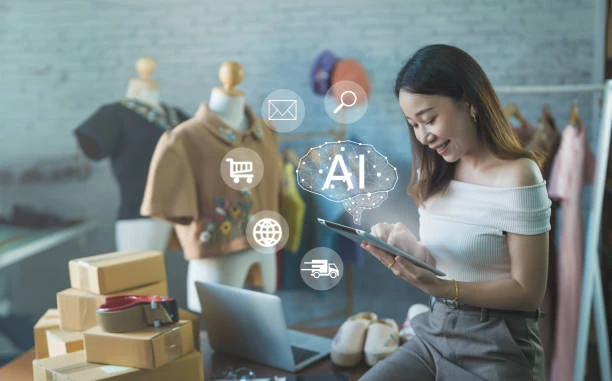
Let's start with something every e-commerce brand knows but rarely says out loud: product photography is a pain.
You book a studio. You coordinate logistics. You wait two weeks for edited images. Then someone notices the lighting looks off on three SKUs, and you do it all over again. Meanwhile, your competitor just launched a full seasonal campaign.
This is the reality for thousands of brands, especially in fashion, jewelry, and apparel, where catalogs change every few months and "a few products" can mean hundreds of variants.
The cost alone is staggering. According to product photography pricing data, a professional package for 25 to 50 products runs anywhere from $1,500 to $4,000, and enterprise shoots covering 50 to 200 products can cost up to $12,000. Add reshoots, inconsistency across SKUs, and dependence on photographer availability, and you start to understand why brands are looking for a way out.
That way out is AI product photography. And before you roll your eyes, it's not a filter. It's not a gimmick.
What AI Product Photography Actually Is
Think of it in two buckets.
The first is background replacement. You take an existing product photo and swap out the background, drop it into a lifestyle scene, or clean it up entirely. This is the simpler, more mature use case, and it works really well for a lot of brands right now.
The second is full AI generation. You provide a reference image of your product and the AI builds an entirely new scene around it. Different lighting, different environment, different context. This is where things get genuinely exciting, and also where the technology still has some rough edges.
The market is moving fast. According to e-commerce product photography market research, the global market was valued at $0.85 billion in 2025 and is projected to reach $2.38 billion by 2034, growing at a CAGR of 12.14%. This isn't a trend. It's a structural shift in how visual content gets made.
Where Brands Are Seeing the Biggest Wins
The clearest wins right now are in specific use cases, not blanket replacement of all photography.
Catalog expansion is the big one. Instead of shooting every colorway of a product separately, brands generate variant images from a single source photo. You shoot the red version, AI handles the green and the blue. That alone cuts shoot days significantly.
Jewelry and accessories are a surprisingly strong category for AI. The precision required for capturing fine details, reflections, and lighting on metal and gemstones is something the technology handles well. Platforms like Caimera are built specifically for this, functioning as a full AI product photography tool for fashion and e-commerce brands that need studio-quality output without the studio overhead.
Ghost mannequin and flat-lay photography is another low-hanging fruit. These are relatively simple setups that don't need a human model, making them ideal for AI replacement. Pack shots, standalone product images, basic e-commerce listings, all of this can be handled without booking a single shoot.
And then there's speed to market.Research on e-commerce photography trends shows the segment is growing at a CAGR of 11.6%, driven by heightened online shopping and the demand for faster, scalable visual production. Brands that can turn around campaign visuals in days instead of weeks are winning the attention game. And with78% of online shoppers considering product images extremely important to their purchase decision, the pressure to keep visuals fresh and consistent across a growing catalog is only going up.
What Doesn't Work Yet
Honest answer: a fair amount.
Complex fabric drape and fit on human models is still inconsistent. AI struggles with how clothing actually moves and sits on a body. If you need a model wearing your dress to look natural and true to fit, you are not quite there yet with pure AI generation.
Brand-specific aesthetics are also tricky. If your brand has a very particular visual identity, tight creative control becomes harder when the AI is making decisions about lighting and composition. You can guide it, but it doesn't always listen the way a trained photographer would.
Platform compliance is a real issue too. Amazon has specific requirements for primary product images, including white backgrounds, no props, and precise sizing. Some marketplaces are strict enough that AI-generated images need significant manual review before they go live.
And finally, if you put low-quality inputs in, you get low-quality outputs. Technology isn't magic.22% of returns happen because the product looked different in person than it did in the photos. That bar doesn't get lower just because AI is involved.
How to Actually Get Started
Don't try to replace your entire photography operation on day one. That's how you create chaos.
Start with secondary images and ads creatives. These are lower-stakes, don't need to meet marketplace compliance standards, and are a great place to test quality and workflows.
Put effort into your source photos. The better your input image, the better the AI output. If you're feeding the model a grainy, poorly lit photo, no amount of AI is going to save it.
Use precision masking to keep your product intact while changing the context around it. This is what separates professional-looking AI images from the generic, slightly-off results that give the technology a bad reputation.
Most importantly, treat AI as a production layer that works alongside photography, not instead of it. For hero images, complex model shots, and brand campaigns, you still want a photographer. For variant images, seasonal updates, and ad assets, AI is already good enough and getting better fast.
FAQs
Is AI product photography good enough to replace a real studio shoot? For many use cases, yes. Secondary images, variant shots, and ad creative are already production-ready. For hero images and model-heavy content, you still need a real shoot, for now.
Will Amazon accept AI-generated product images? Amazon's primary image requirements are strict. Pure AI-generated images often don't meet their standards for the main listing image, but AI can handle secondary images and A+ content without issues.
How much does AI product photography cost compared to traditional? Traditional enterprise shoots can run up to $12,000 for a large catalog. AI workflows bring that down significantly, with no reshoot fees and faster turnaround. The full breakdown of product photography pricing gives a useful comparison if you want to run the numbers for your own catalog size.
Do I need technical skills to use AI product photography tools? Most platforms are built for marketing and e-commerce teams, not developers. If you can upload an image and describe what you want, you can use these tools.
What product categories work best with AI photography right now? Jewelry, accessories, footwear, flat-lay apparel, and packaged goods are the strongest categories. Anything that involves complex fabric drape or human fit modeling is still catching up.
Will consumers know the image is AI-generated? Possibly, if they're looking for it. Around67% of consumers expect brands to disclose when AI was used to create product imagery. Transparency is increasingly expected, so when in doubt, disclose it.





















Sign in to leave a comment.