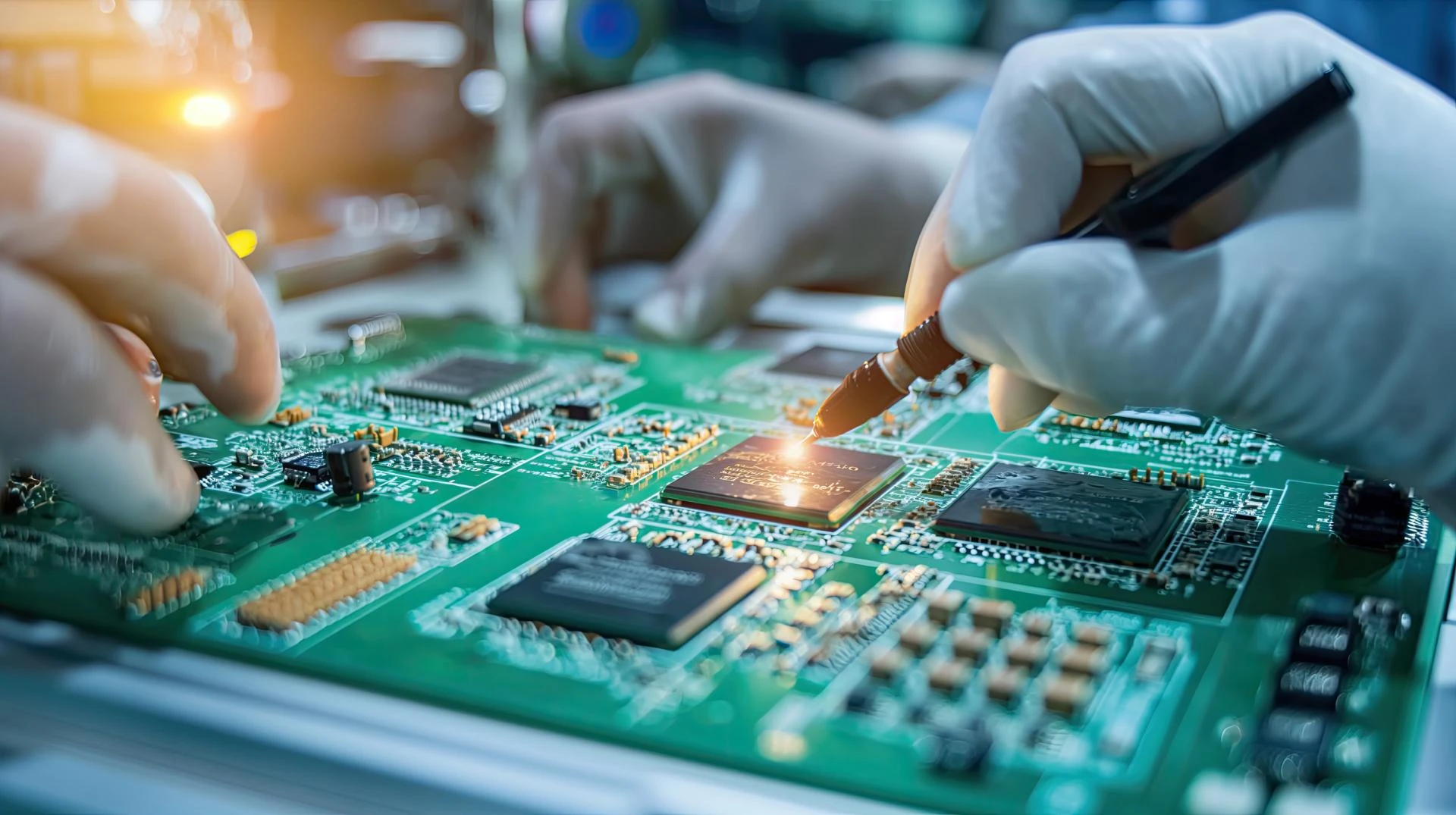

You expect a new smartphone or high-end medical device to work perfectly right away. That dependability isn't just a lucky break. It is the result of strict quality control measures that electronic assembly companies have put in place. If you don't take these steps, anything from your coffee maker to important medical equipment could break down at any time.
Any business that uses electronic parts needs to know how these companies keep their standards high. It tells you how reliable your goods are and how trustworthy your supply chain is. Let's look at the most important quality control methods that make sure electrical devices last a long time.
How electronic assembly companies make sure their work is of high quality
Quality control in electronics production starts long before the first part is soldered. It is a multi-step process. A combination of automatic inspections, manual checks, and thorough testing is used to find problems at every step.
1. A study of Design for Manufacturability (DFM)
The design phase is where quality control begins. Before production starts, experts in electrical assembly do a Design for Manufacturability (DFM) check. This test checks for any design flaws that might happen during production.
DFM analysis makes sure that the circuit board layout lowers the chance of electrical shorts or interference, that solder points are easy to get to and spaced correctly, that the design doesn't include parts that are hard to find or no longer available, and that the placement of parts is best for automated assembly.
Producers can build quality into the product from the start by finding design flaws early on. This saves them money and time later on.
2. Finding and checking parts
The quality of the final product is only as good as the quality of its parts. Companies that put together electronics that are known for their quality get their parts from trusted sources and check them carefully. This means only buying parts from approved wholesalers so that you don't get bad or fake ones, which is a big risk in the electronics business.
When parts arrive at the plant, they are checked to make sure they meet the project's standards. This could mean checking part numbers, confirming electrical properties, and making sure they were stored properly to keep them safe from moisture and static electricity.
3. AOI, which stands for Automated Optical Inspection
During the assembly process, thousands of tiny parts are put together on a printed circuit board (PCB). It would be hard to check each one by hand. This might be helped by Automated Optical Inspection (AOI).
High-resolution cameras on an AOI machine scan the surface of the PCB. The board is compared to a "golden board," which is a model that is perfect for reference.
The system can quickly find a number of problems, such as:
• Parts that are missing or don't fit right.
• Parts that are in the wrong place.
The board itself might have scratches or other problems, and the solder connections might not be good (for example, there might be solder bridges or not enough solder).
AOI is a quick and very accurate way to find flaws that would be hard for the human eye to see. It is an important part of modern electronics assembly.
4. X-ray inspection (AXI)
Some solder connections, especially those for Ball Grid Array (BGA) parts, are hidden under the chip. An AOI system can't see these connections. For these, manufacturers use Automated X-Ray Inspection (AXI).
AXI lets inspectors see through parts, which lets them check the integrity of the hidden solder junctions. It may find issues that could cause the device to break, like bridges between connections, misalignments, and voids (air bubbles) in the solder. This non-destructive test is necessary for complicated, high-density circuit boards to work properly.
5. Testing for function and in-circuit (ICT)
After putting the boards together, they are tested to make sure they work as planned.
ICT, or in circuit testing: This test looks at each part on the board one at a time after soldering. The ICT machine uses a "bed of nails" fixture to touch different places on the circuit to look for shorts, open circuits, and correct component values. It makes sure that each part of the circuit is working correctly on its own.
Functional testing is the last step in the process. After the board is fully built, it is turned on and tested to make sure it works as planned. For example, if it's a computer's motherboard, the test would make sure that it starts up, connects to peripherals, and runs software correctly by doing things that a real computer would do. Functional testing checks to see if each part can work together as a whole.
Conclusion
Quality control is not just a last check; it's a thorough process that is built into every step of making electronics. Manufacturers do everything they can, like carefully reviewing designs, finding real parts, and using the latest inspection technology. This commitment makes sure that the tech gadgets we depend on are safe, reliable, and work as expected. If you make electrical devices, the key to a good and reliable product is to work with electronic assembly companies that put a lot of emphasis on these quality control steps.




























Sign in to leave a comment.