

It might seem hard to choose the best online publishing software. There are a lot of products on the market that say they can help you get the most out of your work. There are so many options to choose from. How do you know which one is best for you? A platform that not only hosts your content but also helps you reach and interact with the right audience is key to success.
Here are 5 helpful tips to help you get started with online publishing tools. By the end, you'll have a clear framework for comparing different platforms.
How to Choose the Best Online Publishing Software
To choose the best software, you need to find one that has the features you need. A platform that works well for a big media company might be too hard and expensive for a single blogger. A basic tool, on the other hand, might not be able to grow with a growing business. Keep these five important things in mind to make sure you choose the best online publishing software for your business.
1. Figure out what your main publishing needs are
Before you can even think about your software options, you need to know exactly what you want to do. Different publishers have very different needs. Are you a small business owner who is starting a blog to get more people to visit? As an editor for a digital magazine, do you manage a team of writers and designers? Or do you run a big business that has to give its clients technical documents?
Begin by saying what you want to achieve. Consider these questions:
· What type of content are you going to put out? Will most of the articles be text-based, or will you add rich media like videos, interactive elements, and high-resolution images?
· Who do you want to reach? Are you making content for a wide audience or just a small group of people who need a certain kind of user experience?
· How do you work? Do you need different levels of access for administrators, editors, and writers for different users? A strong workflow management system might be very important for teams.
· What do you want to achieve with making money? Do you want to make money through e-commerce, sponsored content, ads, or subscriptions? The platform you choose should support the way you plan to make money.
You can make a list of important traits by answering these questions. This first step is very important because it keeps you from being swayed by flashy features that you won't use. While you focus on what you need to do to be successful in publishing right now, think about what you need right now.
2. Check the usability and user experience (UX)
If your employees can't use the software with the most features, it's useless. The user interface (UI) and the overall user experience (UX) are two very important parts. A platform that is hard to use and doesn't make sense can make you angry, slow down the creation of your content, and maybe even require expensive, time-consuming training.
Pick software with a dashboard that is easy to use and clear. The content editor should be the most important thing. A good editor makes it easy to format, smoothly integrate media, and have a "what you see is what you get" (WYSIWYG) experience. This makes sure that the content on your back end will look the same as it does on the live site.
A lot of companies offer free trials or demonstrations. Take full advantage of these chances. To test the platform, have your team make and publish a sample piece of content.
· Is it easy to add and upload pictures and videos?
· Does it seem easy to make a new post?
· How simple is it to change an old article or add new content?
Keep in mind how long it will take to learn. The basic features of any new program should be easy to understand, but some changes may be needed. A platform that puts a lot of emphasis on user experience shows that it knows how hard it is for publishers and content creators to do their jobs every day.
3. Think about how customizable and flexible the design is
Your digital publication shows who you are as a brand. So, you can't give up the ability to change how your website looks and feels. Your online publishing software should give you enough freedom to design things so that your readers have a unique, polished, and consistent experience.
Look at the different themes or templates that are out there. Are they well-designed, current, and work well on mobile devices? A good platform will give you a lot of templates to choose from. More importantly, it should let you change these templates to match your company's colors, fonts, and logo.
If you're more tech-savvy, check to see if the program lets you access the source code directly or even add your own CSS. You can make a design that is truly one-of-a-kind with this level of customization. But the platform should have enough built-in design tools to let you make a website that looks good without having to write any code, even if you don't have a developer on your team. The design of your website has a big effect on how credible it is and how much people want to read it. If you look professional and put together, people will trust you more.
4. Look at how well marketing and SEO work together
Publishing great content is only half the battle; you also need to make sure people can find it. To get organic traffic, you need to have good search engine optimization (SEO) features. When making your online publishing software, you should think about the best ways to do SEO.
Look for features like customizable URLs that let you make neat, keyword-rich URLs for your articles.
· Meta Tags: Boxes that make it easy to change and add meta titles and descriptions to each page.
· XML Sitemaps: These are sitemaps that are made automatically and help search engines crawl and index your content more effectively.
· Mobile responsiveness: Designs that fit all screen sizes without any problems. This is an important part of Google's ranking system.
· Fast Page Loading Times: A platform that is optimized for performance, since site speed is important for both SEO and user experience.
5. Look at the support, scalability, and cost
Last but not least, you need to think about the practical aspects of price, growth potential, and customer service. Publishing software comes in a wide range of price ranges, from expensive enterprise-level options to free open-source options like WordPress.org.
Look closely at how the prices are set up. Is it a one-time payment or a monthly subscription? Are there levels based on the number of users, features, or traffic? Be careful of costs that aren't obvious. Some platforms might charge extra for premium themes, integrations, or features that are needed. Find out the total cost of ownership to make sure it fits in your budget.
Think about what's to come. You should be able to grow with the platform you chose. Will the program be able to handle more users without slowing down as your audience and content collection grow? A scalable solution may help you avoid a difficult and costly migration process later on.
Lastly, don't forget about customer service. It's important to know that help is available in case of an emergency. Check what kind of help is offered. Is there help available by phone or live chat, or is it all email and forums? Read customer reviews and testimonials to find out how good and quick the support staff is. Having reliable help can be very helpful, especially if you're having technical issues that are getting in the way of your publishing.
Conclusion
Your choice of online publishing software will affect every part of your digital content. If you think about your goals, user experience, design freedom, SEO, and the realities of pricing and support, you can choose a platform that lets you confidently create and share high-quality content.
Take your time with this process. The software you choose is more than just a tool; it's a partner in your publishing journey. The right platform can help you reach your business goals, grow your audience, and make things run more smoothly.
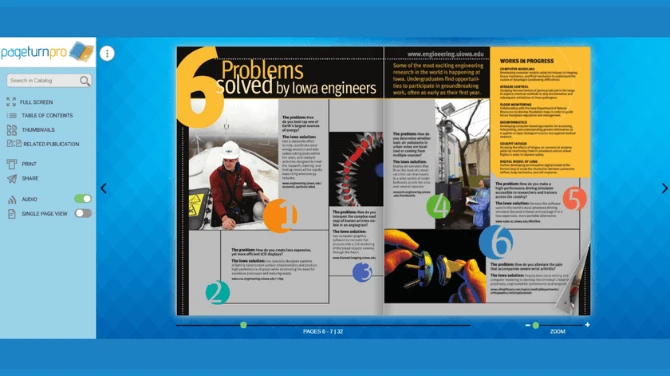
A highly recommended software option that you can try for free for 15 days is PageTurnPro online publishing software.


























Sign in to leave a comment.