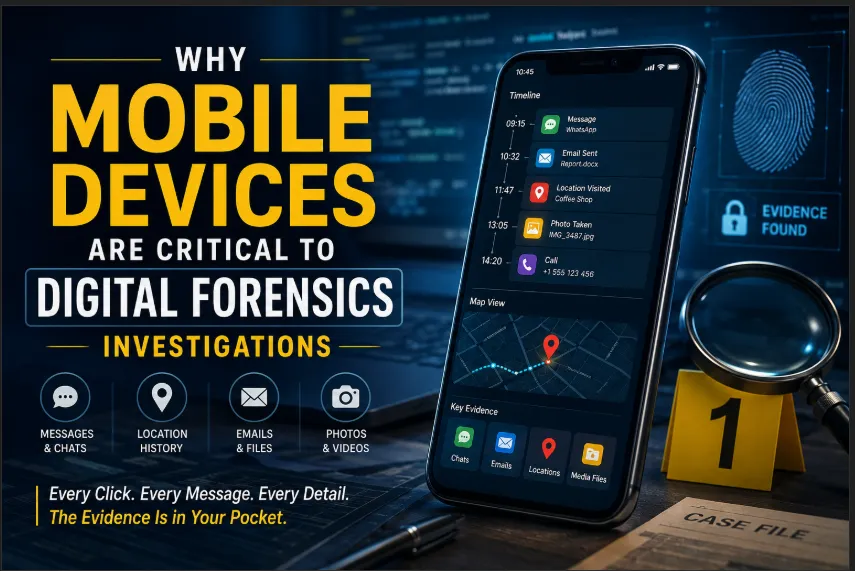

The New Starting Point of Investigations - Not long ago, digital investigations typically began with desktops, servers, or network logs. Today, that approach has shifted significantly. Investigators now turn to mobile devices first and for good reason.
Smartphones have become central to daily life. People use them to communicate, share files, manage emails, track locations, and store personal as well as professional data. In many ways, a mobile device acts as a real-time digital diary, capturing activities as they happen. For investigators, this makes it one of the richest and most reliable sources of evidence.
The Hidden Challenge Behind Valuable Data
While mobile devices contain critical information, accessing and understanding it is not straightforward. The data is often scattered across multiple applications, stored in different formats, and sometimes intentionally hidden or deleted.
This creates a major challenge. Investigators are not just dealing with a lack of data—they are dealing with too much unstructured data. Without proper organization, even the most valuable evidence can remain unnoticed.
What Makes Mobile Evidence So Powerful
Mobile devices hold a wide range of data points that, when combined, provide a complete picture of events. These include:
- Text messages and chat conversations
- Emails and attachments
- Photos and videos
- Call history
- Location and GPS data
Individually, each piece of information may seem insignificant. But when analyzed together, they reveal patterns, intent, and timelines that are critical in solving cases.
Where Traditional Methods Fall Short
Despite the importance of mobile data, many investigations still rely on outdated approaches. These often involve using multiple tools for data extraction and then manually reviewing the outputs.
For example, one tool might extract device data, another might handle emails, while the rest is managed in spreadsheets or static reports like CSV or PDF files. This fragmented process leads to several issues:
- Slower investigation timelines
- Increased chances of missing key evidence
- Difficulty in connecting related data points
- Heavy reliance on manual interpretation
Such methods are not only inefficient but also risky in high-stakes investigations
Why Collecting Data Isn’t Enough
Simply extracting data from a mobile device does not solve the problem. The real value lies in understanding that data.
When information exists in isolated formats, it becomes difficult to see the bigger picture. Investigators may end up analyzing fragments rather than a complete narrative. To uncover the truth, data must be connected, correlated, and analyzed as a whole.
Bringing Structure to Complex Data
Mobile forensic data is naturally complex due to its volume and diversity. To handle this effectively, investigators need a structured approach supported by the right tools.
A well-organized system helps to:
- Focus on relevant evidence
- Reduce manual effort
- Improve analysis speed
- Enhance clarity and accuracy
Instead of working with disconnected data, investigators can view everything in a unified environment. This makes it easier to identify relationships, track communication patterns, and build clear timelines.
Turning Data into Meaningful Insights
The difference between raw data and actionable evidence lies in how it is analyzed. When handled correctly, mobile data can reveal:
- Who communicated with whom
- When specific actions took place
- Where events occurred
- How differet data points are connected
This transformation—from scattered information to clear insights—is what makes mobile forensics so powerful in real-world investigations.
The Role of a Unified Investigation Approach
In modern investigations, data often comes from multiple formats and sources. Managing this information separately only adds to the complexity.
A unified approach allows investigators to bring all data into a single platform, making analysis more efficient and reliable. It eliminates confusion, reduces errors, and helps teams make faster, more confident decisions. For a proper analysis, efficient tools like MailXaminer is used by investigators around the globe.
Why a Structured Process Makes All the Difference
A structured investigation approach is essential for handling mobile forensic data effectively. It ensures that:
- Time is used efficiently
- Errors are minimized
- Evidence is accurately interpreted
- Strong, defensible cases are built
Without structure, even the most advanced tools may fail to deliver meaningful results.
Final Thoughts
Mobile devices have become the most critical source of digital evidence in today’s investigations. They capture detailed insights into human activity, making them invaluable for uncovering the truth.
However, the real challenge lies not in collecting data, but in analyzing it effectively. Traditional methods often fall short because they treat data as isolated pieces. Modern investigations require a connected and structured approach.
By combining the right tools with a clear methodology, investigators can transform complex mobile data into reliable evidence—ultimately leading to faster and more accurate case resolutions.





























Sign in to leave a comment.