

For years, enterprise logistics teams focused on improving shipment tracking.
Track the package.
Update the ETA.
Monitor delivery milestones.
But air freight networks are becoming too complex for traditional tracking models alone.
A quieter shift is now happening across logistics infrastructure:
Visibility is becoming more important than tracking itself.
The Difference Between Tracking and Visibility
Shipment tracking answers a simple question:
“Where is the shipment?”
Visibility answers a much larger one:
“What is happening across the entire logistics network right now?”
That distinction matters more as supply chains scale globally.
Modern air freight operations involve:
- airlines
- freight forwarders
- customs systems
- warehouse platforms
- regional transportation providers
Each system captures a different piece of operational data.
The shipment may still be moving successfully while the network itself loses coordinated awareness.
Why Traditional Tracking Models Are Reaching Their Limits
Most tracking systems were built around isolated shipment events.
A package departs.
A scan updates the dashboard.
Another update appears at arrival.
But enterprise logistics networks now depend on continuous coordination across multiple systems operating simultaneously.
“The growing complexity of enterprise air freight networks is exposing major visibility gaps across carriers, warehouses, customs systems, and logistics platforms” (source: Konverge Digital Solutions)
The challenge is no longer whether companies can collect shipment data.
The challenge is whether that data stays synchronized across the network in real time.
Why Visibility Gaps Create Larger Operational Problems
When systems fall out of sync, operational uncertainty spreads quickly.
This affects:
- ETA accuracy
- warehouse scheduling
- inventory planning
- exception management
- customer communication
And the larger the network becomes, the harder manual coordination becomes.
In many enterprise environments, the issue is not missing information.
It is fragmented information.
The Shift Toward Connected Logistics Ecosystems
This is why logistics organizations are beginning to invest in unified operational visibility systems rather than isolated tracking tools.
The focus is shifting toward:
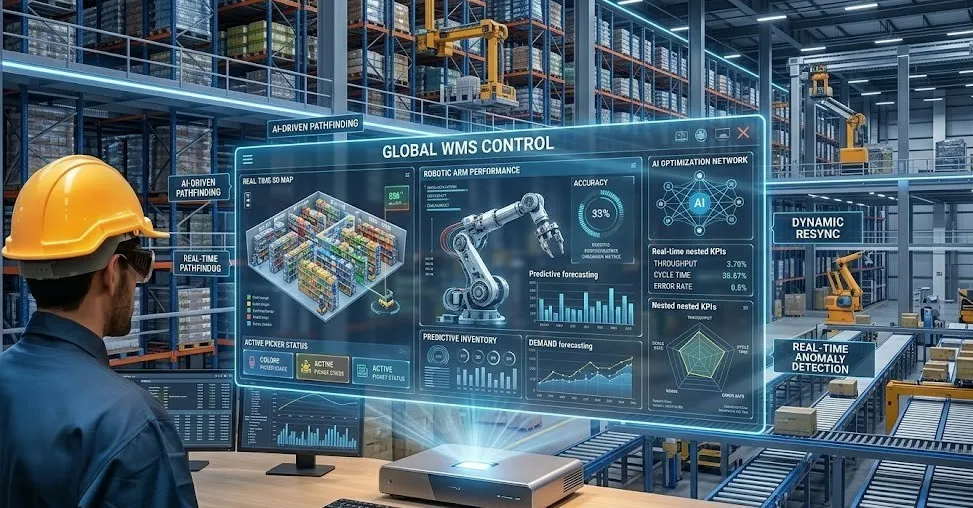
- centralized operational dashboards
- real-time synchronization across systems
- predictive exception monitoring
- integrated data layers across carriers and warehouses
The goal is not simply tracking shipments faster.
It is maintaining operational continuity across the network.
Why This Mirrors Broader Digital Infrastructure Trends
This transition reflects a larger shift happening across enterprise systems.
AI-driven and connected platforms increasingly prioritize coordination and real-time awareness over isolated software functions. Research around generative and AI-driven systems shows that modern digital infrastructure is moving away from static, tool-based workflows toward integrated execution environments.
In logistics, this means the operational layer connecting systems may become more valuable than the individual systems themselves.
The Bigger Change Happening in Air Freight
Air freight networks are evolving from:
- shipment-centric operations
to: - network-centric coordination
The companies that adapt successfully will not just know where shipments are.
They will understand how the entire logistics ecosystem is behaving in real time.
Final Thought
Air freight is no longer limited primarily by transportation speed.
It is increasingly limited by information continuity.
In the next phase of enterprise logistics, visibility across the network may matter more than shipment tracking alone.

























Sign in to leave a comment.