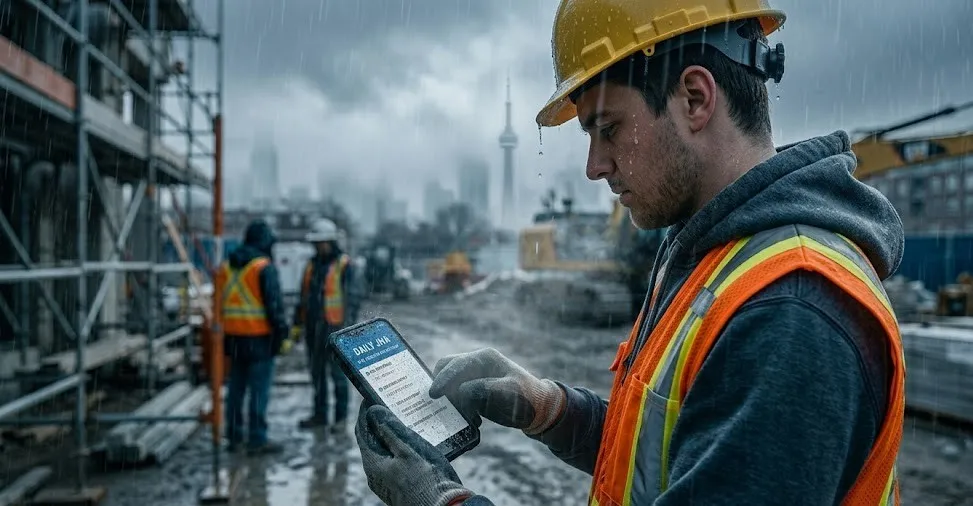

Construction safety has long depended on structured systems built around compliance, documentation, and scheduled reporting. These systems were designed to standardize safety practices across job sites, but they often rely on information being entered after the fact rather than at the moment risks are identified.
In real construction environments, this delay creates a practical limitation. Site conditions change quickly, teams are distributed, and risks often need immediate attention rather than retrospective reporting.
This is where a clear shift is emerging.
Field teams are increasingly using mobile-based workflows to capture safety data directly at the point of work. Instead of relying on paper forms or delayed system entry, hazards, inspections, and incidents are being logged in real time from the site itself.
This change improves both speed and accuracy of reporting. Information is no longer filtered through multiple layers before reaching decision makers. It is captured closer to the source and made available sooner for action.
A key point highlighted in industry discussion around construction safety systems is that modern approaches are increasingly focused on reducing friction between field activity and safety reporting, ensuring that safety data is created where the work actually happens rather than after the fact (source: Konverge).
This shift also changes the role of traditional safety systems. Instead of acting as the primary point of data entry, they are evolving into coordination layers that consolidate field inputs, support oversight, and maintain compliance records. The execution layer is moving to mobile, while systems handle aggregation and structure.
As adoption increases, safety is becoming less about periodic reporting cycles and more about continuous visibility across operations. This allows faster response times, better tracking of site conditions, and more proactive risk management.
The direction of change is clear. Construction safety is moving closer to the field, where information is created, and further away from delayed system-based reporting models.




























Sign in to leave a comment.