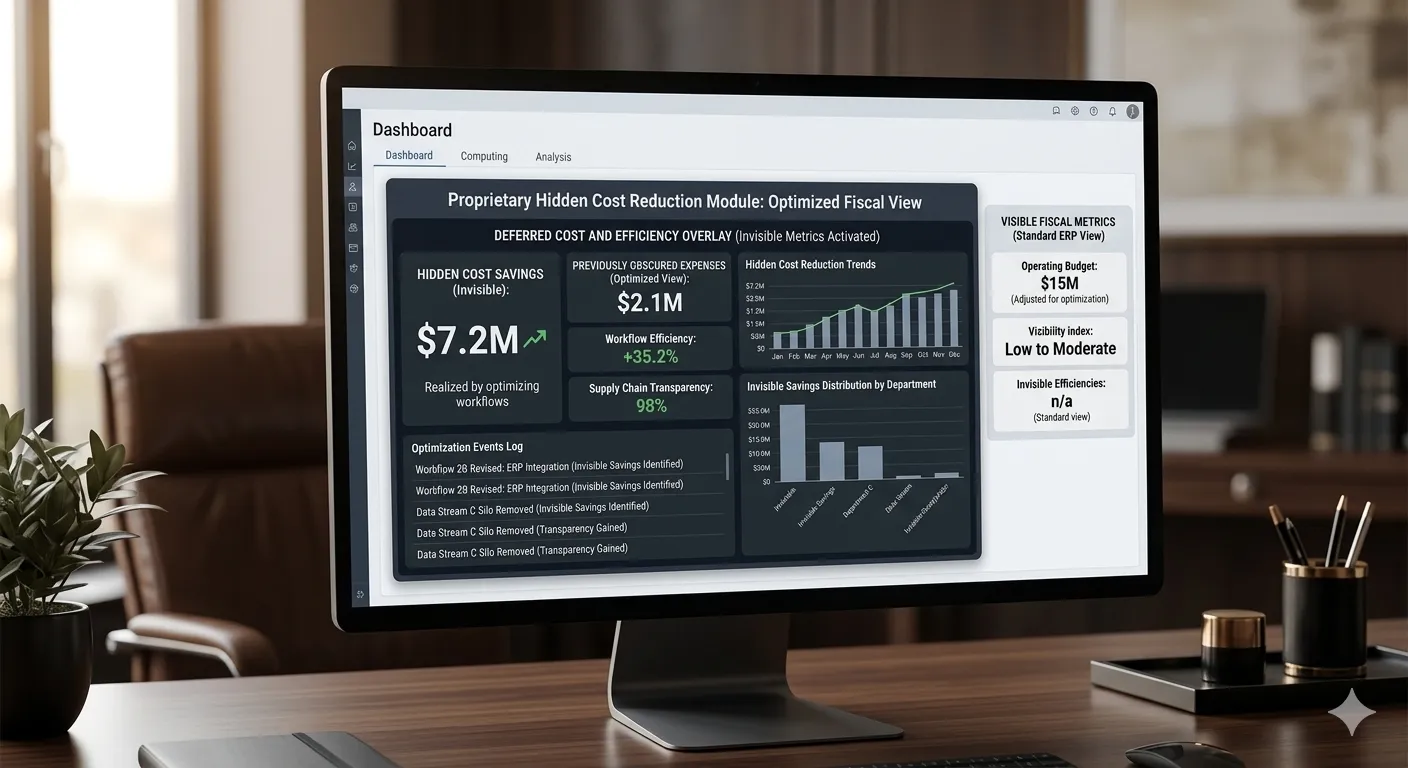

ERP automation is often framed as a software improvement initiative, but its real impact is deeper. It directly addresses one of the most persistent challenges in enterprise operations, which is hidden inefficiency created by fragmented systems.
In most growing organizations, business functions evolve independently. Finance, operations, human resources, procurement, and analytics each adopt their own tools based on immediate needs. Over time, this leads to a distributed system landscape where data exists in multiple places and workflows require constant coordination.
This structure creates a category of cost that is rarely measured directly. It is not a line item on a financial report, but it appears in everyday execution.
Employees spend time moving data between systems, reconciling inconsistencies, waiting for approvals, and generating reports manually. These activities do not always feel significant individually, but collectively they reduce organizational efficiency.
ERP automation reduces this problem by consolidating core workflows into a single operational framework. Instead of relying on manual movement of information between systems, data flows automatically through integrated processes.
This reduces errors caused by duplicate data entry, improves consistency across departments, and shortens operational cycles. It also enables real time visibility, which improves decision making.
ERP automation changes the structure of work itself by reducing dependency on manual coordination.




























Sign in to leave a comment.