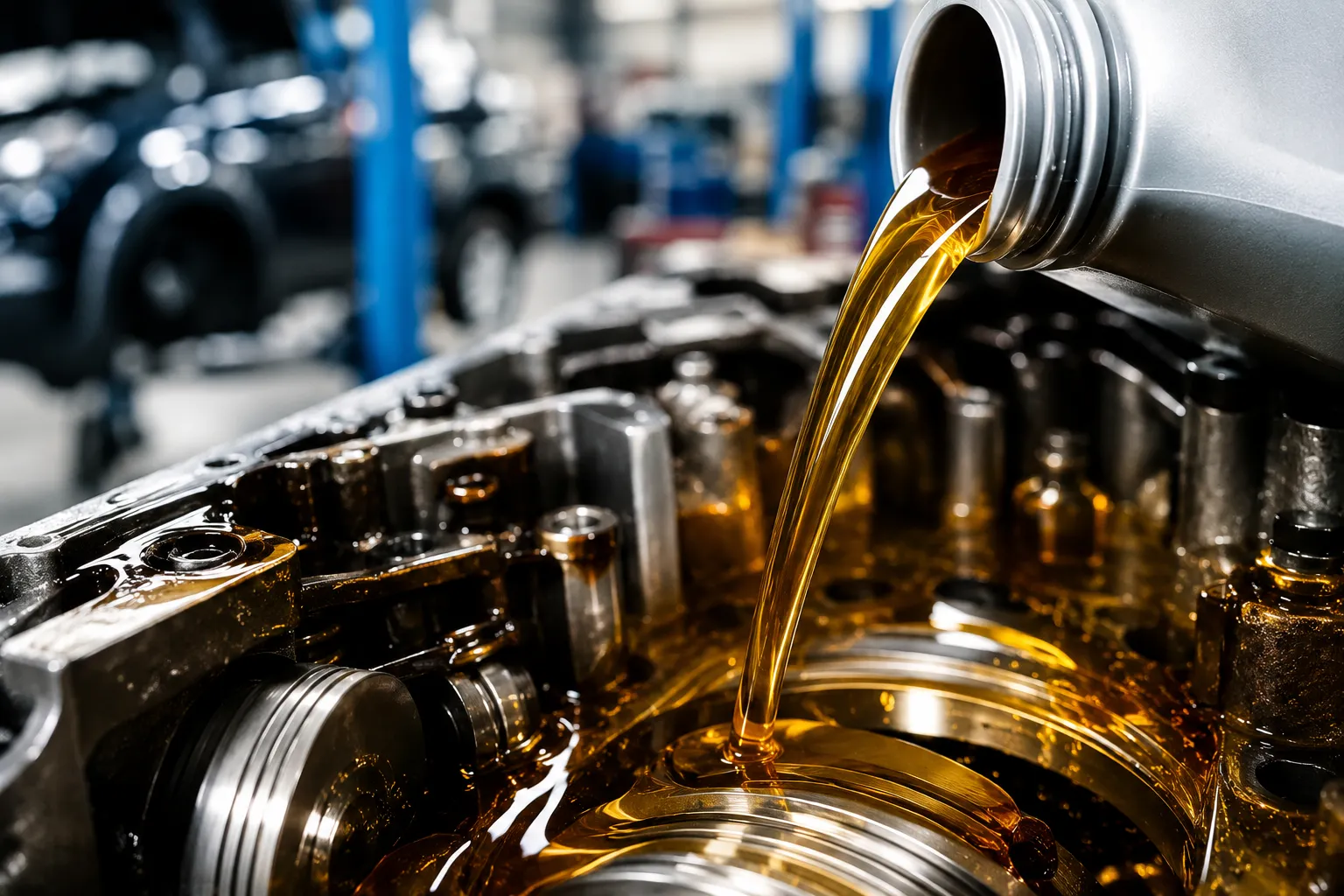

Each generation of engines is an advanced piece of engineering capable of producing incredible amounts of power, fuel economy and reliability. It is the intention of those who manufacture these engines that they perform at the highest possible level; however, they all depend upon one factor for optimal performance, and that is proper lubrication. Many people think that the only thing that is required for proper lubricant performance is to select a base oil; however, the secret to providing the best performance from an engine is the addition of performance additives to the base oil.
The ability of any oil to perform in an engine is greatly improved by the use of performance additives. Performance additives do this by improving the base oil properties, such as the ability of the oil to withstand high temperatures, reduce wear on the engine, prevent deposits and extend the usable life of the oil. In areas such as the United Arab Emirates, where automotive and industrial engines are consistently subjected to high ambient temperatures, excessive amounts of dust, and extreme operating conditions, the use of performance additives is even more important.
This blog discusses how performance additives function in engine oils, the benefits they provide and why they should be considered essential for providing maximum engine performance, protection, and oil life.
What Are Engine Oil Additives?
Engine oil additives are chemical substances used to enhance the performance of base oils and overcome various operational difficulties. Generally speaking, base oils represent the majority of the total composition of engine oil, and additives typically supply most of the beneficial protective and performance-enhancing characteristics of modern-day engines.
Typically, an engine oil may consist of anywhere from 10% to 30% additives depending upon its formulation and intended purpose. Additives are specially developed in order to complement one another and are chemically engineered to provide optimal engine protection over a broad range of operating conditions.
If there were no additives, engine oil would rapidly deteriorate, lose its ability to perform, and be unable to adequately protect critical engine components.
Why Engine Oil Additives Are Important in the UAE
Engine and lubricant challenges are different in the UAE from other parts of the world. Extreme high temperatures, long driving distances, high traffic density, and airborne particulates create substantial stress on engine oil.
Under these conditions, engine oils must:
- Be resistant to thermal breakdown
- Have stable viscosity
- Be resistant to sludge and deposits
- Provide protection against wear and corrosion
- Maintain performance under heavy loads
Advanced types of engine oil additives will offer real performance benefits in these scenarios.
Industry studies show that lubrication-related issues cause a considerable level of engine wear and mechanical failure. As such, it is critical to choose the proper oil that contains the correct additive package.
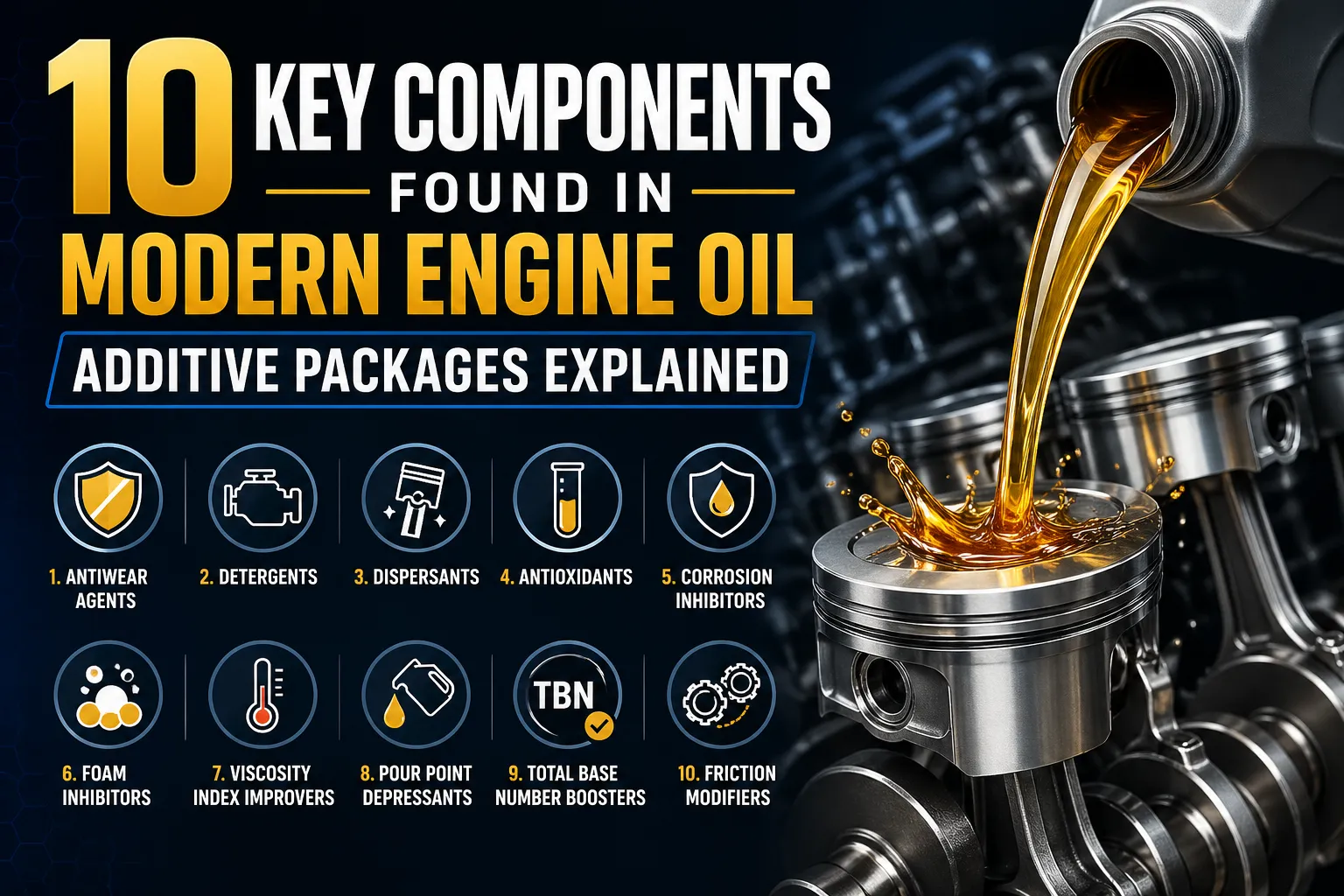
Key Types of Engine Lubricant Additives
Anti-Wear Additives
The primary purpose of any engine lubricant additive is to reduce wear on metal parts that move against each other. Anti-wear additives create a protective layer on all parts of an engine, including camshafts, pistons and bearings, thereby reducing metal-to-metal contact during start-up, when the flow of lubricant through the engine may be minimal.
Benefits of an anti-wear additive include the following:
- Reduced amount of wear on the engine
- Increased life of components
- Increased reliability of components
- Lower maintenance costs
For fleet operators and commercial vehicle owners operating in the UAE, these benefits can result in large, long-term savings.
Detergent and Dispersant
The majority of contaminants found in an engine as a result of the natural combustion process are made up of soot, carbon deposits and undesirable products resulting from oxidation. Detergent additives help keep engine components clean within the engine and also keep them from forming deposits. Dispersant additives keep contaminants suspended within the engine oil until they can be removed from the engine through the lubrication system's filtering process. Together, both types of additives help.
Reduce the accumulation of sludge within the engine
- Help keep the engine clean
- Improve fuel economy
- Extend the service life of the engine lubricant
- Engines that are clean will operate more efficiently and have less wear over time.
Additives containing Antioxidants
Oil oxidation occurs in high temperatures, which causes lubricants to thicken and become less efficient.
Antioxidants slow down that chemical reaction and help oil retain its functionality longer.
This is crucial in the UAE, where engine temperatures soar in summer months. Adequate antioxidant protection prevents premature degradation of oil and sustains the oil drain interval.
Additives that inhibit Corrosion and Rust
Moisture and combustion by-products lead to internal corrosion of automotive engine systems.
Corrosion inhibitors provide a shielding layer on metal, minimising the potential for rusting or chemical deterioration.
This type of protection is even more valuable for automobiles operating in coastal locations, which have an element of humidity and salt exposure.
Viscosity Index Modifiers
Engine oils must remain fluid enough for cold start operations yet maintain a sufficient thickness when heated to high levels during operations.
Viscosity index modifiers help ordinary lubricants remain stable or retain their intended reliability through many greatly fluctuating ambient temperatures and driving conditions.
Consequently, engine operations or engine components run smoother and have improved overall protection from wear and tear.
How Engine Lubrication Additives Prolong Oil Life
Modern engine lubrication additives are one of the most important contributors to increasing the length of time an engine can use oil without having to be changed.
Additives help to increase oil's service life in several ways, including controlling oxidation of oil, reducing contaminants, and maintaining viscosity stability. Oil that has been treated with additives creates a longer-lasting lubricant, resulting in fewer oil changes and lower maintenance costs over the life of the engine.
Due to the fact that additive packages can greatly improve the durability of oil, even under very hard service conditions, the experts in lubrication have stated that engines that are treated with high-quality additives are able to work much more efficiently.
Businesses that operate fleets of vehicles or industrial machinery are able to realise a substantial reduction in costs associated with extended oil servicing.
To What Extent Engine Lubricants Can Affect Performance and Fuel Economy
Many drivers and equipment operators don't know that the additives in their engine oil can have a direct effect on performance and fuel economy.
Engines with reduced friction will require fewer resources to run. Cleaner parts inside your engine will allow for more efficient combustion and improved responsiveness from your engine.
Some of the benefits that can be obtained through the use of engine lubricants include the following:
- Better fuel economy
- Smoother engine operation
- Greater power output
- Reduced emissions
- Less operating expense
Even the smallest gains in efficiency have the potential to produce large long-term savings in today's rapidly changing business world.
Choose the Right Engine Oil Additive Package
Not every engine oil is designed the same way; engines have varying aggregate technology requirements depending on such factors as design, operating condition, and performance criteria.
When you select a motor lubricant, consider:
- The specification provided by your manufacturer.
- Locations where the lubricant will be used through extreme heat and dry areas through to extremely cold.
- The equipment or vehicle for which the lubricant is to be used.
- The severity of road conditions.
- The frequency at which the lubrication will take place.
Having a partner who can provide the proper formulation for the maximum performance of your motor lubrication will help ensure the lubrication provides the optimum protection.
Conclusion
The additives in motor lubrication are responsible for allowing a motor oil to perform today. In addition, these highly developed, cost-effective polymers perform many duties including reducing wear on engines, controlling the build-up of undesirable contaminants in the gasoline and diesel engines, extending the life of the oil, and improving fuel efficiency under the most extreme conditions of the engines.
Engine owners, fleet managers, and industrial equipment owners throughout the UAE can maximise their investment by purchasing high-quality motor lubricants with complex additives to protect their equipment and reduce maintenance costs while maintaining maximum productivity.

























Sign in to leave a comment.