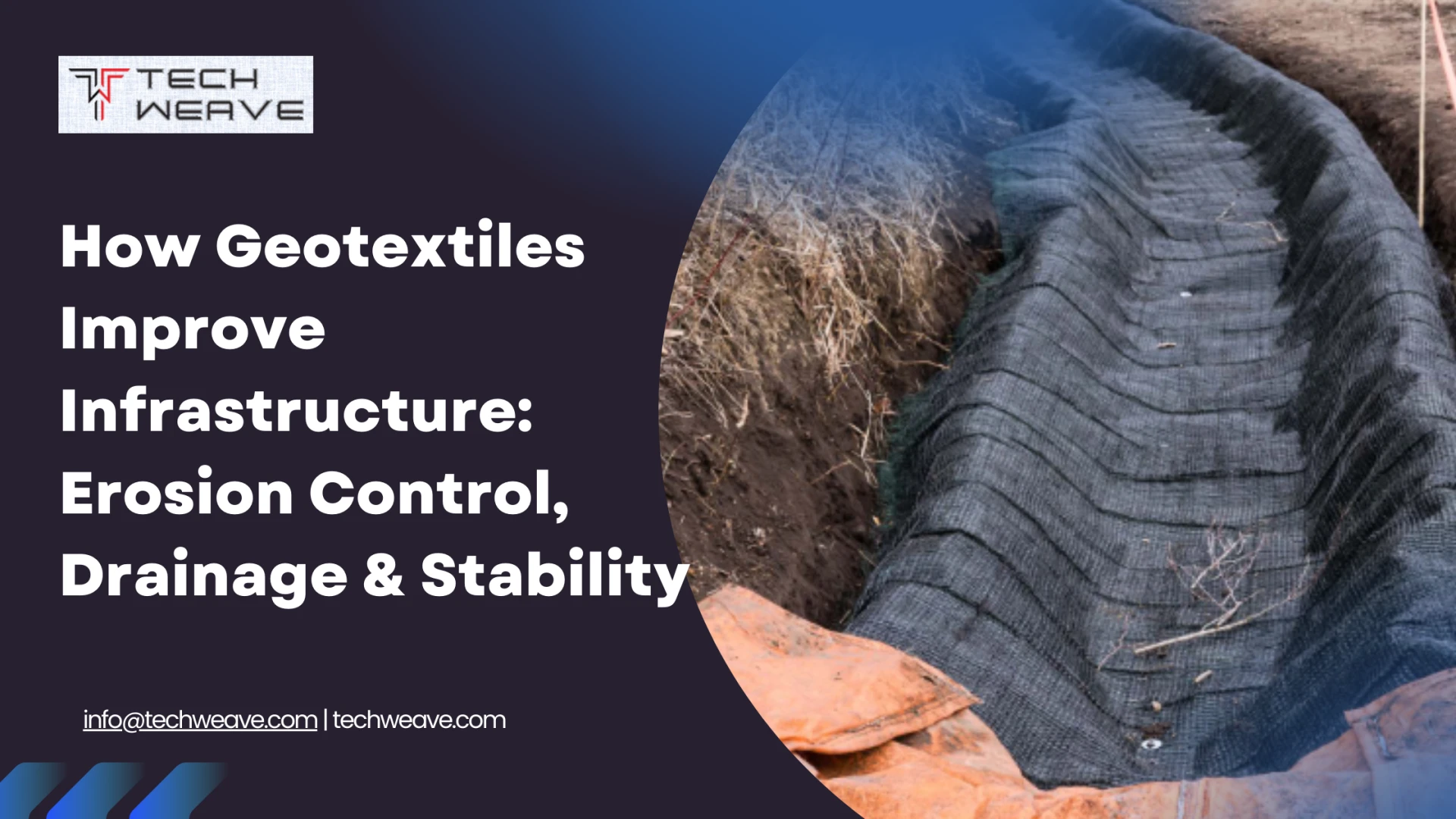

Infrastructure projects demand long-lasting solutions that enhance stability, prevent erosion, and improve drainage. Geotextiles—high-performance technical fabrics—play a vital role in achieving these goals. Whether used in road construction, drainage systems, or landscaping, geotextiles ensure strength, flexibility, and durability.
In this article, we will explore how geotextiles work, their types, and the key benefits for infrastructure development.
What Are Geotextiles?
Geotextiles are synthetic fabrics made from polypropylene and polyethylene yarns and woven fabrics. These engineered textiles are designed to provide reinforcement, filtration, separation, and drainage functions in civil engineering projects.
Common types of geotextiles include:
- Woven Geotextiles: Made from polypropylene or polyethylene yarns, offering high tensile strength.
- Non-Woven Geotextiles: Typically needle-punched, providing excellent filtration and drainage.
They are widely used in road construction, embankments, erosion control systems, and drainage applications.
Why Geotextiles Are Essential in Infrastructure Projects
Geotextiles have become an integral part of modern infrastructure for several reasons. Let us break down their main functions and benefits.
1. Erosion Control
One of the most critical challenges in construction is soil erosion caused by water flow, wind, and heavy rainfall. Geotextiles function as a protective barrier, stabilizing soil and preventing washouts.
- Leno weave fabric and silt fence fabric are commonly used in erosion control applications to keep sediment in place.
- In coastal and riverbank projects, geotextiles help prevent scouring and soil loss.
Benefits:
- Reduces soil displacement
- Maintains structural integrity of slopes and embankments
- Enhances vegetation growth by holding soil and nutrients
2. Drainage and Filtration
Proper drainage is essential to prevent waterlogging and foundation damage. Geotextiles function as a filter, allowing water to pass through while keeping soil particles intact.
- Non-woven geotextiles excel in drainage systems like French drains, retaining walls, and roadbeds.
- These fabrics also prevent clogging in drainage pipes and channels.
Benefits:
- Improves water flow and prevents blockages
- Reduces maintenance costs in drainage systems
- Enhances the lifespan of roads and pavements
3. Soil Stabilization and Reinforcement
Heavy traffic, load-bearing structures, and weak soils require extra reinforcement. Geotextiles distribute loads evenly, reducing settlement and preventing structural failures.
- Woven polypropylene fabrics are ideal for road construction, embankments, and airport runways.
- They function as a separation layer between subgrade and aggregate layers, maintaining structural stability.
Benefits:
- Extends pavement life
- Reduces repair costs
- Improves safety and reliability of infrastructure
Popular Applications of Geotextiles
Geotextiles are versatile and used across multiple sectors. Some common applications include:
- Road Construction: Improves load distribution and prevents potholes
- Drainage Systems: Enhances water flow in highways and landscapes
- Erosion Control: Protects slopes, riverbanks, and shorelines
- Agriculture & Landscaping: Nursery ground cover fabric is widely used to control weeds and improve soil quality
- Roofing Systems: Synthetic roll roofing combined with geotextiles provides an additional protective layer
How Geotextiles Are Manufactured
Modern geotextiles manufacturers use advanced technology like weave tech to produce durable technical fabrics. These fabrics are engineered to meet specific performance standards for strength, permeability, and UV resistance.
Common materials:
- Polypropylene and polyethylene yarns and woven fabrics for strength and longevity
- Specialized technical fabric suppliers provide a range of woven and non-woven solutions for construction and industrial needs
Environmental and Economic Advantages
Apart from structural benefits, geotextiles also contribute to sustainability:
- Reduces the need for natural aggregates and stones
- Minimizes construction waste and maintenance
- Provides long-term performance, reducing lifecycle costs
Future of Geotextiles in Infrastructure
As construction challenges increase due to climate change, urbanization, and resource scarcity, geotextiles will continue to evolve. Expect innovations like biodegradable fabrics, smart geotextiles with sensors, and enhanced durability under extreme conditions.
Final Thoughts
From erosion control and drainage to soil reinforcement, geotextiles have transformed modern infrastructure. Their versatility, durability, and cost-effectiveness make them indispensable for engineers and contractors.
If you are a contractor, engineer, or project planner seeking high-quality geotextile solutions, trust Tech Weave International—a leading geotextiles manufacturer and technical fabric supplier. We provide tailored products, including polypropylene and polyethylene woven fabrics, leno weave fabrics, silt fence fabrics, and nursery ground cover fabrics, to meet the specific needs of your projects.
Partner with Tech Weave International for innovative, durable, and cost-effective geotextile solutions that ensure long-lasting performance.

























Sign in to leave a comment.