
If you're searching for premium hormone replacement in Atlanta, you're probably dealing with hot flashes that hit at the worst times, sleepless nights, or mood swings that feel out of your control. You're not imagining it, and you're not alone. Menopause affects every woman differently, but hormone therapy has helped millions manage these changes with real, measurable relief.
Hormone therapy replaces the estrogen and progesterone your body stops producing during menopause. It's the most effective treatment available for hot flashes, night sweats, vaginal dryness, and several other symptoms tied to hormone decline. When started at the right time and tailored to your health history, it can also support bone strength and heart health. This guide breaks down how it works, who it helps, and what to expect.
What Happens to Your Body During Menopause
Menopause is confirmed after twelve months without a period, and in the United States, the average age this happens is 51. But the real disruption starts earlier, during perimenopause, when estrogen levels swing up and down before dropping for good.
Estrogen does a lot more than regulate your cycle. It affects your brain, bones, skin, blood vessels, and metabolism. When it declines, the body reacts in ways that go beyond hot flashes. Fat tends to shift from your hips and thighs toward your belly. Sleep gets lighter and more broken. Bone density starts to drop faster. Many women also notice vaginal dryness, mood changes, and a harder time concentrating.
Hormone therapy works by putting some of that estrogen, and often progesterone, back into your system so your body isn't running on empty.
How Hormone Therapy Actually Works
Hormone therapy, often called HRT or MHT (menopausal hormone therapy), replaces the hormones your ovaries stop making. There are two main types.
Estrogen-only therapy is typically used for women who no longer have a uterus, since estrogen alone can raise the risk of uterine cancer in women who still have one. Combined therapy, which pairs estrogen with progesterone, is used for women who still have a uterus, because the progesterone protects the uterine lining.
You can take hormone therapy in several forms: pills, patches, gels, sprays, or vaginal creams and rings for localized symptoms. Patches and gels deliver estrogen through the skin, which many doctors now prefer because it carries a lower risk of blood clots compared to oral pills. Vaginal estrogen, used at a low dose, treats dryness and discomfort directly without significantly affecting the rest of the body.
What Symptoms Does Hormone Therapy Actually Improve
Hormone therapy is the most effective treatment for hot flashes and night sweats, and it also helps with vaginal dryness, sleep disruption, and bone loss. Most women notice fewer hot flashes within a few weeks of starting treatment, with full benefits building over two to three months.
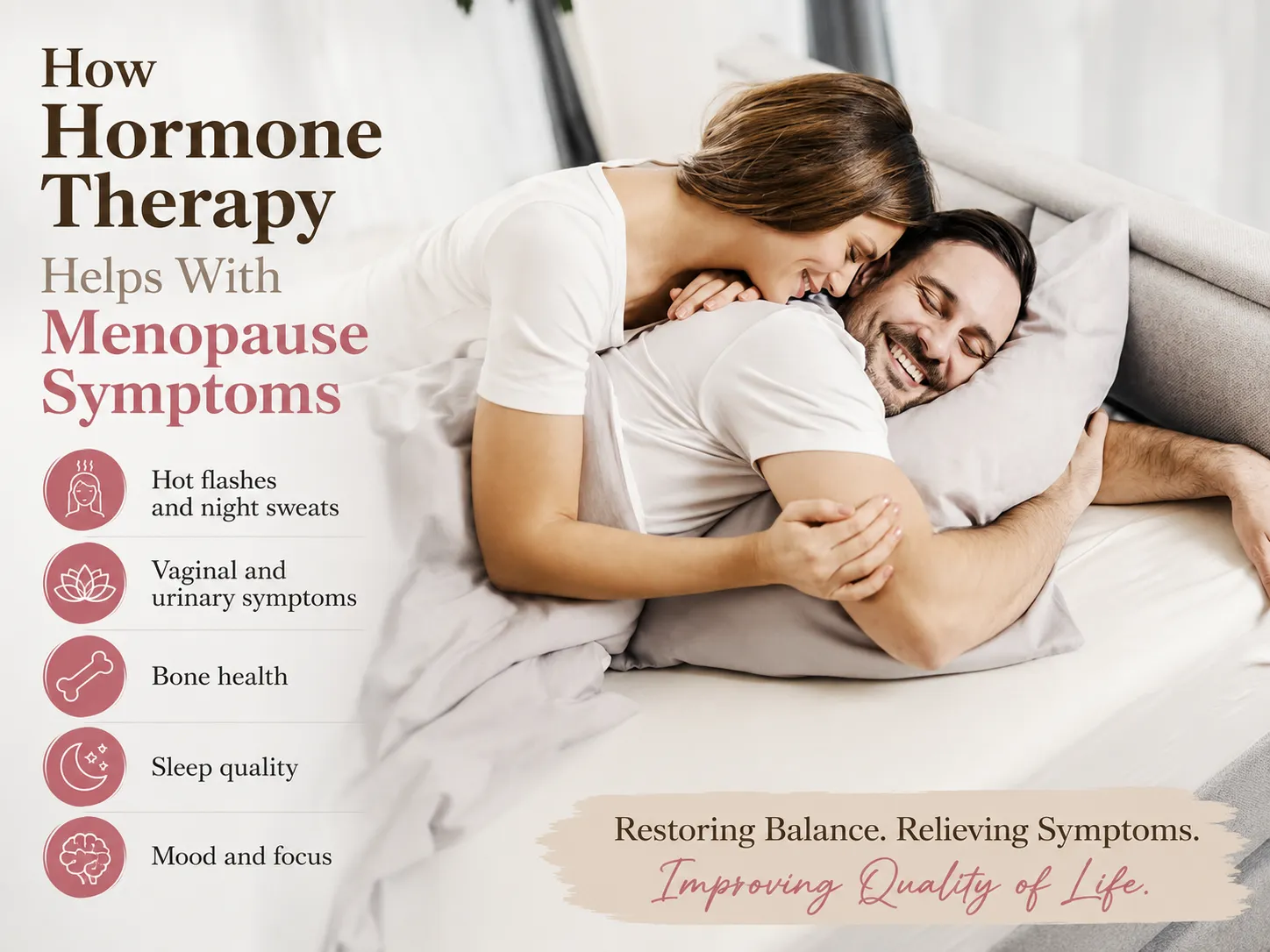
Here's a closer look at what it typically helps with:
Hot flashes and night sweats. These are the classic menopause symptoms, and hormone therapy remains the gold standard for treating them. Hormone therapy provides the most effective relief of hot flashes and related symptoms and is the first-line treatment for genitourinary changes tied to menopause, especially with low-dose vaginal estrogen.
Vaginal and urinary symptoms. Dryness, irritation, and discomfort during intimacy are common as estrogen drops. Low-dose vaginal estrogen treats this directly, often with noticeable improvement within a few weeks.
Bone health. Estrogen helps maintain bone density. Hormone therapy also helps prevent early postmenopausal bone loss and lowers fracture risk in certain women.
Sleep quality. Night sweats are a major reason for disrupted sleep during menopause. Reducing them often means falling asleep faster and staying asleep longer.
Mood and focus. While hormone therapy isn't a treatment for depression, many women report steadier moods and clearer thinking once hot flashes and sleep problems improve.
If you'd like a professional to walk through your specific symptoms and medical history, a consultation is the best next step. This is where a soft, no-pressure conversation with a provider makes a real difference before deciding on a treatment plan.
Is Hormone Therapy Safe? What the Research Actually Shows
Safety depends heavily on your age, how long it's been since menopause, and the type of hormone therapy used. This is often called the "timing hypothesis," and it's now widely accepted among major medical groups.
Research following women for years after the original Women's Health Initiative study found something important: women who started hormone therapy within 10 years of menopause had reduced all-cause mortality, reduced cardiovascular disease, and, in the estrogen-only group, a real reduction in breast cancer risk. This is very different from what earlier headlines suggested.
In 2022, regulators updated their stance on this topic. The FDA removed the blanket black box warning that had been in place since 2003, replacing it with more individualized guidance based on age, years since menopause, and hormone type. Major medical groups, including the Menopause Society, the Endocrine Society, and the British Menopause Society, now support hormone therapy for symptomatic women who are good candidates, noting that benefits outweigh risks for most healthy women under 60 who are within 10 years of menopause.
That said, hormone therapy isn't right for everyone. Women with a personal history of hormone-receptor-positive breast cancer, active heart disease, or uncontrolled high blood pressure need an individualized risk assessment before starting. This is exactly why working with an experienced provider matters more than following a generic checklist.
Timing Matters: The "Critical Window"
When hormone therapy starts within ten years of menopause, or before age 60, research consistently links it to cardiovascular protection, since estrogen has direct protective effects on blood vessels that diminish the longer treatment is delayed. Doctors who specialize in menopause care call this the critical window.
Risks tend to rise with age, particularly for heart disease, stroke, and blood clots, and this pattern is strongest in women over 70. This is why your doctor will always ask about your age and how long ago your periods stopped before recommending a plan.
A Real-World Example
Consider a 52-year-old woman two years past her final period, dealing with hot flashes several times a day and waking up drenched in sweat most nights. After ruling out other causes and reviewing her health history, her doctor starts her on a low-dose transdermal estrogen patch combined with oral progesterone. Within six weeks, her hot flashes drop from several a day to almost none, and she starts sleeping through the night again. This kind of outcome is common when treatment starts early and is matched to the right dose and delivery method.
It's worth noting that hormone therapy is often discussed alongside growth hormone treatments, but they are not the same thing and don't treat the same conditions. If you're curious how they differ, this breakdown on the difference between hormone therapy and HGH explains it clearly.
Getting Started With the Right Care
Menopause symptoms don't have to run your life, and you don't have to guess your way through treatment options on your own. The research is clear that hormone therapy, when timed and dosed correctly, offers real relief for the symptoms that disrupt daily life. What matters most is working with a provider who takes your full health picture into account rather than applying a generic protocol.
If you're ready to talk through your options with a team that specializes in this exact conversation, Harley Institute offers personalized hormone therapy consultations built around your health history, symptoms, and goals, so you get a plan made for you, not a template.
People Also Ask
How long does it take for hormone therapy to work?
Most women notice fewer hot flashes within two to four weeks. Full benefits, including better sleep and reduced vaginal dryness, usually build over two to three months of consistent use.
At what age should you start hormone therapy?
There's no single age, but starting within 10 years of your final period, or before age 60, is linked to the best safety profile and strongest benefits for most healthy women.
Can hormone therapy help with weight gain during menopause?
Hormone therapy doesn't directly cause weight loss, but it can help offset the shift of fat toward the belly that happens as estrogen drops, especially when paired with strength training.
Does hormone therapy increase breast cancer risk?
Risk depends on the type used and timing. Estrogen-only therapy in women without a uterus has shown a lower breast cancer risk in long-term data, while combined therapy carries a different risk profile that your doctor can explain.
How do I know if hormone therapy is right for me?
The best way to know is a full health history review with a provider who checks your age, time since menopause, personal risk factors, and symptom severity before recommending a treatment plan.























Sign in to leave a comment.