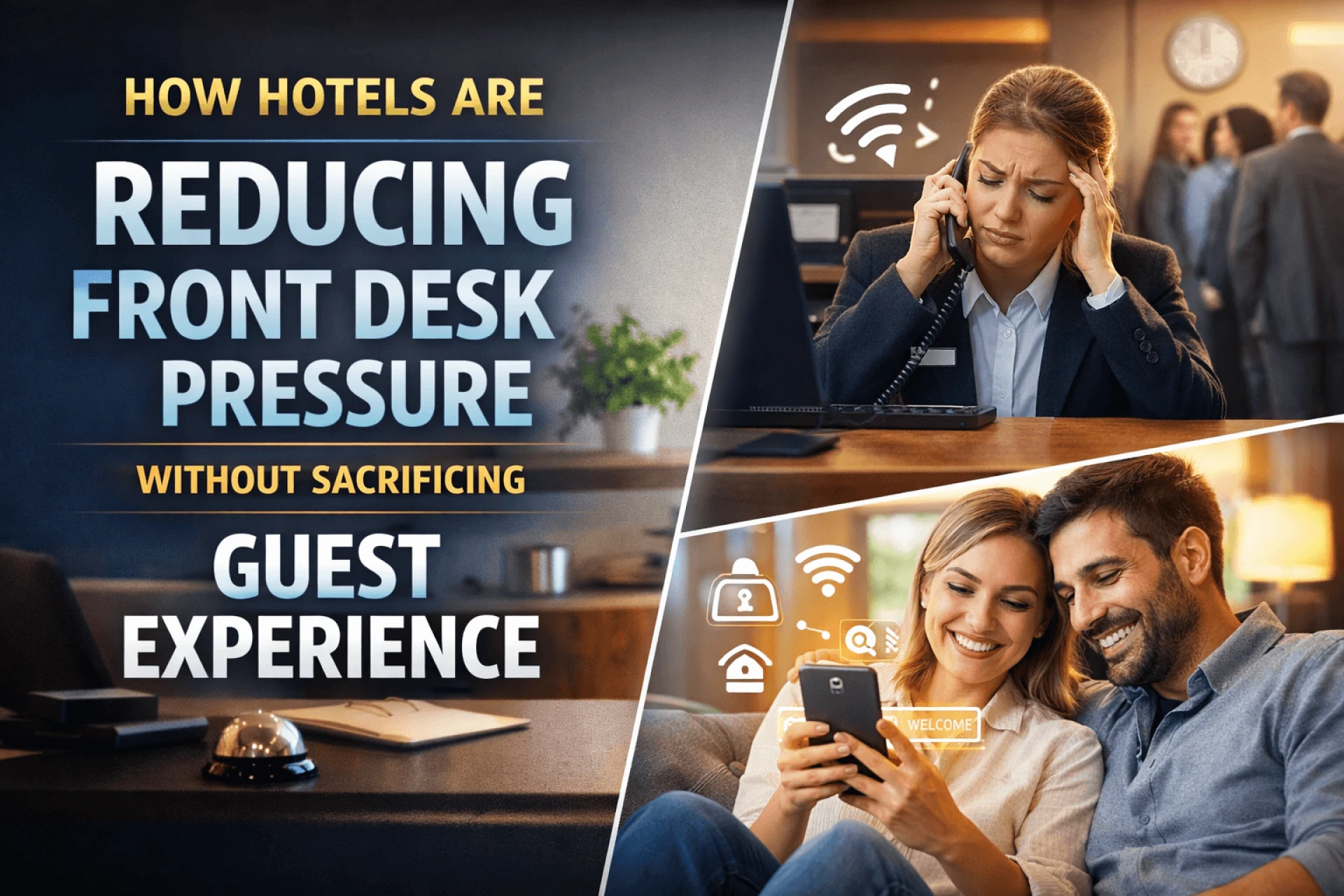

The hotel front desk has always been the heart of guest service. It’s where first impressions are formed, questions are answered, and problems are solved. But today, front desk teams are under more pressure than ever.
Staffing shortages, rising guest expectations, and constant interruptions have made it harder for hotels to deliver smooth service using traditional methods alone. At the same time, guests expect faster responses, clearer information, and more control over their stay.
The good news is that many hotels are finding ways to reduce front desk workload without compromising the guest experience. In fact, some are improving it.
Why Front Desk Pressure Has Increased
Modern hotels are handling far more than check-ins and check-outs. Front desk teams now manage guest communication, service requests, local recommendations, complaints, and administrative tasks—often all at once.
Much of this work is repetitive. Questions about Wi-Fi, breakfast times, parking, late check-out, or hotel policies come up again and again. While these interactions matter, they don’t always require a face-to-face conversation.
When everything funnels through the front desk, queues grow, phones ring nonstop, and staff are forced to multitask constantly. Over time, this leads to slower response times, stressed employees, and frustrated guests.
As the saying goes, something has to give.
Guest Expectations in a Digital-First World
Guest behavior has changed, even if hotel operations haven’t always kept pace.
Most guests are comfortable using their phones to:
- Access information instantly
- Message instead of calling
- Handle simple tasks on their own
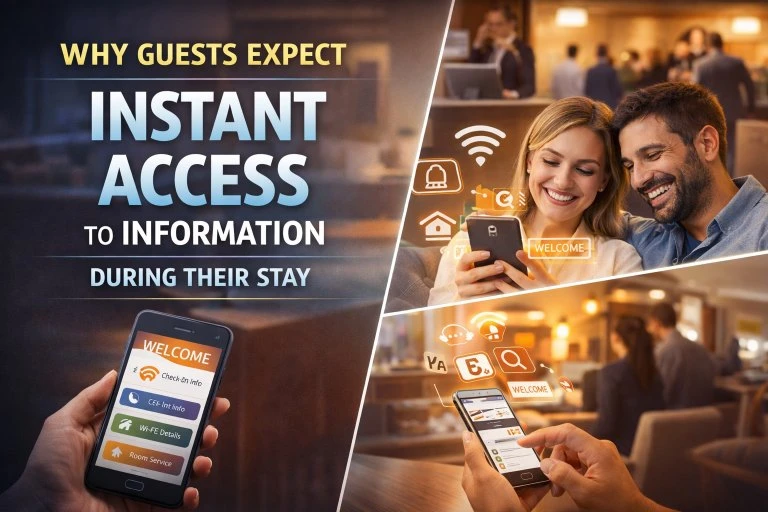
Outside of hotels, people rarely wait in line to ask basic questions. They expect self-service options that are quick and intuitive. When hotels rely only on the front desk for every interaction, the experience can feel outdated.
This doesn’t mean guests want less personal service. It means they want convenient guest communication and easy access to information, while still knowing help is available when needed.
Reducing Front Desk Load Through Better Information Access
One of the most effective ways hotels reduce front desk pressure is by improving how guest information is shared.
When guests can easily find:
- Check-in and check-out details
- House rules and amenities
- Local recommendations
- Service request instructions
they don’t need to ask staff for every detail.
Many hotels now use digital guest information systems or browser-based guest apps to centralize this content. Guests access what they need from their own devices, without downloading anything.
This approach supports both guest experience and operational efficiency. Staff spend less time answering routine questions, and guests feel more informed and independent.
Proactive Communication Prevents Problems Before They Start
Another major shift is moving from reactive service to proactive guest engagement.
Instead of waiting for guests to encounter confusion or frustration, hotels are sharing helpful information earlier in the guest journey. Pre-arrival messages, digital welcome guides, and clear instructions reduce uncertainty and build confidence.
For example:
- Explaining parking options before arrival
- Sharing how to request services digitally
- Highlighting key amenities upfront
When expectations are clear, guests ask fewer questions and issues are resolved faster. As the idiom goes, it’s better to head things off at the pass.
Giving Guests Flexible Ways to Communicate
Not every guest wants to walk to the front desk or make a phone call. Some prefer messaging. Others want to browse quietly.
Hotels that offer multiple communication channels—especially digital guest messaging tools—spread demand more evenly and reduce peak-time congestion at the desk.
This flexibility doesn’t eliminate human interaction. It enhances it. When simple requests are handled digitally, staff have more time to focus on meaningful, high-value guest interactions.
Supporting Staff While Improving Guest Satisfaction
Reducing front desk pressure isn’t about replacing staff. It’s about supporting them.
When teams are freed from constant interruptions, they can:
- Respond more thoughtfully to guest needs
- Handle complex situations with care
- Deliver warmer, more personalized service
This leads to better guest satisfaction and healthier work environments. In an industry where burnout and turnover are common, operational improvements that support staff are invaluable.
Happy teams create better guest experiences. It’s a win-win situation.
Why No-Download Guest Apps Matter
Many hotels have learned that asking guests to download an app—especially for short stays—creates friction.
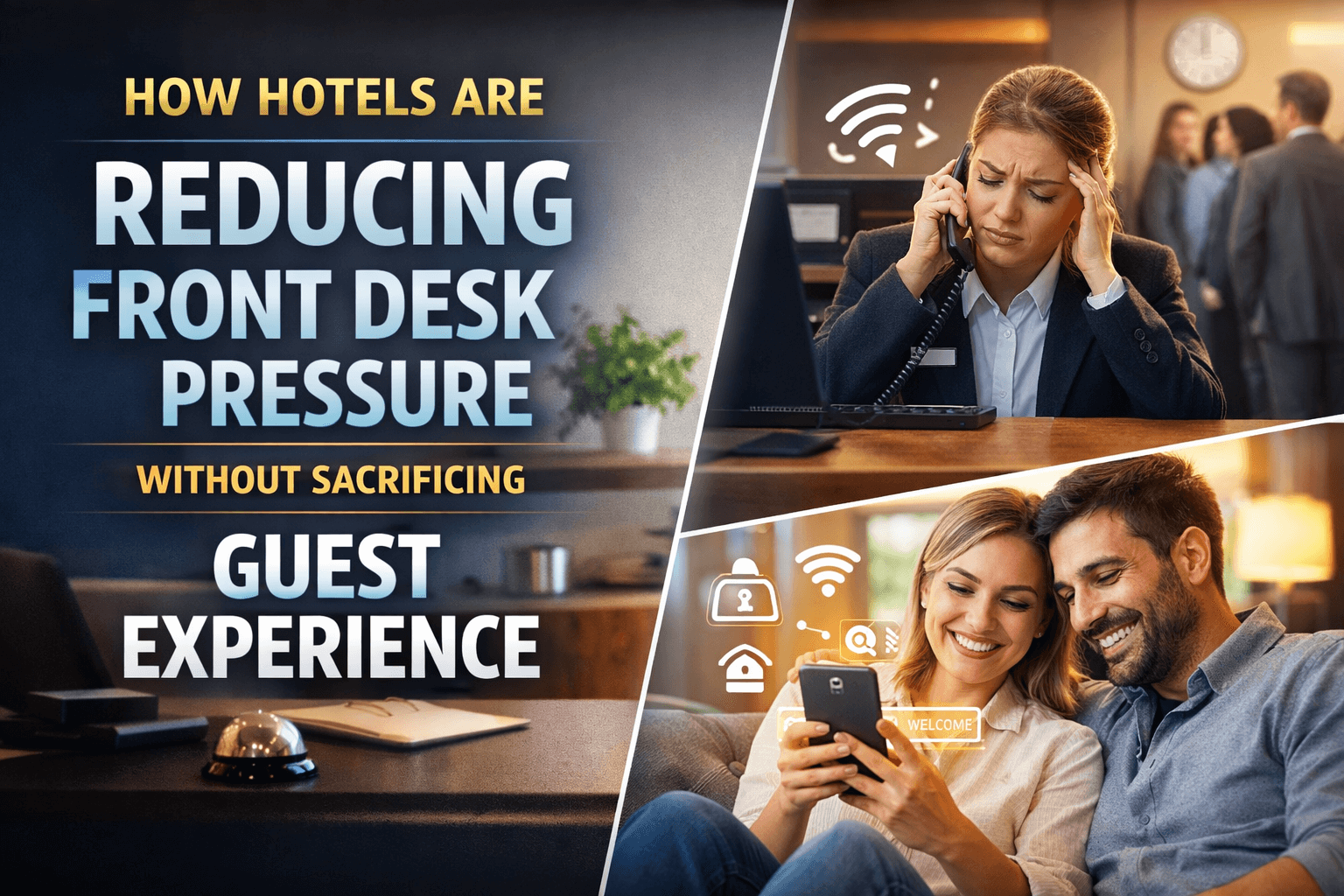
Guests are unlikely to install a new app just to check hotel information or request towels. Guest apps without installation, accessed through a browser or QR code, remove this barrier entirely.
These tools feel familiar and effortless. Guests tap a link, get what they need, and move on. Simplicity drives adoption, and adoption drives results.
A Practical Example from Hospitality Operations
Some hotels use browser-based guest platforms like Frictionless Guest App to manage guest communication, service requests, and stay information in one place.
The real value isn’t the technology itself, but the operational approach behind it. Centralizing guest interactions reduces front desk interruptions while keeping service accessible and responsive.
It’s about working smarter, not harder.
Creating Better Experiences Through Simpler Processes
At its core, reducing front desk pressure comes down to simplifying the guest journey.
Clear communication, accessible information, and intuitive guest experience software all contribute to smoother operations. When guests know where to find answers, they feel more confident and in control of their stay.
When staff aren’t overwhelmed, they can focus on hospitality rather than damage control.
As the saying goes, less is more.
The Front Desk Is Evolving, Not Disappearing
The future of the hotel front desk isn’t about removing people or replacing service with screens. It’s about evolving the role.
Front desks are becoming calmer, more focused spaces where staff can deliver meaningful, high-quality interactions. Digital tools handle the routine. Humans handle what matters.
Hotels that embrace this balance aren’t sacrificing guest experience—they’re strengthening it.
By reducing unnecessary front desk pressure, hotels create better service, happier teams, and more memorable stays. And in hospitality, that’s what truly sets a property apart.






























Sign in to leave a comment.