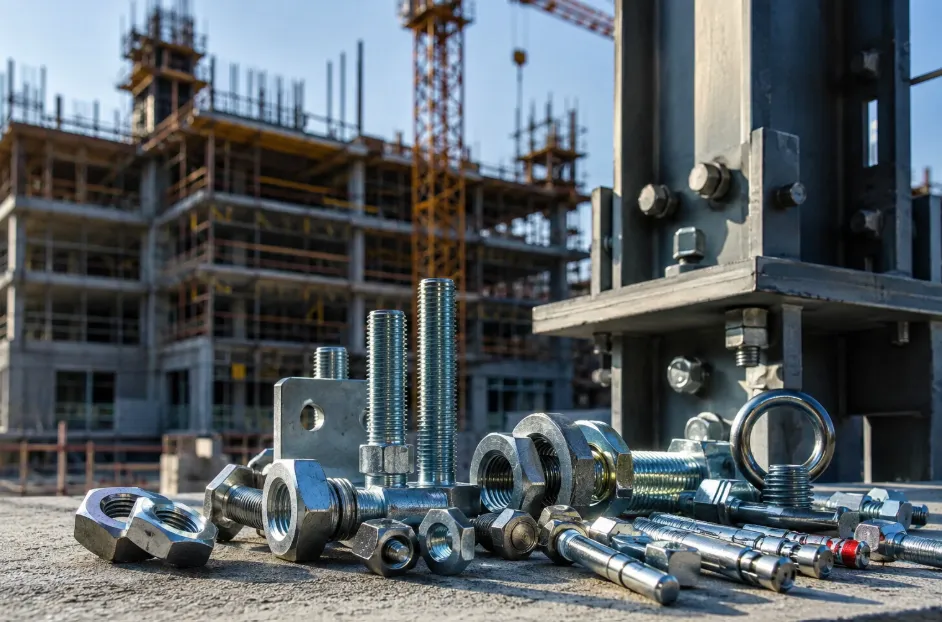
A steel frame rises above a busy construction site cranes lift heavy sections into position while engineers check drawings, measurements and load requirements. Yet the stability of that large structure often depends on components small enough to fit in one hand.
Bolts, anchors, nuts, washers, screws and threaded rods may not attract much attention once installation ends. However, each fastener performs a serious job. It holds materials together, transfers loads, controls movement, and helps the completed structure perform as designed.
This responsibility has become even more important in 2026. Construction projects now involve larger prefabricated sections, complex façades, rooftop solar systems, industrial equipment and shorter completion schedules. Every connection must perform correctly from the day of installation.
So, how do construction fasteners improve safety and strength across modern projects? The answer begins with understanding what these small components actually carry.
Small Components With a Serious Structural Role
Concrete, steel, timber, and masonry form the visible parts of a building. Fasteners connect these materials and allow them to work as one complete system.
A bolt in a steel connection may resist tension, shear, vibration, or a combination of forces. An anchor installed in concrete may support machinery, structural frames, railings, pipes, cable trays, or solar mounting systems. Screws used in roofing and cladding must hold materials securely while facing wind, rain, and temperature changes.
The fastener does not simply keep two parts together. It transfers force from one component to another.
Consider a steel bracket fixed to concrete. The bracket may support a pipe, façade element, platform or machine. When the connected component carries weight, the anchor transfers that load into the concrete. If engineers select and install the anchor correctly, the connection performs predictably. If they choose the wrong anchor the entire support arrangement may become unstable.
This is why fastener selection should never depend only on visual size. Two fasteners may look similar but carry different strength ratings, material properties, and installation requirements.
Connection Problems Can Spread Quickly
A weak connection rarely affects only one small area.
An undersized bolt may bend or stretch under load. A loose nut may allow movement between connected parts. An anchor installed too close to a concrete edge may contribute to cracking. Incorrectly tightened fasteners may also allow vibration to increase over time.
These problems can lead to
- Joint movement
- Misalignment
- Cracking around anchor points
- Damage to surrounding materials
- Loosening of mounted equipment
- Separation of connected parts
- Falling fixtures or components
Construction already carries significant safety risks The United States Bureau of Labour Statistics recorded 1,034 workplace deaths in private construction during 2024. Falls, slips and trips caused 389 of those deaths, which represented more than one third of construction fatalities. These figures do not suggest that fasteners caused those incidents. They show why every safety related component, connection, support and installation process deserves careful attention.
Secure railings, access platforms, suspended supports, façade elements, and mounted equipment all rely on dependable connections. A strong safety culture therefore includes the correct use of heavy duty fasteners, proper inspection and clear installation records.
The Right Fastener Starts With the Application
There is no universal fastener for every construction job.
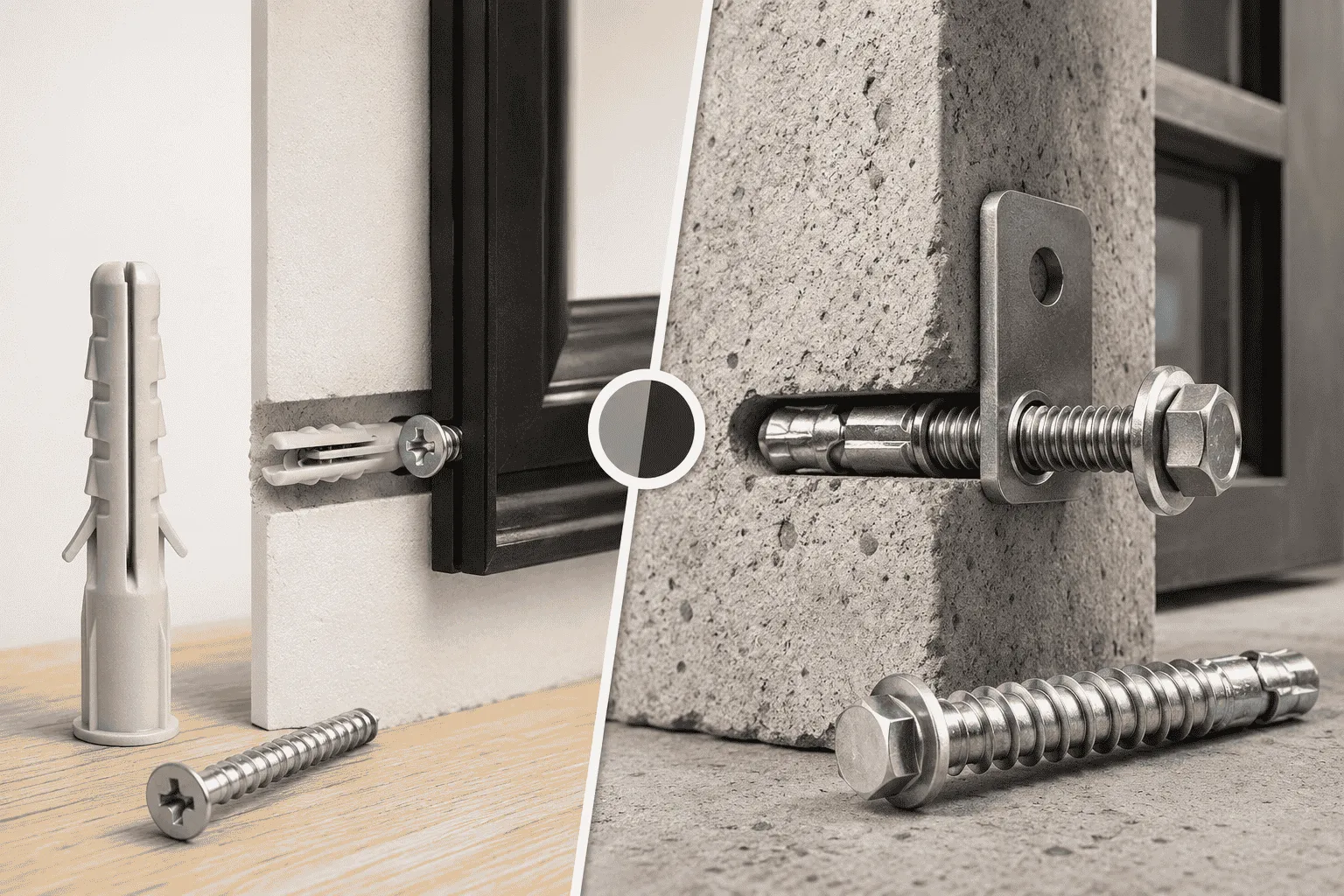
A fixing designed for solid concrete may not perform correctly in hollow blocks. A bolt suitable for an indoor steel connection may corrode quickly in a coastal location. A standard screw may not handle the vibration produced by industrial machinery.
Before selecting a fastener, engineers and site teams should consider four basic questions.
What material will receive the fastener?
What type of force will act on the connection?
What environmental conditions will the fastener face?
How long must the connection remain in service?
The answers guide the selection of mechanical anchors, chemical anchors, structural bolts, self drilling screws, threaded rods, frame fixings, and other industrial hardware solutions.
Base Material Changes Everything
Concrete, masonry, steel, timber, hollow blocks, and lightweight materials behave differently under load.
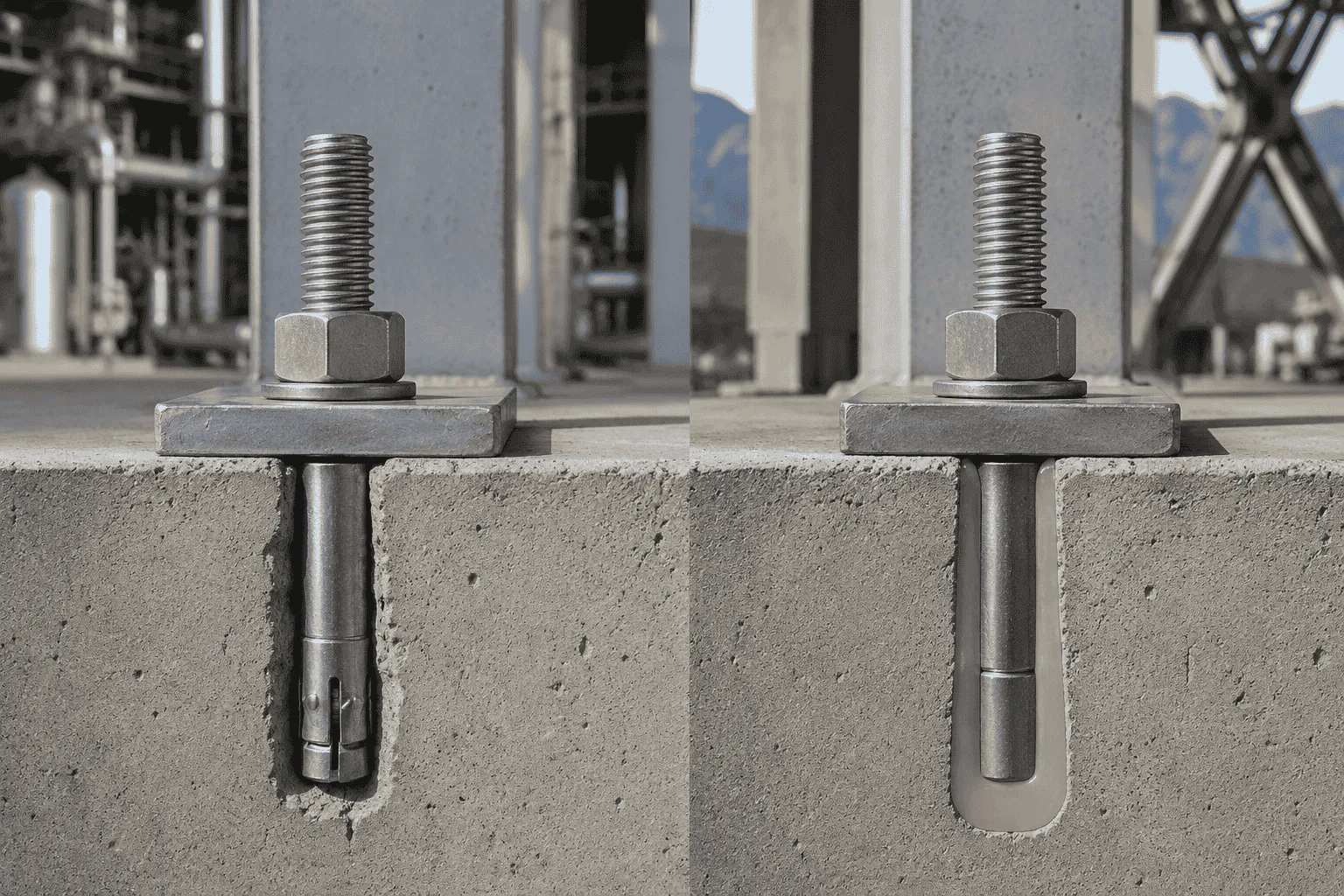
An expansion anchor creates force against the walls of a drilled hole. This can work effectively in suitable concrete, but it may not suit weak or hollow material. A chemical anchoring system bonds a threaded rod or reinforcing bar inside the drilled hole, making it useful for many demanding applications when engineers specify and install it correctly.
Steel connections may require high strength structural bolts, while roofing and cladding systems may use screws designed for thin metal sections. The fastener must match the material rather than forcing one product into every application.
Load Direction Matters Too
Fasteners may experience tension, shear, or combined loading.
Tension tries to pull the fastener out of the base material. Shear acts across the fastener and tries to move one connected part past another. Some connections also face vibration, repeated loading or impact.
A support fixed to a wall may carry both downward force and outward pull. A rooftop solar mounting system may experience uplift from wind as well as the permanent weight of the panels and structure Engineers must consider every important force instead of checking only the most visible load.
Bigger does not always mean safer. A larger anchor placed too close to an edge may create unwanted pressure in the concrete. Proper calculations, spacing, embedment depth and installation matter more than size alone.
Strength Grades Are Not Just Numbers
Fastener grade tells engineers and installers important information about mechanical performance.
The required grade depends on the connection design, expected load, fastener dimensions, and applicable standard. Mixing bolts, nuts and washers from incompatible systems can reduce connection reliability, even when each component appears strong on its own.
India has standards covering different types of threaded fasteners. The Bureau of Indian Standards lists IS 3757 as the specification for high strength structural bolts. This standard forms part of the wider framework used to identify products for demanding structural applications.
Project teams should confirm
- Bolt and anchor grade
- Diameter and length
- Thread dimensions
- Required embedment
- Nut and washer compatibility
- Hole size
- Edge distance
- Fastener spacing
- Material and protective coating
An experienced Industrial Fasteners Supplier in India can help buyers identify products that match the approved project specification. However, the structural designer and responsible engineer must make the final application decision.
Environmental Exposure Can Reduce Long Term Strength
A fastener may perform well during installation and still fail to deliver the expected service life if the environment attacks it.
Moisture, salt, chemicals, heat, and outdoor weather can gradually affect exposed metals. Corrosion may reduce the effective metal section, damage threads, weaken protective coatings, and make future inspection or removal difficult.
This concern becomes especially important in
- Coastal construction
- Water treatment facilities
- Chemical plants
- Rooftop solar projects
- External façades
- Bridges and transport structures
- Food processing units
- Humid industrial spaces
FHWA guidance on bridge preservation notes that salt, moisture, and debris can create harsh corrosion conditions around embedded anchor bolts and anchoring reinforcement. This shows why material selection, drainage, protection, inspection and maintenance must work together.
Stainless steel or specially coated fasteners may suit some exposed applications, but teams should not select them through assumptions. The environment, connected materials, coating compatibility, design life and applicable approval must guide the decision.
A rooftop solar installation offers a useful example. Its anchors and mounting fasteners face wind, rain, heat and repeated temperature changes. The system may remain in place for many years. Correct load assessment and corrosion resistance therefore matter as much as initial installation speed.
Installation Turns Design Into Real Performance
A well selected fastener can only achieve its intended performance when installers follow the correct process.
Small errors during drilling, cleaning, positioning, or tightening may reduce connection capacity. Common problems include incorrect hole diameter, shallow embedment, damaged threads, missing washers, excess tightening, insufficient tightening and dust left inside drilled holes.
Chemical anchors require additional care Installers must drill to the specified diameter and depth, clean the hole properly, dispense the resin correctly, insert the rod using the recommended method, and allow enough curing time before applying load.
What happens when a team skips hole cleaning to save a few minutes. Dust may remain between the resin and the base material which can affect bonding. The connection may look complete from the outside while failing to meet the intended installation condition.
The same principle applies to tightening. A torque value should not become a rough guess based on experience. Teams should follow the approved method, product instructions, and project requirements.
Why Controlled Bolt Tension Matters
Some structural connections need fully tensioned bolts.
When installers tighten these bolts using the correct procedure, they create controlled tension in the fastener. This helps clamp the connected steel parts together and supports the intended behaviour of the joint.
AISC guidance explains that fully tensioned bolts may be required in slip critical connections exposed to vibration or fatigue loading The installed tension and thread friction also help resist loosening.
This matters in connections involving moving machinery, repeated loads, bridge components, industrial platforms, and other applications where movement can develop over time.
Installers should never assume that every bolt requires the same tightening process. Some connections rely on snug tightening, while others require pretensioning or a specified installation method. The drawing, engineering specification, and approved procedure should clearly state the requirement.
Inspection Makes Quality Visible
Once a fastener disappears behind cladding, equipment, concrete work, or finishing material, correcting a mistake becomes difficult and expensive.
Inspection allows teams to identify problems before loading or covering the connection.
A practical inspection process may include
- Checking product markings and dimensions
- Confirming batch details
- Reviewing test certificates
- Verifying hole depth and diameter
- Checking embedment
- Confirming installation torque
- Recording chemical anchor curing time
- Inspecting exposed fasteners for damage
- Conducting pull out or proof tests where specified
Structural bolting standards recognise that connection reliability involves design, installation and inspection. Product quality alone cannot guarantee performance when the installation process remains uncontrolled.
Imagine a steel support frame prepared for heavy industrial equipment. During inspection, the site team discovers that several anchor holes do not reach the specified depth. Correcting the issue before equipment placement may cause a brief delay. Finding it after installation could require dismantling, lifting equipment again and repeating part of the work.
Early inspection protects safety, time, and project cost.
Reliable Sourcing Supports Reliable Construction
Fasteners often arrive on site in large quantities. Different grades, sizes, coatings, and product types may look almost identical once removed from their labelled packaging.
That creates a serious procurement and storage challenge.
Traceable products help teams confirm what they ordered, received, and installed. Markings, batch records, certificates, and original documentation become especially valuable for safety critical connections.
A dependable Industrial Fasteners Supplier in India should support buyers with more than product availability. The supplier should help with product identification, compatible accessories, technical documents, batch consistency, and access to suitable industrial hardware solutions.
Procurement teams should also avoid judging critical fasteners only by unit price. A cheaper product can become costly if it creates rework, installation delays, premature corrosion, replacement needs or uncertainty about compliance.
The better question is not “Which fastener costs the least?”
It is, “Which approved fastener reduces the total project risk?”
Practical Checks for Safer Connections
Before approving or installing construction fasteners, project teams should
- Confirm the base material.
- Identify tension, shear, vibration, and combined loads.
- Check the approved grade, diameter, and length.
- Verify edge distances and spacing.
- Use compatible bolts, nuts and washers.
- Consider moisture, chemicals, heat and outdoor exposure.
- Follow the approved drilling method.
- Clean anchor holes correctly.
- Apply the specified tightening procedure.
- Respect resin curing times.
- Inspect critical connections before loading.
- Maintain batch and installation records.
- Include exposed fasteners in maintenance checks.
- Source critical products through a reliable Industrial Fasteners Supplier in India.
These steps are simple but together they create a more controlled and dependable connection process.
Stronger Projects Begin at the Connection
Modern construction relies on advanced design, strong materials, skilled labour and accurate project management. Yet none of these elements can work as intended when the connections between them remain weak.
The right heavy duty fasteners support safe load transfer, control movement, secure structural and service components and improve long term reliability. Correct installation then turns the design into actual site performance. Inspection confirms that the team completed the work properly, while traceable sourcing reduces uncertainty.
This makes fastener selection part of risk management, not routine purchasing.
Every bolt, anchor, screw, nut and washer has a defined role. When project teams understand that role, they make better choices about materials, grades, coatings, installation methods, and maintenance.
A building may contain thousands of individual connections. Some remain visible, while others disappear behind walls, equipment, roofs, and façades. Each one contributes to the finished project.
When so much structural strength depends on these connections, can any industrial fastener truly be considered a minor component?























Sign in to leave a comment.