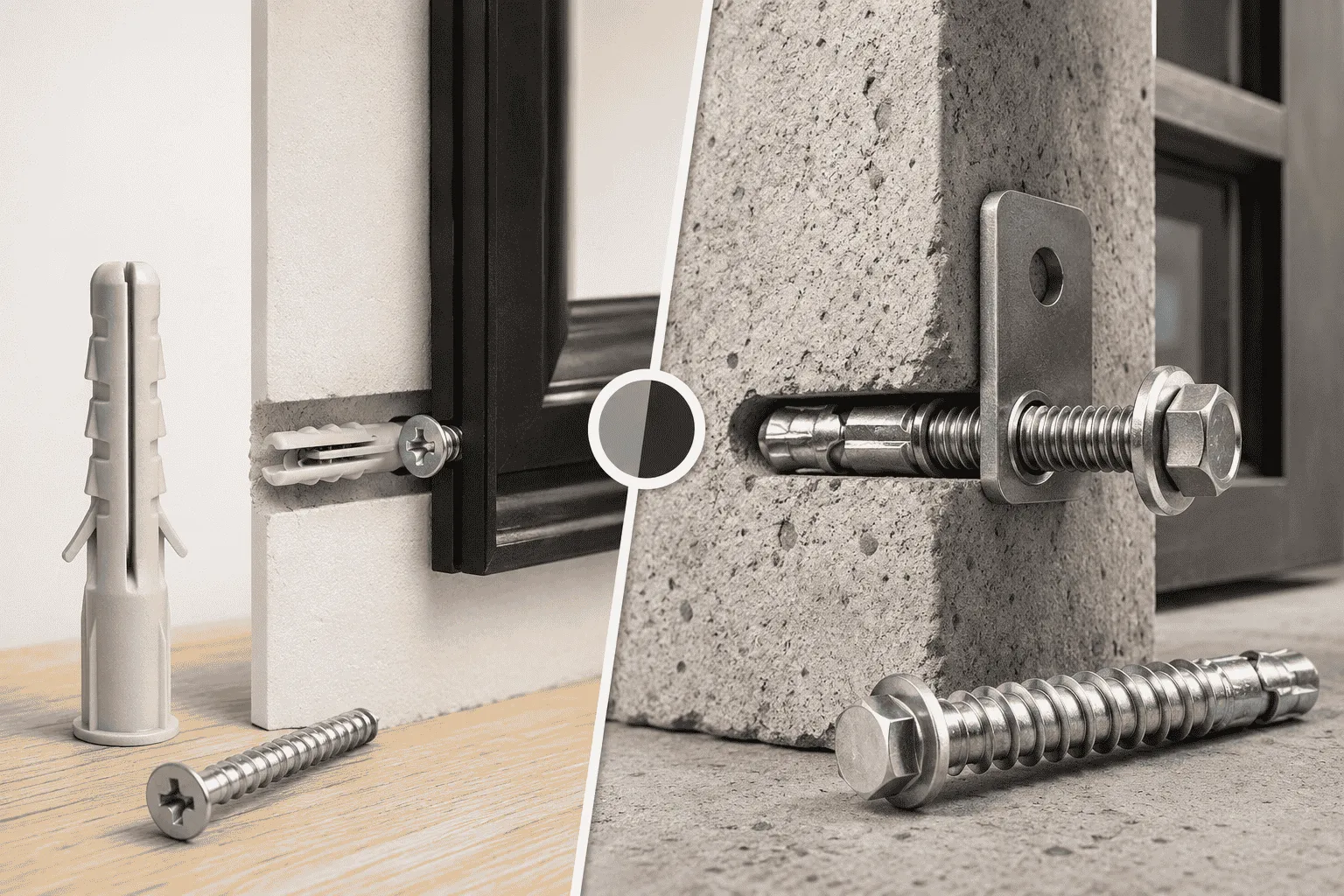

Construction projects often come down to a series of small decisions that have a big impact. One of those decisions involves choosing the right fastening system.
Imagine! You are installing window frames in a commercial building. The frames need to stay secure for years despite weather changes, vibrations, and daily use. Now, picture a different scenario where steel brackets, cable trays, or mechanical supports need to be fixed directly into concrete, at first, both tasks seem similar because they involve anchoring. But reality is different, they require very different solutions.
This is where many professionals encounter a common question. Should you use a nylon frame fixing plug or opt for concrete anchor screws designed for higher loads?
As construction methods are evolving to date, the focus has shifted from simply securing components to ensuring long term performance, safety, and efficiency. The choice between frame fixing, SXR, and hammerset anchor EA II is a perfect example of how selecting the right anchor can influence the success of an entire installation.
Understanding when and where each solution works best can help contractors, engineers, and installers make smarter decisions while reducing installation risks and future maintenance concerns.
Why Fastener Selection Matters More Than Ever
Fasteners may represent a small portion of a project’s overall cost, but they play a critical role in structural performance, a poorly selected anchor can lead to loosening, movement, or even premature failure.
This importance becomes even clearer when we compare the scale of today’s construction industry with the past. According to Oxford Economics, the global construction industry is expected to reach approximately $15.5 trillion by 2030 As infrastructure projects continue to grow worldwide, demand for reliable fastening systems continues to rise.
At the same time, concrete remains the world’s most widely used construction material, the World Cement Association has estimated an annual consumption of around 30 billion tonnes. This means millions of anchors are installed every day across residential, commercial, industrial, and infrastructure projects.
The challenge is not finding an anchor. The challenge is finding the right anchor.
This brings us to two popular solutions that serve different purposes: the frame fixing sxr and the hammerset anchor ea ii.
Understanding the Frame Fixing SXR System
When versatility is a priority, the frame fixing SXR often becomes the preferred choice.
Designed as part of the broader Fischer frame fixing system, this anchor combines a high quality screw with a specially engineered nylon frame fixing plug. Together, they create a secure expansion fixing suitable for a wide variety of building materials.
What makes this system particularly useful is its ability to perform in both solid and hollow substrates, Whether the installation involves concrete, brick, hollow block, or aerated concrete, the anchor adapts to the material through its expansion mechanism.
Instead of placing excessive pressure on the substrate, the nylon body expands evenly as the screw tightens. This creates a reliable connection while minimising stress on surrounding materials.
Why is this important?
Different substrates react differently to expansion forces. A solution that works perfectly in solid concrete may not perform well in hollow masonry The flexibility of a nylon frame fixing plug helps address this challenge.
Another advantage comes from the material itself. Nylon resists corrosion and does not suffer from rust related issues that can affect certain metal components over time This makes the system particularly attractive for applications where durability and adaptability are required.
The result is a fastening solution that balances strength, flexibility, and ease of installation.
Where Frame Fixing SXR Delivers the Best Results
Every fastening solution has a purpose. The real value comes from understanding where it performs best.
The frame fixing SXR excels in applications involving frame installations and medium duty fastening requirements.
Common uses include
- Window frames
- Door frames
- Timber battens
- Façade substructures
- Lightweight brackets
- Interior and exterior fittings
Consider a window installation project. The anchor must securely hold the frame while accommodating slight building movements and varying substrate conditions. In this scenario, the flexibility of the fischer frame fixing system provides a significant advantage.
Similarly, when working with hollow bricks or mixed construction materials, installers often benefit from the adaptability offered by a nylon frame fixing plug.
Of course, no anchor is suitable for every application.
Although the frame fixing sxr performs exceptionally well in many situations, it is not intended for heavy structural loads that require maximum pull out resistance in concrete. For those applications, another solution becomes more appropriate.
That brings us to the hammerset anchor EA II.
What Makes the Hammerset Anchor EA II Different
While the frame fixing sxr focuses on versatility, the hammerset anchor ea ii focuses on strength and efficiency in concrete.
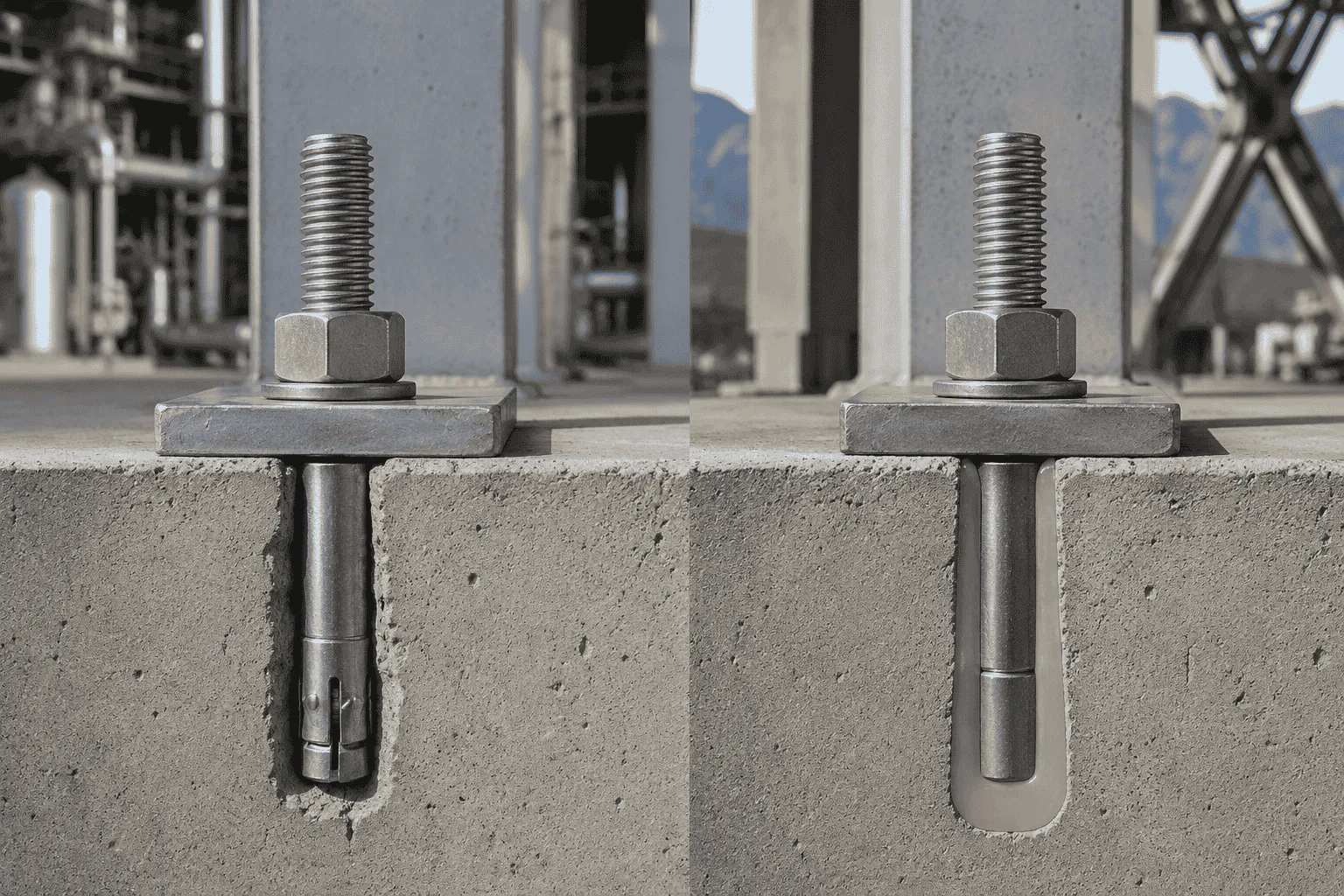
This anchor operates through a mechanical expansion principle designed specifically for concrete applications. Once inserted into the drilled hole, the expansion mechanism creates a secure connection capable of handling demanding loads.
Unlike a nylon frame fixing plug, which relies on expansion within various substrates, the hammerset anchor EA II is optimised for concrete performance.
Why does this distinction matter?
Concrete structures often support heavier loads and experience higher stress levels than standard frame installations. Mechanical supports, cable trays, suspended systems, and industrial equipment require anchors capable of maintaining reliable performance over time.
The American Concrete Institute emphasises that anchor performance depends heavily on factors such as embedment depth, concrete strength, installation quality, and edge distance. This highlights why anchor selection should always align with the specific application.
The hammerset anchor ea ii addresses these requirements by providing a dependable fixing solution where concrete serves as the primary substrate.
Its installation process is also straightforward, making it attractive for projects where speed and consistency matter.
Real World Applications for the Hammerset Anchor EA II
When concrete becomes the primary base material, the hammerset anchor ea ii often stands out as the logical choice.
You will commonly find it in
- Pipe support systems
- Cable tray installations
- Mechanical equipment mounting
- Industrial support structures
- Steel brackets
- Service installations
Imagine a large industrial facility where hundreds of cable trays need to be secured overhead. Each fixing point must withstand vibration, weight, and long term operational demands.
Would a standard frame fixing solution provide the same level of confidence?
In most cases, the answer is no.
This is where concrete anchor screws and hammer set anchors demonstrate their value. They offer the load bearing performance required for applications where safety and reliability cannot be compromised.
The result is a fastening system designed to perform consistently in demanding environments.
Nylon Plugs vs. Concrete Anchor Screws
Now comes the practical question.
How do you decide between a nylon frame fixing plug and concrete anchor screws?
The answer starts with understanding the project requirements.
Installation Speed
Both systems offer relatively quick installation.
The frame fixing SXR simplifies installations across multiple substrate types, reducing the need for different anchor solutions on site.
The hammerset anchor ea ii, on the other hand, provides fast installation in concrete while maintaining strong load performance.
Substrate Compatibility
The frame fixing SXR offers greater versatility.
It works effectively in
- Concrete
- Solid brick
- Hollow brick
- Aerated concrete
- Natural stone
The hammerset anchor ea ii performs best when installed in concrete, where its design can deliver maximum effectiveness.
Load Requirements
This is often the deciding factor.
For frame installations and medium duty applications, the frame fixing sxr provides excellent performance.
For heavier supports, mechanical systems, and demanding concrete applications, the hammerset anchor ea ii offers greater confidence.
Long Term Performance
Both systems deliver durability when used correctly.
The key difference lies in matching the anchor to the application. An anchor selected according to load requirements and substrate conditions will almost always outperform an anchor chosen based solely on convenience or price.
This is why professional installers begin with project requirements rather than product preferences.
How Professionals Choose the Right Fixing System
Experienced contractors rarely start by asking which anchor is better.
Instead, they ask several important questions.
What material am I fixing into?
How much load will the anchor carry?
Will vibration affect the installation?
Is the environment exposed to moisture or weather conditions?
How long must the installation last?
These questions guide the selection process.
Industry organisations such as the European Organisation for Technical Assessment require extensive testing before anchors receive technical approvals. Load capacity, crack performance, durability, and environmental resistance are all evaluated.
This testing ensures that approved fastening systems perform reliably under real world conditions.
Professionals understand that successful installations come from matching product capabilities to project demands.
A frame installation requires one approach.
An industrial concrete support system requires another.
Recognising this difference often determines the long term success of the installation.
Looking Ahead at Construction Fastening Trends
The construction industry continues to evolve.
The International Energy Agency projects significant growth in global building floor area through 2050. As new buildings, renewable energy projects, and infrastructure developments emerge, fastening technology will continue to advance.
Manufacturers are investing in solutions that improve installation speed, increase performance, and simplify compliance with modern construction standards.
This trend means that choosing between systems like the frame fixing SXR and the hammerset anchor EA II will become increasingly application driven rather than product driven.
The focus will remain on achieving the right balance between efficiency, safety, and long term reliability.
Key Takeaways
- Use frame fixing sxr when working with frames, masonry, and mixed substrate conditions.
- Choose the hammerset anchor EA II for concrete focused applications that demand higher load performance.
- Consider substrate type before selecting any fastening solution.
- Match anchor capacity to actual project requirements.
- Use a nylon frame fixing plug where flexibility and substrate adaptability are important.
- Select concrete anchor screws and hammer set anchors for demanding concrete installations.
- Follow approved installation procedures to achieve optimum performance.
- Think beyond installation day and consider long term durability.
Final Thoughts
The best fastening solution is not necessarily the strongest one. It is the one that matches the demands of the project.
The frame fixing, SXR, and hammerset anchor EA II were designed to solve different challenges. One offers flexibility across a wide range of substrates and frame applications. The other provides dependable performance in concrete environments where higher loads and greater structural demands exist.
Understanding these differences allows you to make informed decisions, improve installation quality, and reduce long term risks.
The next time you evaluate an anchoring requirement, pause for a moment and ask a simple question.
Does the fixing system match the job it is expected to perform?
The answer to that question often determines the reliability of the entire installation.







![The Benefits of Using a CNC Touch Probe [Infographic]](https://writeupcafe.com/data/post/1677697/bfdf3e040e67936848aa232d2dfe3d03.jpg.webp)










Sign in to leave a comment.