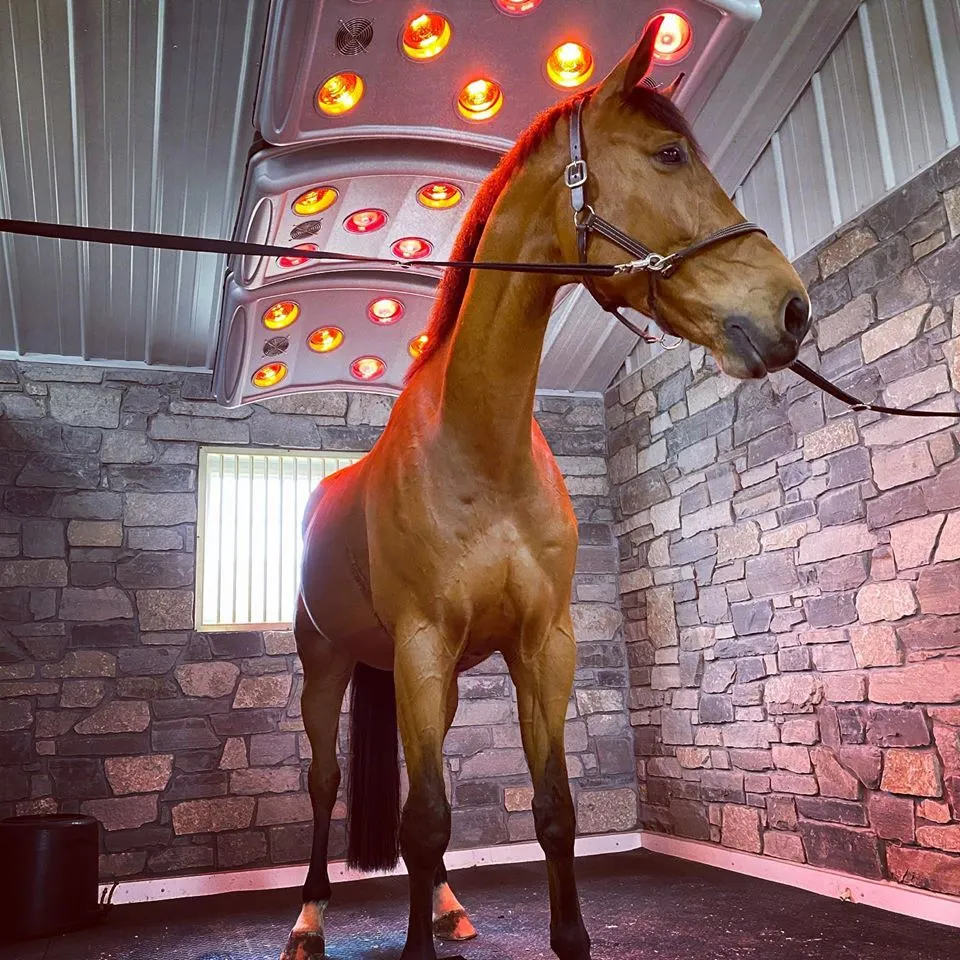

Preparing a horse for exercise involves more than adjusting tack and beginning with a slow walk. Whether the goal is daily conditioning, competition, or rehabilitation, thoughtful preparation and recovery routines help support overall comfort and performance. Infrared light therapy for horses has become an increasingly common addition to equine management by providing controlled warmth before exercise and practical support after training or bathing. Alongside established practices such as gradual warm-ups and cool-downs, infrared systems offer another way to support everyday horse care. Could structured infrared sessions become a practical part of everyday horse care?
Understanding Infrared Heat in Equine Care
Infrared lamps emit radiant heat that reaches the horse's coat and warms the tissues beneath the skin. Unlike ordinary room heating, which mainly raises the temperature of the surrounding air, infrared energy directs warmth toward the body. This makes it suitable for controlled applications before exercise and during post-training care.
The Q-Line MaXuSS 230 equine solarium uses multiple infrared lamps positioned within a contoured three-piece body. As a Horse drying and muscle recovery solarium, its shape follows the natural line of the horse's back, allowing heat to reach major muscle groups more evenly. Its front and rear sections can also be angled to direct warmth toward selected muscles, tendons, and tissues.
Supporting a Structured Warm-Up
A warm-up prepares the horse's body for the mechanical demands of exercise. Walking and controlled movement remain central to this process, but directed heat can serve as a useful preparation step. Infrared light therapy for horses may promote local circulation and help muscles relax before ridden work, groundwork, or training begins.
Warm muscles generally move more comfortably than cold, tense muscles. When infrared warmth is applied before exercise, it can help create a smoother transition from standing in the stable to active movement. This may be particularly useful during colder weather, after transport, or when a horse has been inactive for an extended period.
The process should not replace an active warm-up. A horse still requires gradual movement to prepare joints, connective tissues, respiration, and coordination. Instead, a solarium can serve as the first stage of a broader routine that includes infrared heat, walking, stretching, and progressive exercise.
Supporting Everyday Stable Management
Beyond exercise preparation, equine solariums can become part of routine stable operations. Many facilities incorporate infrared sessions before grooming, after transport, or after bathing to help maintain a comfortable body temperature and encourage horses to relax. This flexibility allows a single system to support multiple daily care activities in training barns, rehabilitation facilities, breeding operations, and private stables.
Targeting Important Muscle Groups
A horse's back, neck, hindquarters, and surrounding tissues play important roles in balance and movement. The contoured construction of the solarium helps position the lamps above these areas while reducing the likelihood of contact between the horse and the heating elements.
Adjustable front and rear sections provide further control over heat direction. This allows stable staff, trainers, or rehabilitation professionals to adapt the positioning according to the horse's size and care routine. Directed warmth may be useful when a particular region requires additional attention, although any injury-related application should follow veterinary guidance.
The system uses ten 100-watt infrared bulbs, twelve 150-watt infrared bulbs, and two 250-watt infrared bulbs. This arrangement distributes infrared energy across the length of the unit rather than concentrating warmth in one small area. Six integrated air blowers operate automatically during use, providing consistent airflow to support coat drying and help maintain a comfortable environment throughout each session.
Promoting Relaxation After Exercise
Exercise creates repeated muscular contractions and places controlled stress on the body. Following training, horses require an appropriate cool-down to allow breathing, circulation, and body temperature to gradually return to resting levels.
A solarium session can be introduced after the active cool-down. Directed heat may help maintain comfortable warmth while the horse stands quietly, supporting muscle relaxation after demanding work. The calm environment beneath the solarium may also encourage the horse to settle during grooming or other post-exercise care.
Infrared treatment should remain part of a complete recovery routine. Walking, hydration, veterinary assessment, nutrition, suitable rest, and careful monitoring remain essential. Solarium use does not correct an injury or replace professional treatment, but it can complement an established conditioning or rehabilitation program.
Shortening Drying Time After Washing
A wet coat can take considerable time to dry, especially during cold or humid conditions. Leaving a horse damp may also make temperature management more difficult after training or bathing. The infrared lamps provide warmth, while the integrated air blowers circulate air across the coat to support more efficient drying.
Installing the system in a grooming or wash area allows drying and post-exercise care to take place in the same location. This can reduce the need to move a wet horse between different areas of the facility. Faster, controlled drying may also help stable teams manage several horses more efficiently during busy training schedules.
The solarium has an IP54 rating and a casing made from heat-resistant, impact-proof plastic designed for demanding equine environments.
Rounded edges contribute to safer operation around horses, while the durable construction helps withstand routine exposure to dust, moisture, and everyday stable activity. The insulated housing is also designed to efficiently use generated heat, supporting energy-conscious operation during routine use.
Adapting the System to the Facility
The unit can be installed as a stand-alone solarium with a CUL 508A-listed control box or combined with an electric lift. The lift allows the equipment height to be adjusted for different horses and applications.
A ceiling height of approximately nine feet is recommended for installation without the lift. Facilities that use the electric lift generally require a ceiling height between 11 and 13 feet. The unit measures 94 by 51 by 17 inches, weighs 157 pounds, and requires a 230-volt, 16-amp electrical supply with a 3,500-watt power rating.
Optional additions include two ultraviolet lamps controlled by a separate timer and nine programmable RGB LED therapy lights. These configurations should be selected according to facility requirements, professional guidance, and the intended care program.
Conclusion
Infrared heat can provide a measured and practical addition to equine warm-up, grooming, drying, and post-exercise routines. The contoured structure, adjustable sections, multiple infrared lamps, automatic air blowers, and energy-efficient insulated housing distribute warmth across key muscle groups while supporting consistent drying performance. A Horse drying and muscle recovery solarium works best when combined with gradual exercise, active cooling, veterinary oversight, hydration, nutrition, and appropriate rest.
When used responsibly, the system can support consistent preparation and recovery practices without replacing the fundamental elements of horse care.
Explore advanced equine solarium solutions designed to support controlled warm-up, efficient coat drying, muscle relaxation, and structured post-exercise recovery routines.



















Sign in to leave a comment.