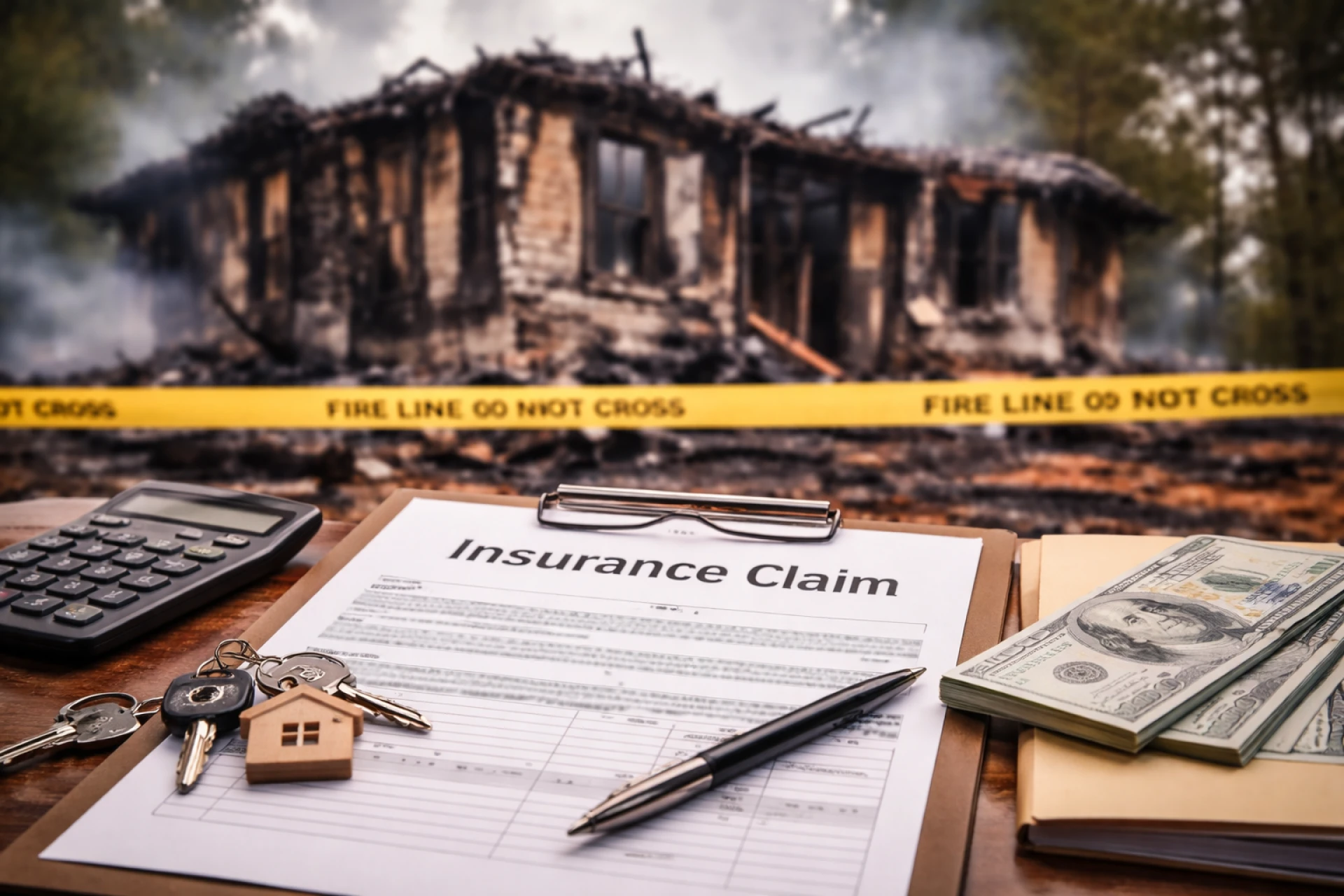

Introduction
Understanding how insurance works when your home burns down is not something most people think about until they are standing on the front lawn watching it happen. And that’s unfortunately the worst time.
Whether it is a wiring fault, a kitchen accident, or something out of control like wildfire…fires happen. Home insurance is meant to protect you in situations like this. But the process is not always as simple as filing a claim and receiving a payout, which is why many homeowners eventually work with a Construction Project Management Company during the rebuilding phase.
This guide will help you understand how fire insurance works, what it covers, and the process to claim the payouts.
How Fire Insurance Works When Your Home Burns Down
Your home is probably the biggest investment you will ever make. You spend years paying EMIs, maintaining it, and making it feel like yours. And then one day, a fire changes everything in a matter of hours. That’s when you call your agent to activate your homeowners' insurance policy.
Most home insurance policies cover three major things after a fire:
- the structure of the house
- the belongings inside the house
- the cost of living somewhere else while repairs happen
Here are a few coverages that you can activate based on your situation:
Dwelling Coverage
Dwelling coverage protects the structure of your home. So, if your walls, floor or any built-in parts are damaged by fire, this coverage helps you repair or rebuild those parts. It may also cover attached structures such as garages, decks, balconies, or porches
Personal property coverage
A house fire rarely damages just the structure. Furniture, electronics, clothing, appliances, and other personal belongings are often destroyed as well. That’s when personal property coverage comes into play. It helps pay for personal items like clothing, TV, laptops, and other electronics while you prepare for rebuilding with Residential Construction Project Management.
Additional Living Expenses (ALE)
After a major fire, you may not be able to live in your home for weeks or even months till the repairs are completed. Now, where will you live? How will you survive till then? This is where Additional Living Expenses (ALE) coverage helps.
ALE usually pays for temporary living costs such as: hotel stays, restaurant meals, temporary rental costs, transport costs, or laundry services. You need to keep the receipts to get reimbursement.
Liability coverage
Sometimes a fire does not stay limited to one home. It may spread to the garage, fence, or other property nearby. If the neighbour claims that the fire started because of something on your property, they may hold you responsible for the damage.
That’s when you activate the liability coverage. It helps pay for the damage caused to someone else’s property.
Types of Fire Insurance & Policy Structure
Home insurance policies are not all structured the same way. Every policy type has a different set of coverage & exclusions. The following are the types of fire insurance policies for homeowners:
Standard Homeowners Policy (HO-3)
This is the most common type of fire insurance for homeowners. It covers fire protection for your home and other structures on an open-peril basis. This means everything is covered unless it is specifically excluded. However, personal belongings inside the home are usually covered on a named-perils basis, which includes: explosions, theft, vandalism, volcanic eruptions, riots, etc.
Best for: single-family homes, townhouses, or owner-occupied houses.
Comprehensive Fire Insurance (HO-5)
Unlike the HO-3 policy, the HO-5 policy offers wide coverage for protection against dwelling and personal property on an open-peril basis. You will get the complete replacement cost of your damaged items.
For example, if a fire destroys your sofa, art piece and TV, the insurer pays the cost to buy new ones of similar quality, not the depreciated value. Because of this wider protection, HO-5 policies are usually more expensive.
Best for: Families with valuable items and high-value homes wanting max protection.
Floating Policy
A floating policy is used when property or goods are stored in multiple locations but insured under one policy. This is mostly used by businessmen. However, it can apply to property owners with assets in different places. For instance, property investors, landlords, or short-term rental hosts like Airbnb owners.
The main advantage of a floating policy is flexibility, as coverage automatically applies wherever the insured property is located within the policy terms.
Actual Cash Value (ACV) Policy.
According to ACV policy, you get the payouts based on the current market value of the damaged item at the time of loss. Let’s understand this better with a simple example. Suppose, you bought a sofa for ₹40,000 five years ago. Due to wear and tear, its current value is ₹15,000.
If a fire destroys it, the insurance will pay ₹15,000, not the original price.
Replacement Cost Value (RCV) Policy
A Replacement Cost Value (RCV) policy reimburses the cost required to repair or replace damaged property with a new item of similar type and quality.
This is the better version of an ACV policy. It pays the cost to repair or replace your damaged property with a brand-new item of similar quality. It does not deduct money for depreciation.
Valued Policy
This type of policy is less common for standard homes but useful for unique situations. In a valued policy, you and the insurance company agree on a specific value for your property when you buy the policy.
If a fire causes a total loss, the insurer pays that exact agreed-upon amount. There is no arguing about depreciation or current market value.
Best for: Unique properties, historic homes, or expensive artwork where value is hard to determine after a fire.
Step-by-Step Fire Insurance Claim Process
So, the worst has happened. But how do you actually get the insurance claim payout? Below are the
Step 1: Reach Out To Your Insurance Company
The first priority is always safety. Make sure all family members and pets are safe and accounted for. Once the situation is under control, contact your insurance company or insurance agent as soon as possible. They will ask your policy number, date of fire & damage. Based on that input, the company will open the claim, tell you what documentation you need, and connect you with a claims adjuster.
P.S Do not throw away any damaged items yet. You need proof they existed!
Step 2 : Document everything before anything is touched
Try to list every item in your bedroom right now without looking. Hard, right? Now imagine doing it for a burnt house. You have to document every room, every damaged item, every wall and corner. All this will become your evidence of damage and help the insurer to calculate your compensation.
Step 3: Secure the Property
After a fire, your home may be exposed to theft, weather damage. Insurance companies will require homeowners to take reasonable steps to prevent further damage. This can include boarding up broken windows, covering damaged parts of the roof, etc. If you spend money on emergency repairs, keep all receipts because the insurance company may reimburse these costs as part of your claim.
Step 4: The Adjuster Visit
The insurance company will assign an adjuster to your case. Their job is to look at the damage and calculate how much the insurance company should pay. They may inspect the structure, take photos, review your inventory list, and ask questions about the fire.
Step 5: Request your ALE coverage
If you escaped with just the clothes on your back, you need money now for clothes, shelter, food and other necessities. That’s when you ask your agent specifically to activate ALE coverage. This coverage helps pay for temporary living costs such as:
- Hotel stays
- Rental apartments
- Restaurant meals
- Transportation costs
- Laundry services
Step 6: Review the Settlement Offer
Once the investigation and damage assessment are complete, the insurance company will calculate your claim payout. Now is time to check if any damage is unaccounted for, or is the payout appropriate or not, etc. If it seems low, you have the right to negotiate.
Step 7: Receive Payment and Begin Rebuilding
After you accept the settlement, the insurer issues payments. All payouts are often made in stages as the construction progresses. Once the payment process begins, you can start repairing or rebuilding your home and replacing belongings.
How Payouts Are Calculated (RCV vs ACV)
Now that you know how insurance works when your home burns down, let’s get to the payout process.
Insurance companies usually use two methods: Replacement Cost Value (RCV) or Actual Cash Value (ACV). This is the part that surprises most homeowners because the difference between these two payout methods can be tens of thousands of dollars.
Actual Cash Value - It pays you what your damaged property is worth at the time of the loss. Just like any asset, depreciation is deducted for wear & tear every year.
Replacement Cost Value - This policy pays you for the actual costs to replace the damaged item. There is no deduction made here.
Common Reasons Claims Are Denied
Even when homeowners have insurance coverage, claims can sometimes be rejected if certain policy conditions are not met.
- Arson by policyholder - If investigators determine the fire was intentionally set by the homeowner or someone acting on their behalf, the claim is denied. Moreover, a criminal case is filed.
- Give inaccurate details - If you provided false information about the damage or property value, the insurer can void the policy entirely at the time of claim.
- Policy lapse - If premium payments were missed and the policy expired before the incident, the insurer may reject the claim.
- Lack of maintenance – If the fire resulted from negligence, such as faulty wiring that was never repaired, insurers may question the claim.
- Not enough coverage for the rebuild - This is not exactly a denial but it has the same financial impact. If your dwelling coverage limit is $350,000 and the actual cost to rebuild is $500,000, you are responsible for the $150,000 gap. This situation is called underinsurance. It often happens when homeowners don’t update their coverage limits, making Fire Rebuild Cost Controls an important part of managing rebuilding expenses.
Tips to Maximize Your Insurance Claim
- Don't Settle Fast - The first offer from an insurance company isn't always the final one. If you think the rebuild estimate is too low, get your own contractor to write a quote.
- Know Your Policy - Have you reviewed your policy limits in the last year? If not, today might be the day to make that call. This will help you advocate for your case better.
- Document Every additional expense - Every hotel night, every restaurant meal while you have no kitchen, every load of laundry…keep receipts for everything. You will need it while asking for reimbursement from the insurance company.
- Follow Up Often - Don’t hesitate to show up regularly to ask for updates on your application. Insurance companies can be slow. But when you show your persistence, it shows you mean business.
Conclusion
A house fire is one of the hardest things a homeowner can go through. The financial side of it should not have to be the part that breaks you. Understanding how insurance works when your home burns down means you are not starting from zero when it matters most. And that can make the recovery process less stressful.
If you are already dealing with fire loss and feeling stressed, you do not have to do it alone. At PaliPM, we have been through fire loss ourselves. We know how delayed insurance payouts can get. That’s why many homeowners have taken insurance services to get everything streamlined.
Ready to talk? Book a free consultation with PaliPM today.
FAQs
Does homeowners insurance fully cover a total house fire?
That depends on the coverage limits of your insurance policy.
How long does it take to receive insurance money after a house fire?
For first payout, it can take anywhere around a few weeks after the claim is approved. However, the full payout can take several months.
Will insurance pay for temporary housing if my home burns down?
Yes, under the loss of use or additional living expenses section of your policy. Keep every receipt. Hotel, rent, meals, laundry - all are paid by the company.
What a Home Fire Insurance Policy Covers?
Whether you take a HO-5 or a ACV policy, a home fire insurance policy usually covers damage protection for home structure, personal belongings, additional living expenses (ALE) and smoke and water damage.



















Sign in to leave a comment.