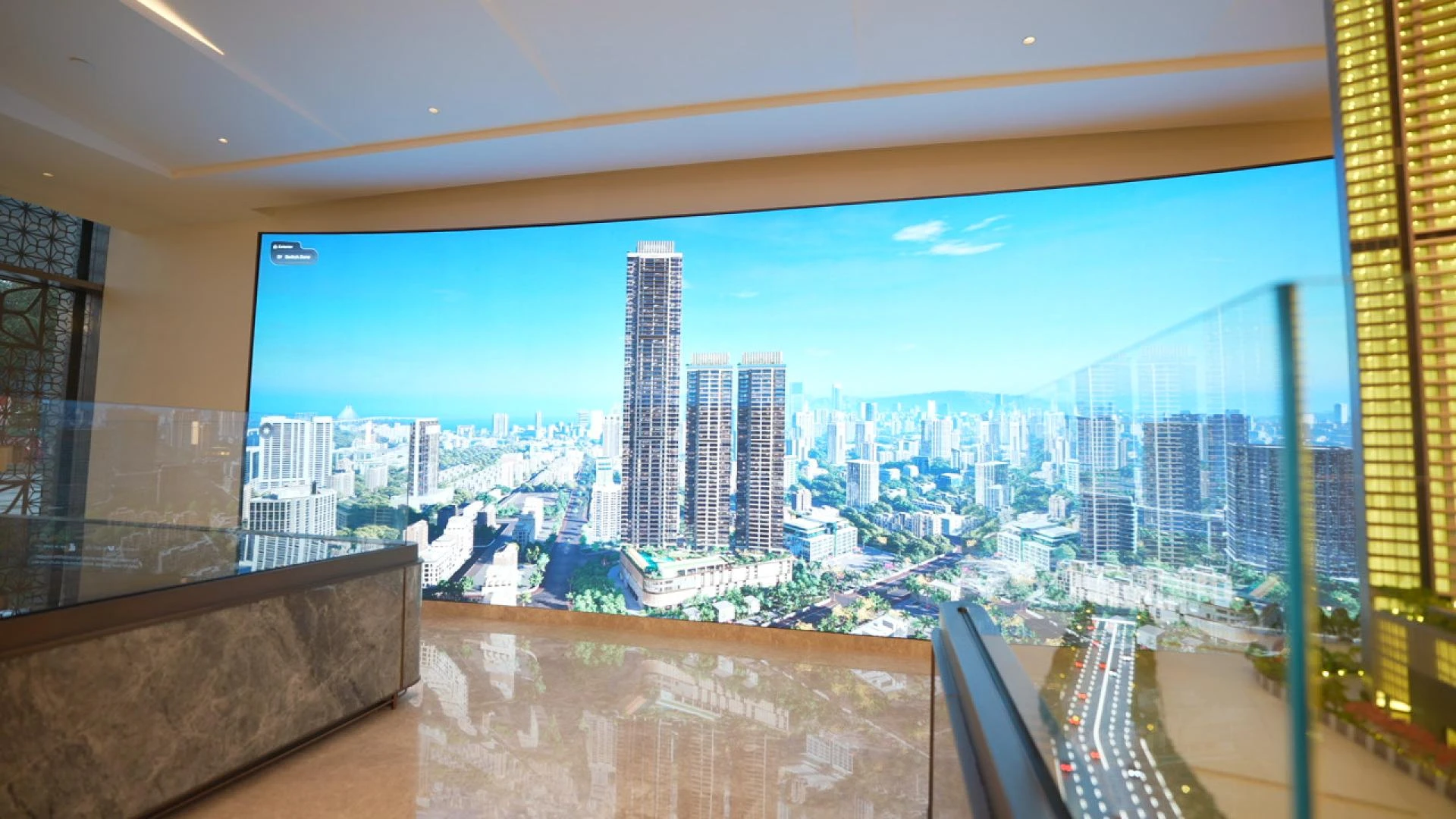

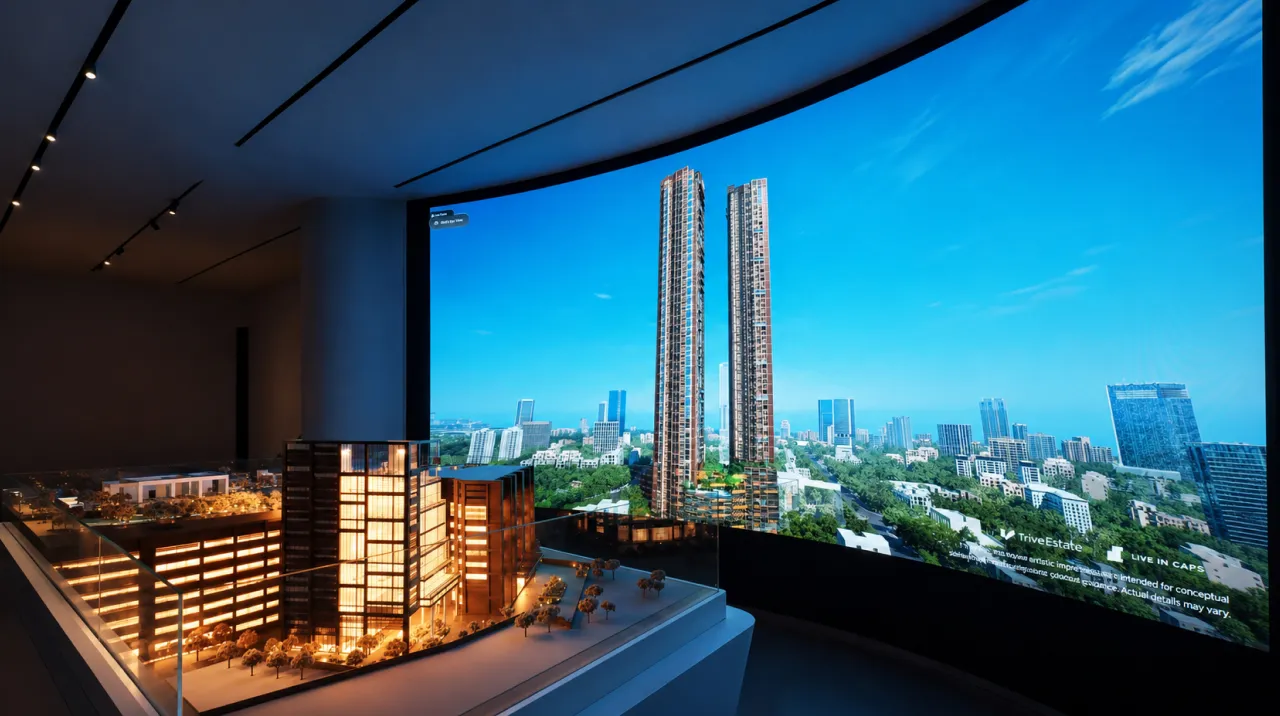
Walk into any modern property sales gallery, and you'll notice something's shifted. The old setup printed floor plans pinned to walls, miniature models gathering dust, salespeople flipping through presentation folders feels almost archaic now. Real Estate Experience Centers have rewritten the rulebook, creating spaces where technology and human connection work together to tell stories that actually resonate.
Why the Old Approach Stopped Working
Here's the reality: your buyers have changed. They've booked Airbnbs with virtual tours, bought cars after online configurators, and explored museums through digital exhibits. When they walk into your sales office expecting the same level of interaction and get handed a brochure instead, the disconnect is jarring.
Static marketing materials ask buyers to do all the heavy lifting imagine the view, calculate the space, picture the lifestyle. That's too much guesswork for what's likely their biggest investment. Experience centers remove that friction entirely by making everything tangible, explorable, and real.
What Actually Happens Inside These Centers
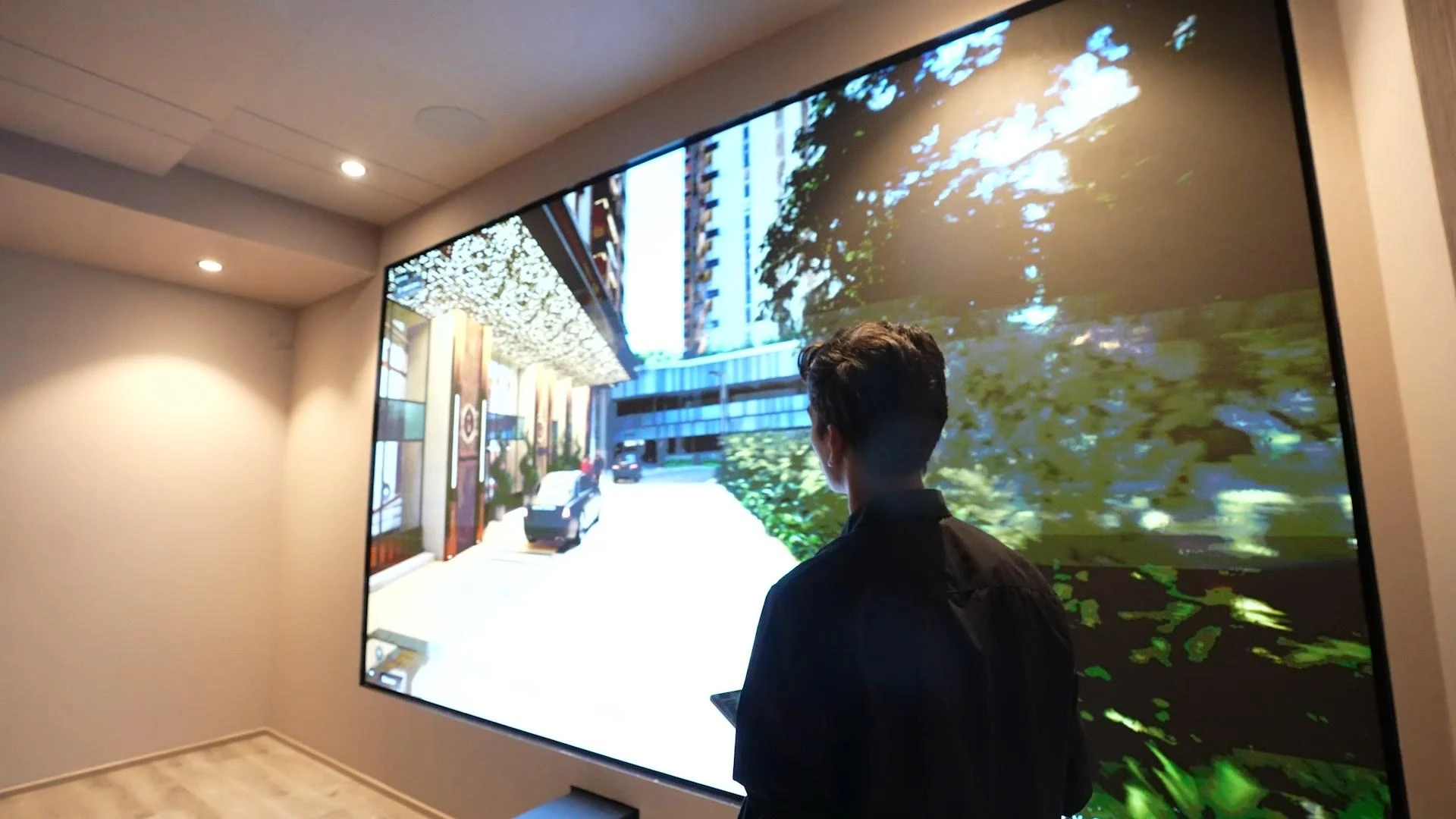
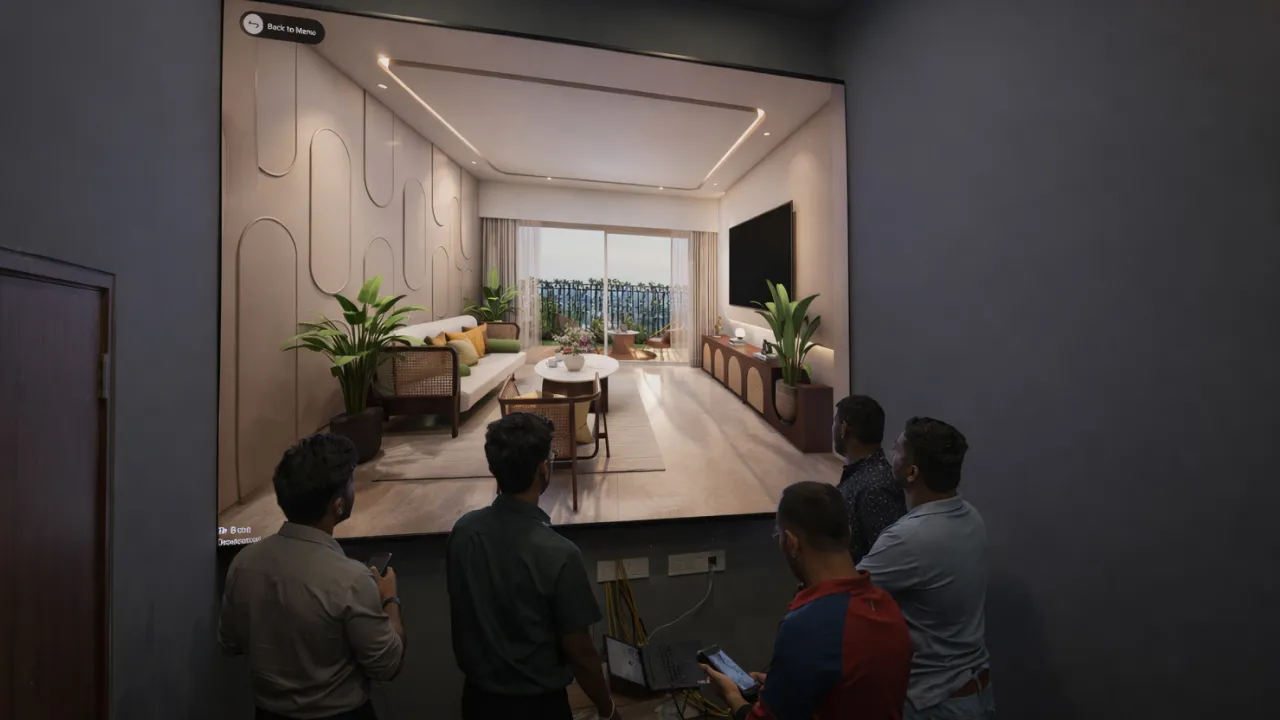
Forget buzzwords for a moment. Let's talk about what your buyers actually experience. They walk in curious but guarded. Within minutes, they're controlling a 65-inch touchscreen, rotating buildings, peeling back construction phases, and virtually stepping inside units that won't be ready for months.
The experience unfolds naturally:
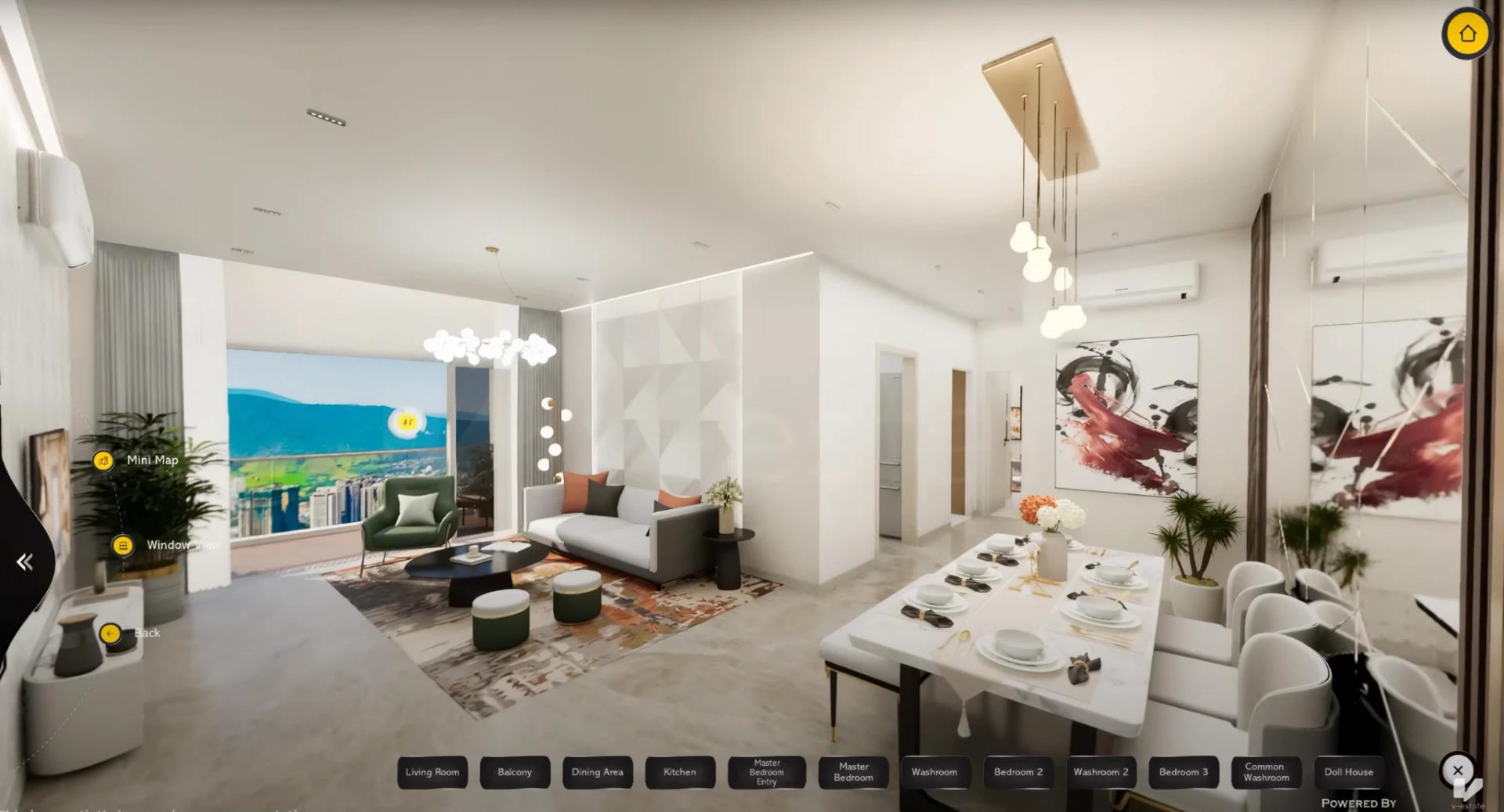
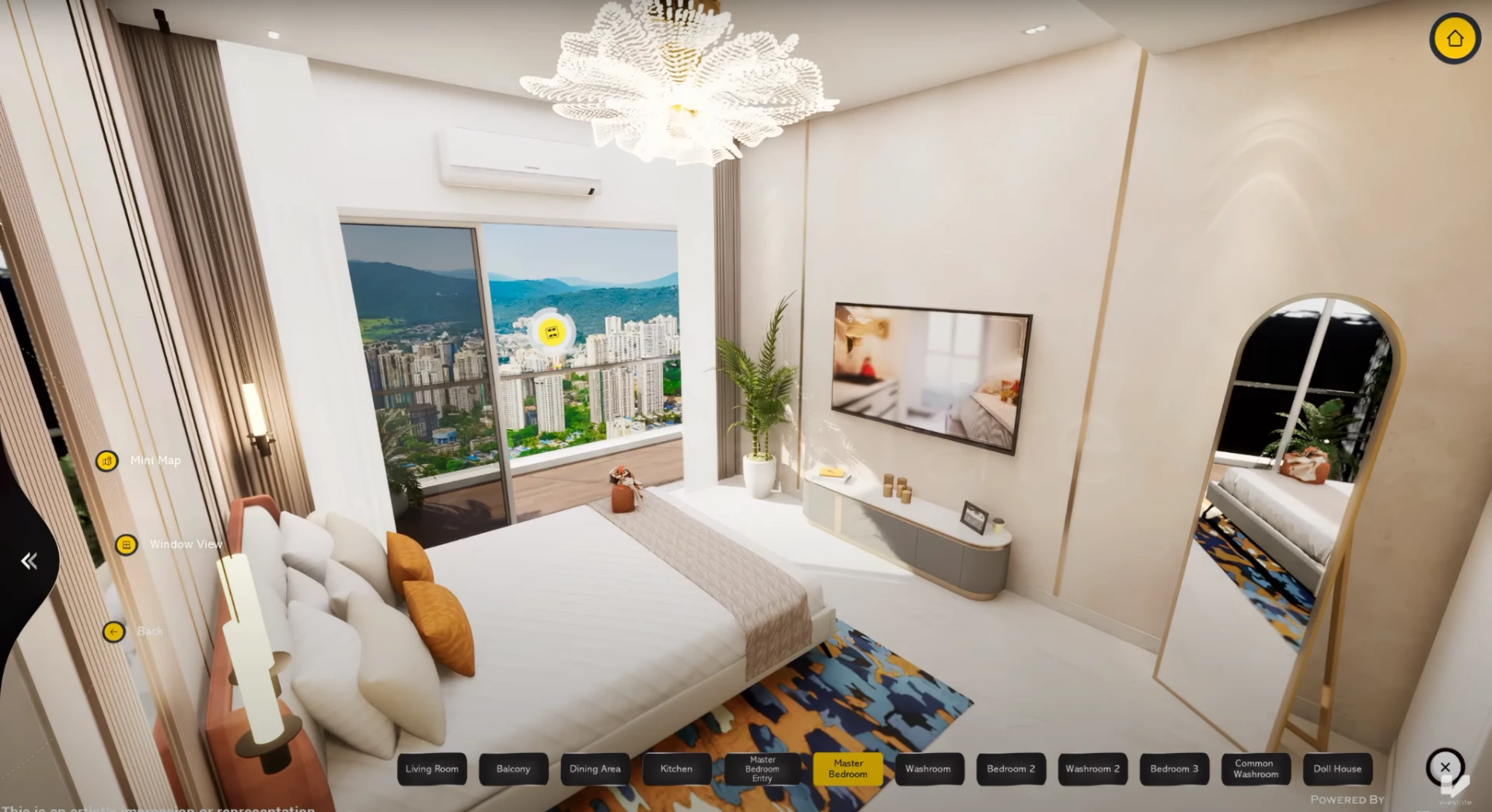
They start with the big picture—the full development from every angle. Then they narrow focus—their preferred tower, their ideal floor. Next, they're inside a virtual unit, checking sightlines from the balcony, measuring kitchen counter space visually, imagining furniture placement. All without leaving your air-conditioned sales gallery.
Tools like V-estate make this seamless. Real-time 3D representation means no lag, no loading screens, no technical hiccups that break the spell. The 360-degree exploration feels intuitive because it mirrors how they'd naturally explore a physical space. Interactive touchscreen controls respond like smartphones they use daily. There's no learning curve, no friction—just exploration.
The Conversation Changes Completely
Here's what surprised most developers when they first adopted interactive experience centers: their sales teams started having completely different conversations. Instead of explaining layouts repeatedly, they were discussing lifestyle preferences. Instead of justifying pricing, they were exploring customization options. Instead of convincing skeptics, they were helping believers make final choices.
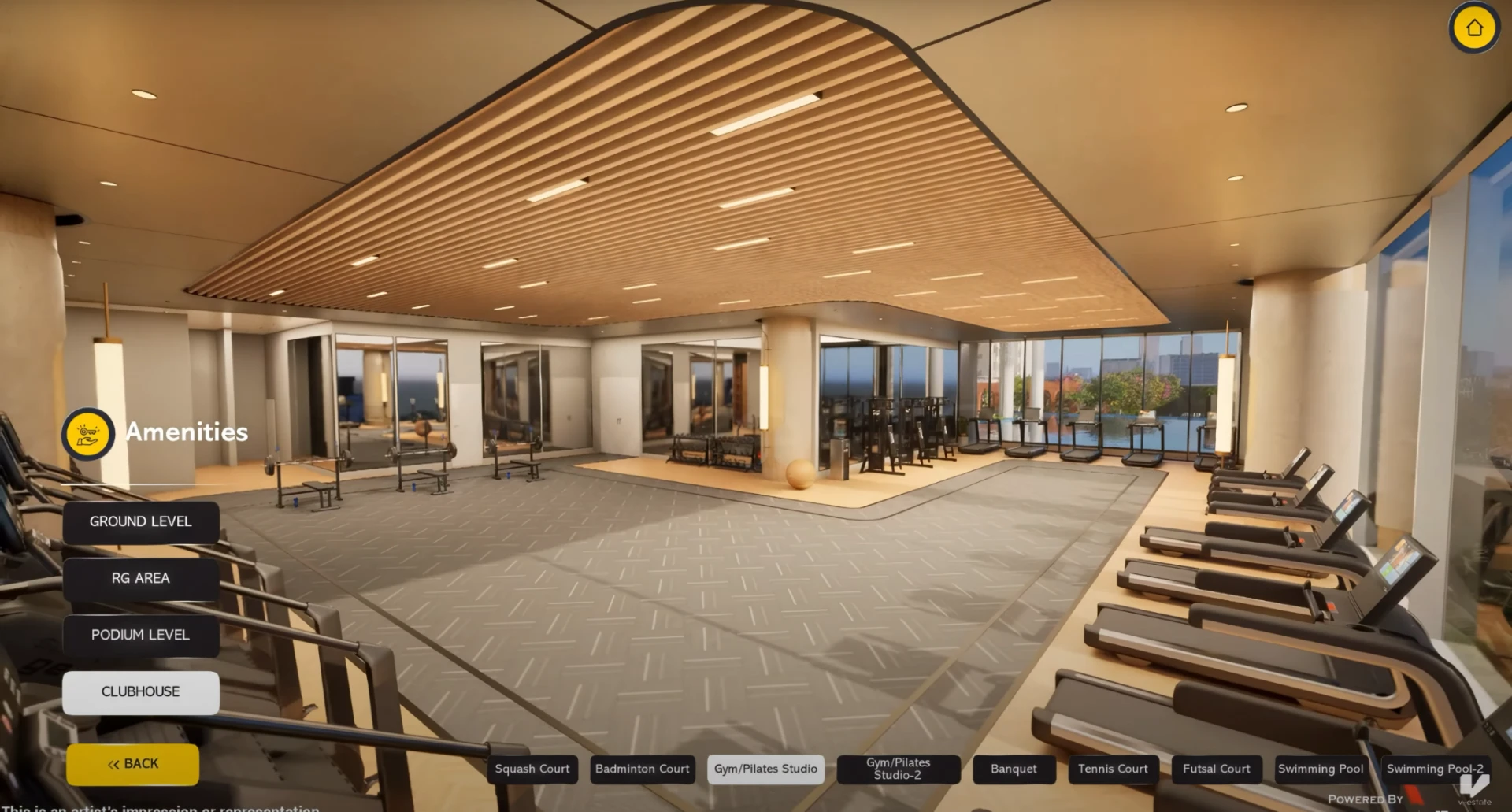
The technology handles information delivery. Your team focuses on understanding people. When a buyer can independently explore amenities through 3D virtual walkthroughs, find their commute distance on interactive vicinity maps, and compare unit configurations side-by-side, they come to your sales team with informed questions, not basic doubts.
This shift matters enormously. Your best salespeople aren't order-takers; they're consultants who understand aspirations and solve problems. 3D Virtual Show Flats and digital twins give them the tools to do exactly that.
When Families Decide Together
Property decisions rarely happen in isolation. Spouses debate. Parents consider their children's needs. Investors evaluate rental potential. Traditional presentations forced these stakeholders to absorb information separately, then reconcile their impressions later—a recipe for confusion and delayed decisions.
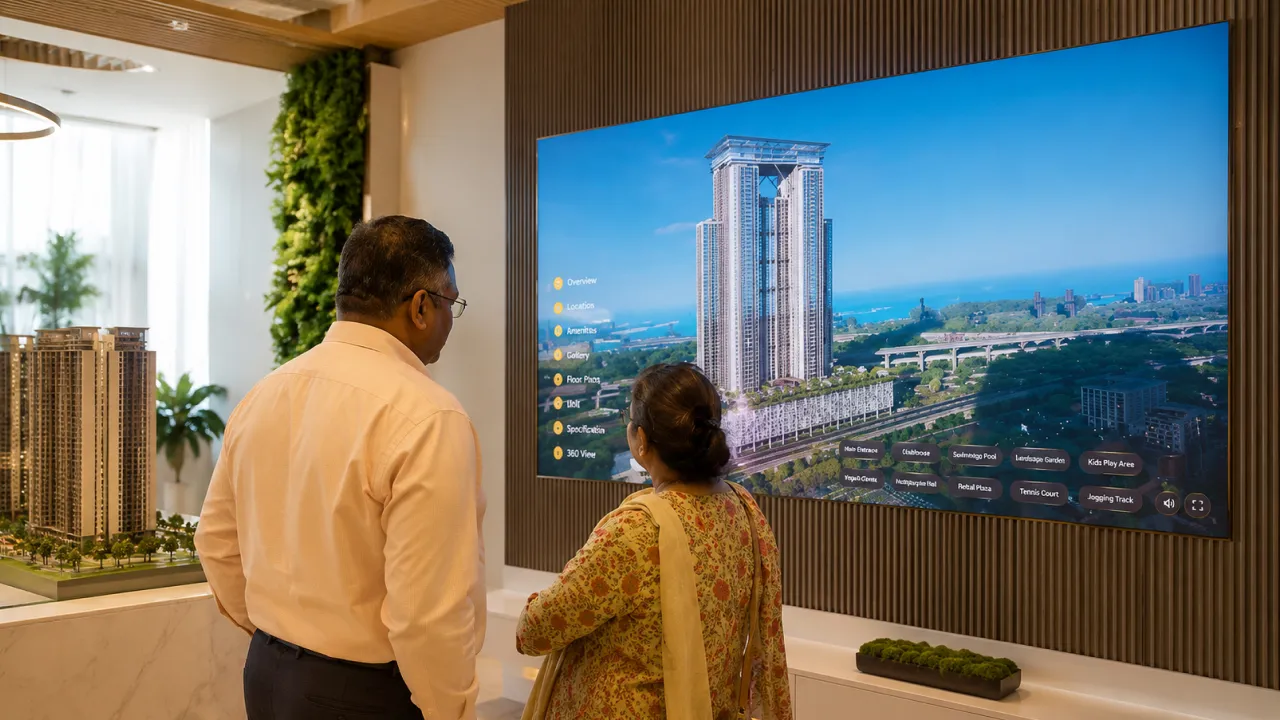
Interactive experience centers change this dynamic completely. The entire family gathers around one screen. Dad checks connectivity to his office. Mom explores the clubhouse layout. Kids get excited about the pool design. Everyone sees the same high-fidelity visualization simultaneously, building shared understanding and alignment in real-time.
This collaborative exploration accelerates decision timelines dramatically because there's no post-visit confusion about what was shown or promised.
Real Implementation, Real Impact
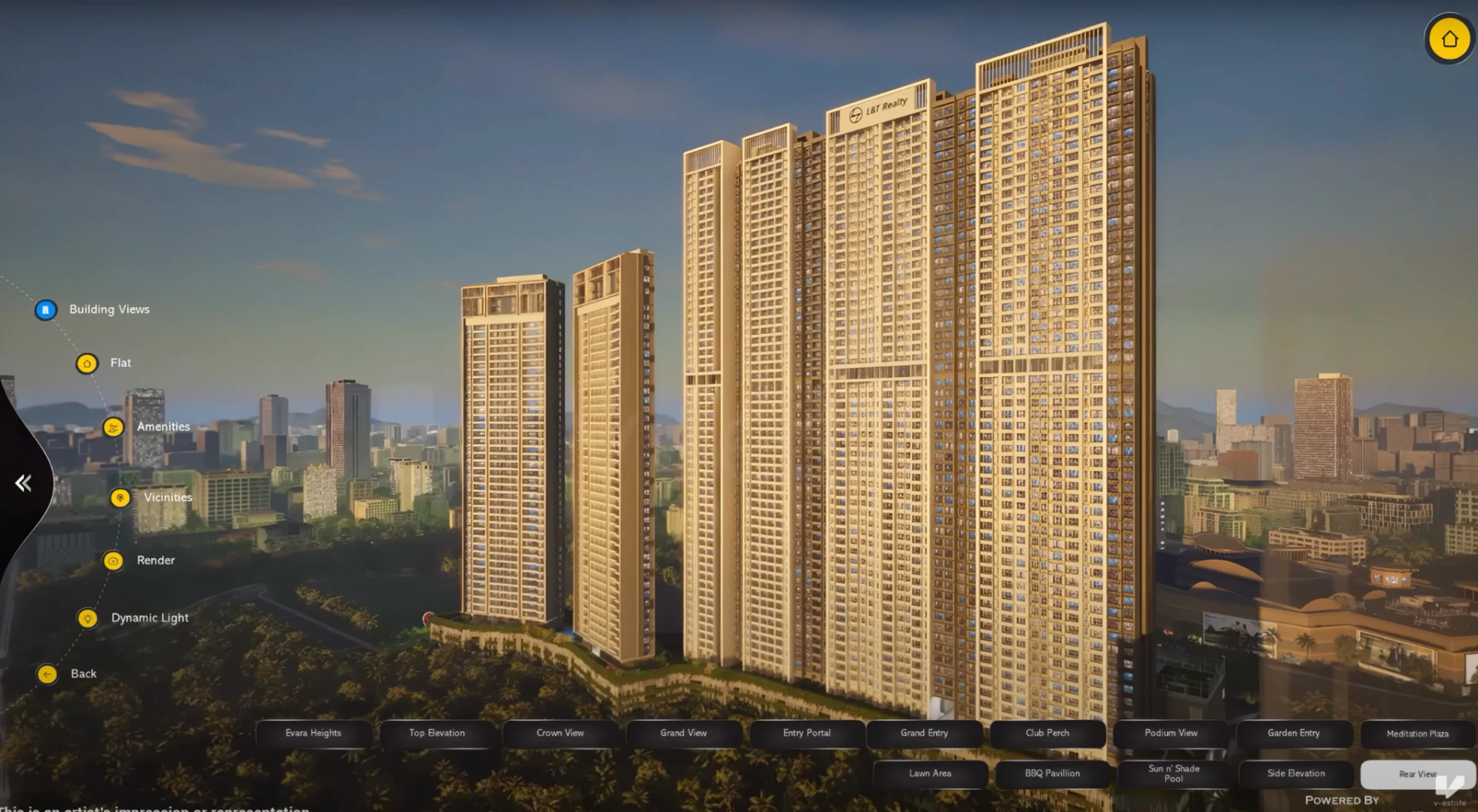
L&T Realty faced a challenge that would've been impossible to solve five years ago: showcase Evara Heights—a five-tower project near Yeoor Hills—while it was still under construction, communicate future phase plans clearly, and do all this without confusing buyers about what was launching when.
V-estate's interactive solution handled it elegantly. Buyers explored exterior visualizations showing all five towers against the hillside backdrop. They virtually walked through planned amenities that existed only as blueprints. Interactive mapping demonstrated vicinity advantages they couldn't yet see from the construction site. Interior unit exploration let them configure and compare options effortlessly.
The web version extended reach globally, letting NRI investors explore as thoroughly as local buyers. Marketing collaterals integrated seamlessly pricing, specifications, payment plans all accessible within the same interface. Most importantly, performance stayed flawless despite the complex 3D rendering demands.
The Broader Shift Happening Now
This isn't about adopting one more marketing tool. It's about recognizing that buyer expectations have fundamentally evolved. They've grown accustomed to experiencing before purchasing trying software before subscribing, sampling products before buying, previewing content before committing.
Real estate was stuck in "trust us, it'll look great" mode for too long. Real Estate Experience Centers finally close that gap, offering tangible experience where only promises existed before. The AR capabilities, digital twin technology, and interactive controls aren't gimmicks—they're responses to legitimate buyer needs for transparency, control, and confidence.
For developers and marketers, this creates genuine competitive advantage. Projects with immersive experience centers generate higher quality leads, shorter sales cycles, and stronger buyer conviction. The investment in technology pays back through efficiency gains and conversion improvements.
What This Means for Your Next Project
Every project tells a story—location advantages, design philosophy, lifestyle promises, community vision. The question is whether you're telling that story effectively or hoping buyers will fill in the gaps themselves.
Interactive experience centers ensure your story lands with clarity and emotional resonance. They transform abstract concepts into tangible experiences, turn specifications into sensory exploration, and convert interest into commitment through transparency and engagement.
The market's moving fast. Buyers who experience immersive presentations first will find traditional approaches frustrating. Being early to this shift positions you as innovative and buyer-focused—exactly the reputation that drives premium positioning and faster absorption.
Your next launch deserves storytelling that matches your vision. V-estate's interactive experience center solutions bring properties to life before construction completes, creating buyer confidence through immersive exploration. Let's discuss how we can transform your sales gallery into an experience that converts curiosity into committed buyers.























Sign in to leave a comment.