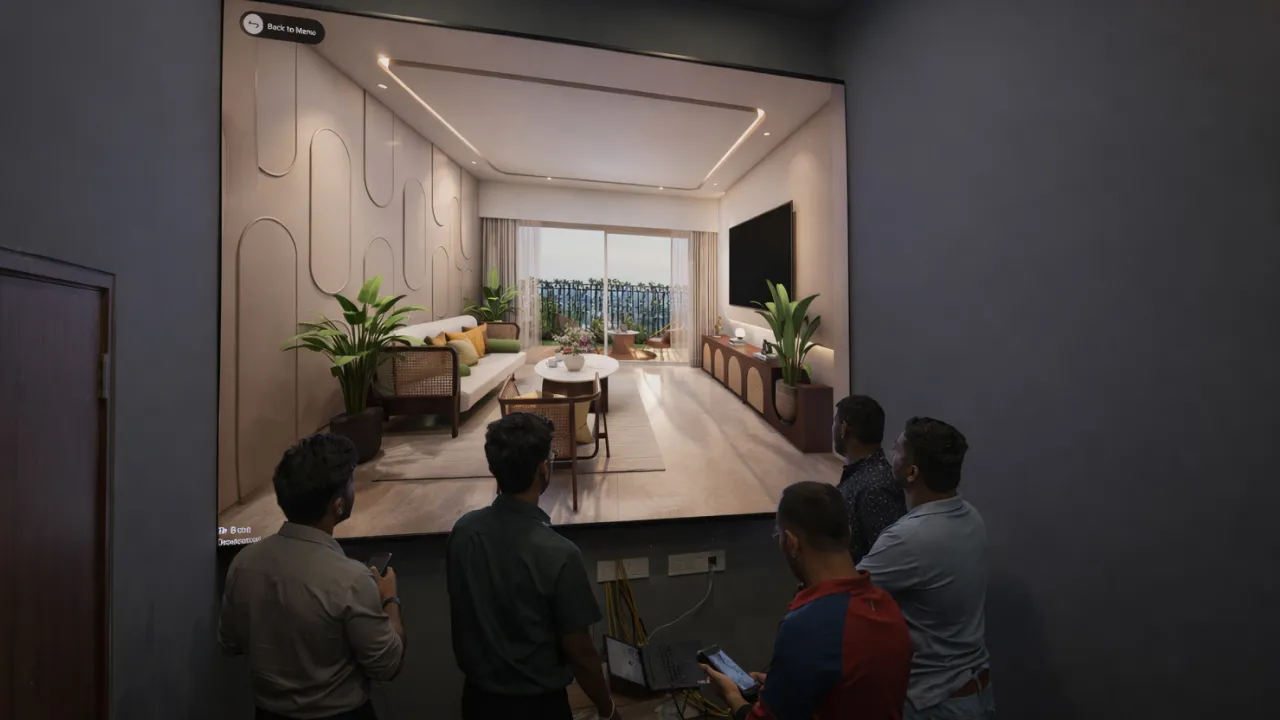

There's a specific moment that can quietly undo months of good sales work: a buyer visits the sample flat during construction, and something about it doesn't quite match what they were shown earlier. Maybe the finish looks different. Maybe a feature they were promised isn't visible yet. It's rarely dramatic, but it plants a small doubt — and small doubts, left alone, tend to grow into hesitation or, worse, cancellation.
Digital twin technology real estate clarity is really about closing that exact gap — making sure what a buyer sees digitally and what they eventually walk into physically tell the same, consistent story, well before the site is complete.
Where Clarity Usually Breaks Down
Most projects don't lose buyer confidence in one big moment. It erodes gradually, through small inconsistencies:
- A digital render that looks noticeably different from the physical sample flat
- Engineering details — waterproofing, structural strength, wiring safety — that never get explained beyond a vague brochure line
- A gap between what's described in a sales pitch and what construction progress actually shows
- Buyers who visit once early, then return months later to a project that "feels different" from what they remember
None of these issues are usually intentional. They happen because digital and physical representations of a project are built and maintained separately, by different teams, on different timelines.
Making Digital and Physical Tell the Same Story
The fix is straightforward in principle, harder in execution: build the digital twin's interiors to match physical sample flats exactly, down to finish and detail — not as a rough approximation, but as a genuine mirror of each other.
Ma Sarada's House of Sapiens deployment did exactly this. Two physical test flats — a two-bedroom and a three-bedroom unit — were built to match their digital twin counterparts precisely. The result was direct: what buyers explored on screen and what they physically walked into were consistent, closing the gap between expectation and reality rather than leaving it to chance. You can see this alignment described in the Ma Sarada digital twin case study.
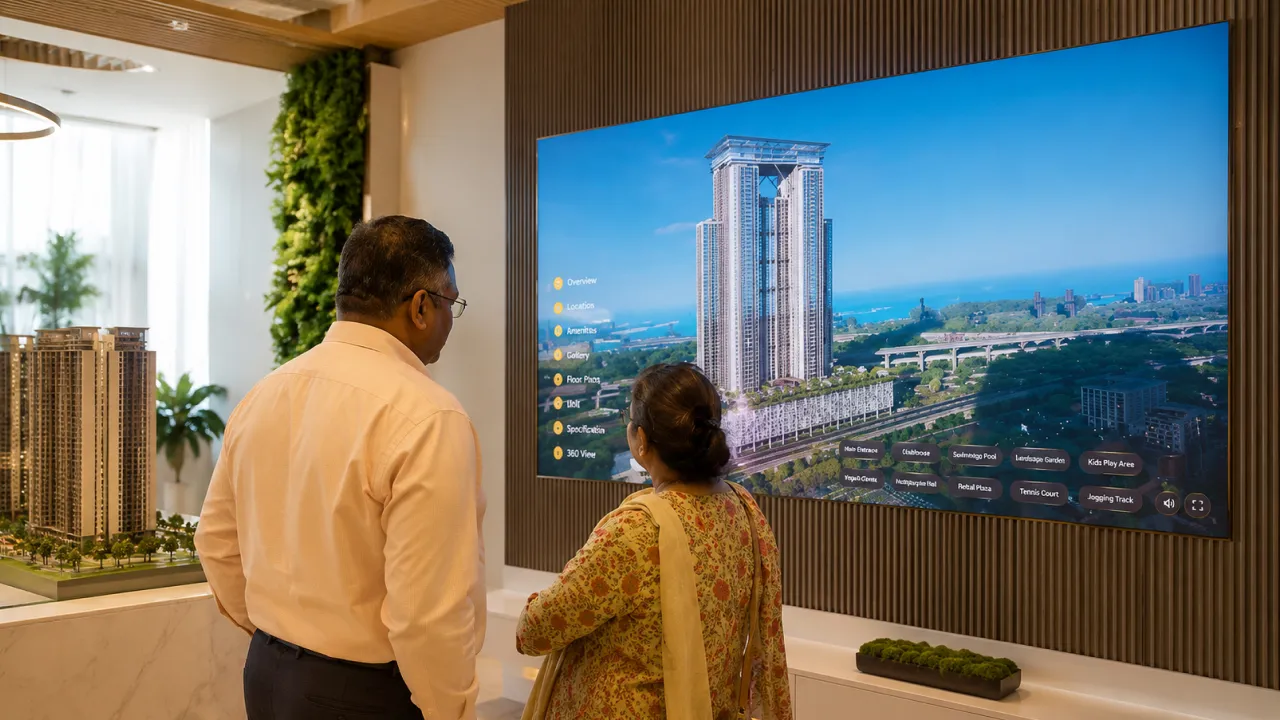
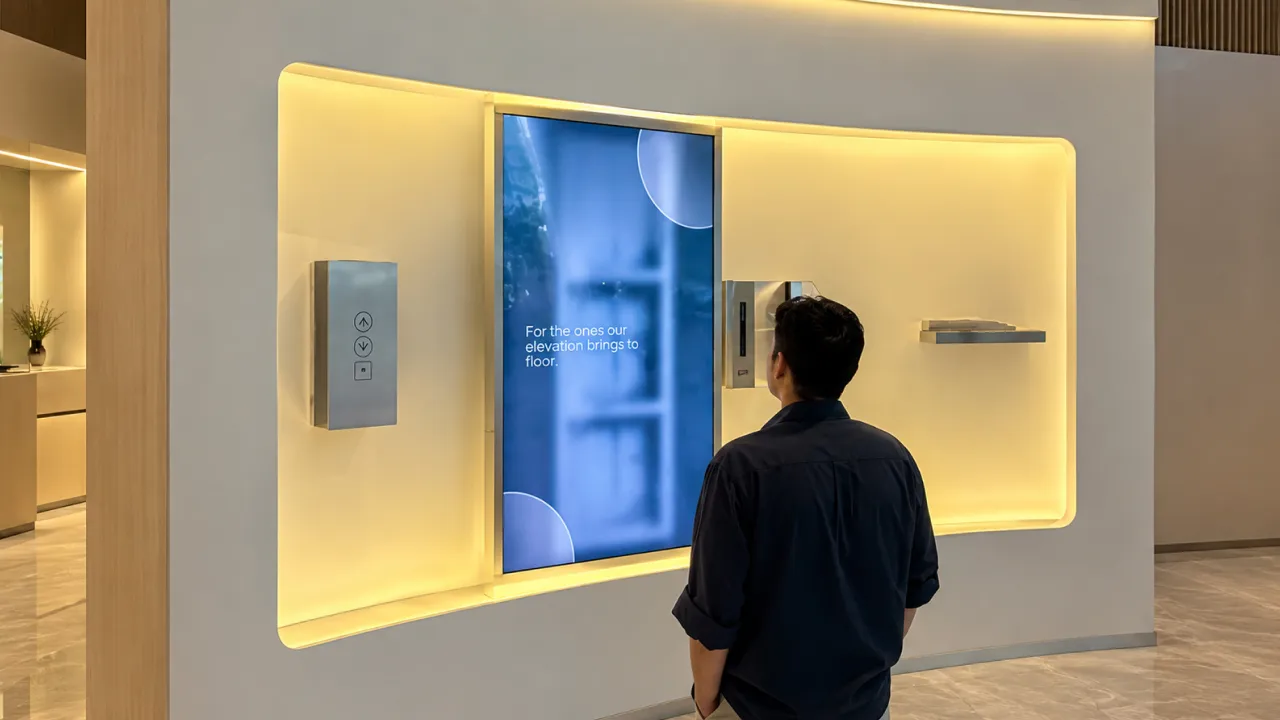
Rustomjee's experience centre applied a similar principle at the sample flat stage — layering interactive digital overlays directly onto the physical unit, so buyers could see real window views and daylight behaviour alongside the tangible finishes in front of them, rather than treating the digital and physical experiences as separate stops on the tour.
Clarity Goes Beyond Finishes — It Includes Engineering
Buyers rarely ask about waterproofing or RCC strength directly, but it's often sitting quietly behind their hesitation, especially for anyone who's heard a horror story about a previous project. Interactive engineering visualisation addresses this directly — pairing physical material samples with detailed visual explanations that surface the "under-the-hood" story of waterproofing, structural strength, or wiring safety on demand.
This kind of transparency does something subtle but important: it signals that a developer isn't just confident about the finishes buyers can see, but about the engineering they can't. That distinction matters far more to a discerning buyer than most sales scripts give it credit for.
What Is a Digital Twin in Real Estate Doing Here, Practically?
In this context, a digital twin functions less like a sales pitch and more like a consistency layer — one accurate source of truth that both the digital exploration and the physical site visit are built from. Buyers checking back in at different stages of construction see a project that matches what they were originally shown, rather than one that seems to shift depending on when they visit.
That consistency is what actually earns clarity before site completion. Not a single flashy feature, but the absence of contradiction across every touchpoint a buyer encounters.
Practical Steps for Developers
A few things worth building into the process:
- Build sample flats and digital twin interiors from the same source data, not separately
- Surface engineering details visually, not just verbally, especially for structural and safety-related questions
- Revisit the digital twin periodically as construction progresses, so it stays aligned with what's actually being built
- Brief every sales executive on where digital and physical currently align, so no one accidentally overstates progress
Let Every Stage Tell the Same, Consistent Story
Buyer confidence shouldn't depend on which stage of construction they happen to visit during. V-Estate builds digital twins engineered to match physical reality precisely, so clarity holds steady from launch through possession. Connect with V-Estate to keep your project's digital and physical story consistent at every stage.























Sign in to leave a comment.