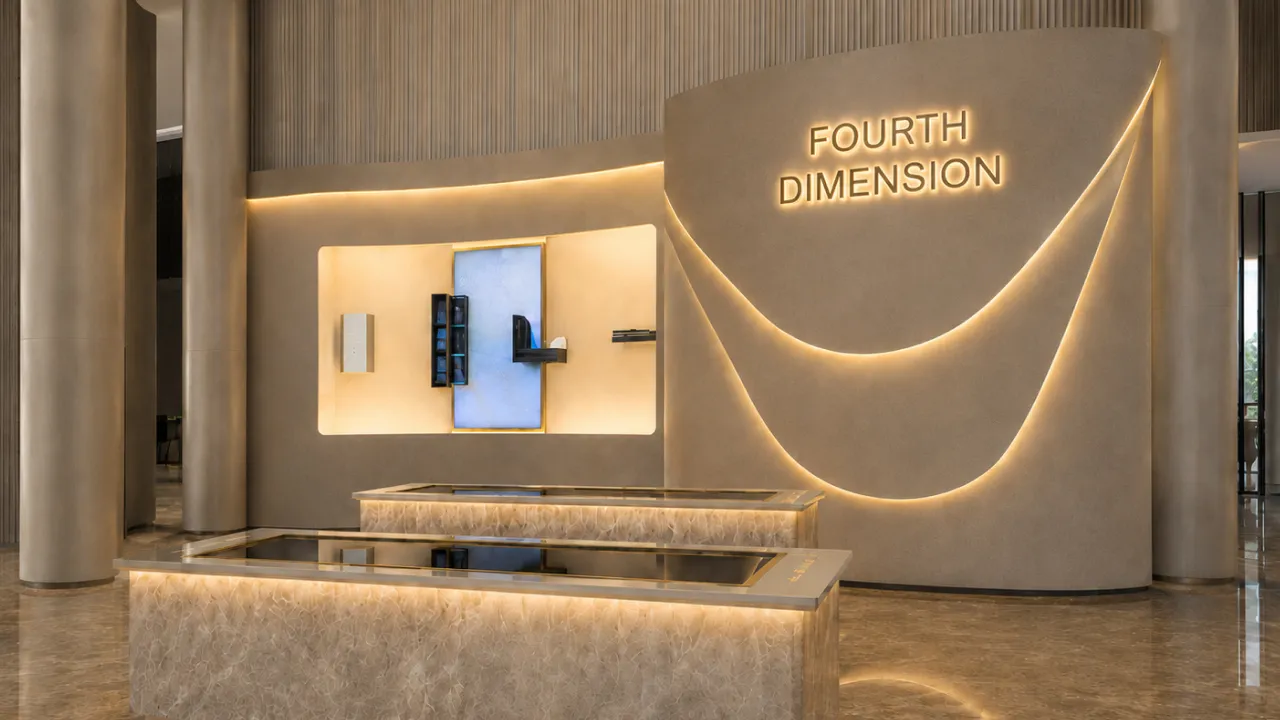

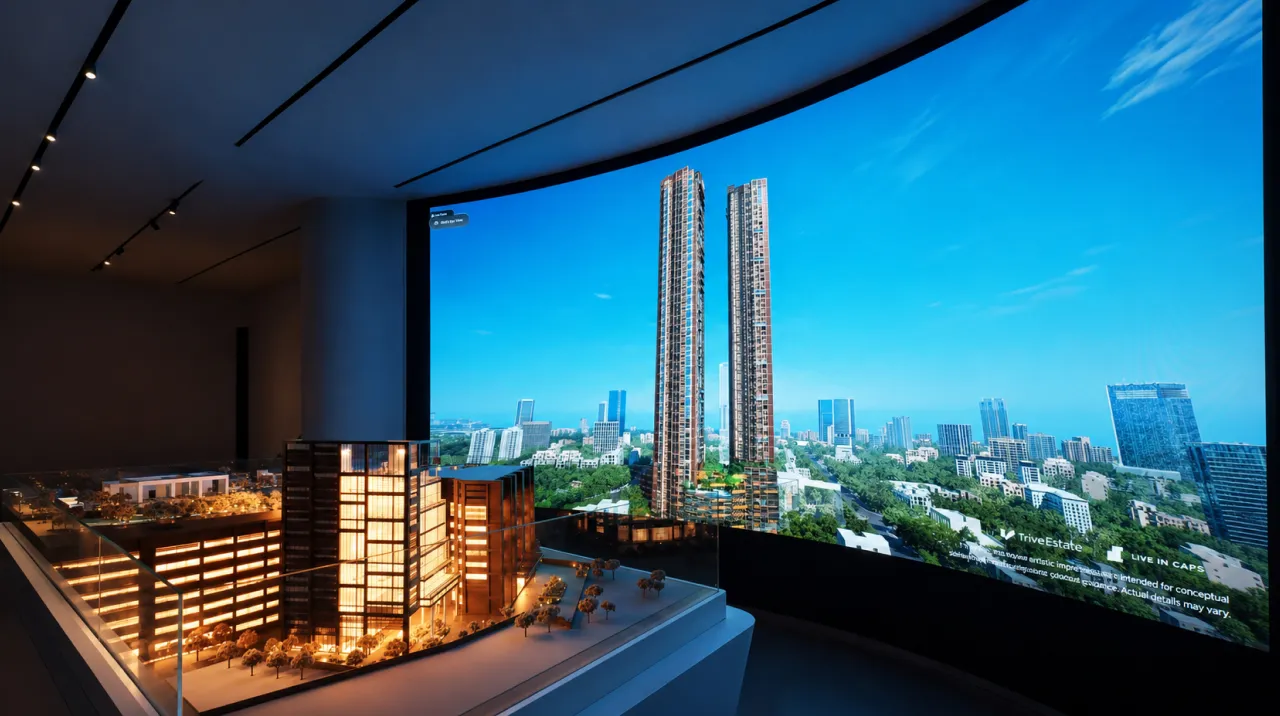
Walk into most luxury sales galleries and you'll find the same three things: a scale model under glass, a stack of glossy brochures, and a looping video nobody's actually watching. For a ₹10-crore purchase decision, that's a strangely passive experience — buyers are asked to invest serious money based on a room that mostly asks them to look, not engage.
Luxury buyers today expect more than aesthetics. They expect proof — of construction quality, engineering integrity, and design intent — delivered in a way they can question and verify on the spot. That's exactly what 3D walkthrough services bring to a sales floor, turning a passive showroom into a genuinely interactive real estate sales gallery buyers actually want to spend time in.
If your sales gallery still runs on brochures and a static AV loop, it's worth understanding what's replacing that model, and why the shift is happening faster than most developers expect.
Why the Traditional Sales Gallery Is Losing Its Grip on Luxury Buyers
At the premium end of the market, buyers ask sharper questions than they used to:
- How is this building structurally different from the competing project two blocks over?
- What safety systems are actually installed, and how do they work?
- What justifies this price point beyond location and brand name?
Most sales executives don't have a good way to answer these with visual proof. Brochures lose credibility the moment a technical question comes up. Looping AV videos don't invite interaction. Static models can't explain what's happening inside the walls.
The result is predictable: buyers leave without full conviction, sales cycles stretch, and deals that should close in weeks drag into months.
What Makes a Sales Gallery Genuinely Interactive
An interactive real estate sales gallery isn't defined by how much screen space it has. It's defined by whether buyers can explore and question the space, instead of just observing it.
The core capabilities that separate a genuinely interactive gallery from a decorated one:
- Self-guided navigation — buyers move through the environment at their own pace, not a scripted tour
- Layered storytelling — surface-level design appeal paired with deeper engineering and construction detail, available on demand
- Real-time responsiveness — sensor-driven or touch-triggered installations that react to buyer interest, not fixed loops
- Consistent delivery — the same quality of presentation whether a junior executive or a senior consultant is guiding the visit
This is the foundation of good 3D architectural walkthrough services — technology that gives every visitor a version of the gallery's best possible pitch, every single time.
How an Interactive Gallery Gets Built
Deploying an interactive gallery is a structured, multi-stage process, not a hardware purchase:
- Brief definition — identifying exactly what the gallery needs to prove: design excellence, engineering quality, lifestyle appeal, or all three
- Spatial architecture — designing the physical flow of the gallery itself, so buyers move through a logical, cognitively manageable sequence rather than a scattered layout
- Content development — building the visual and interactive material for each zone, from kinetic wall animations to touchscreen deep dives
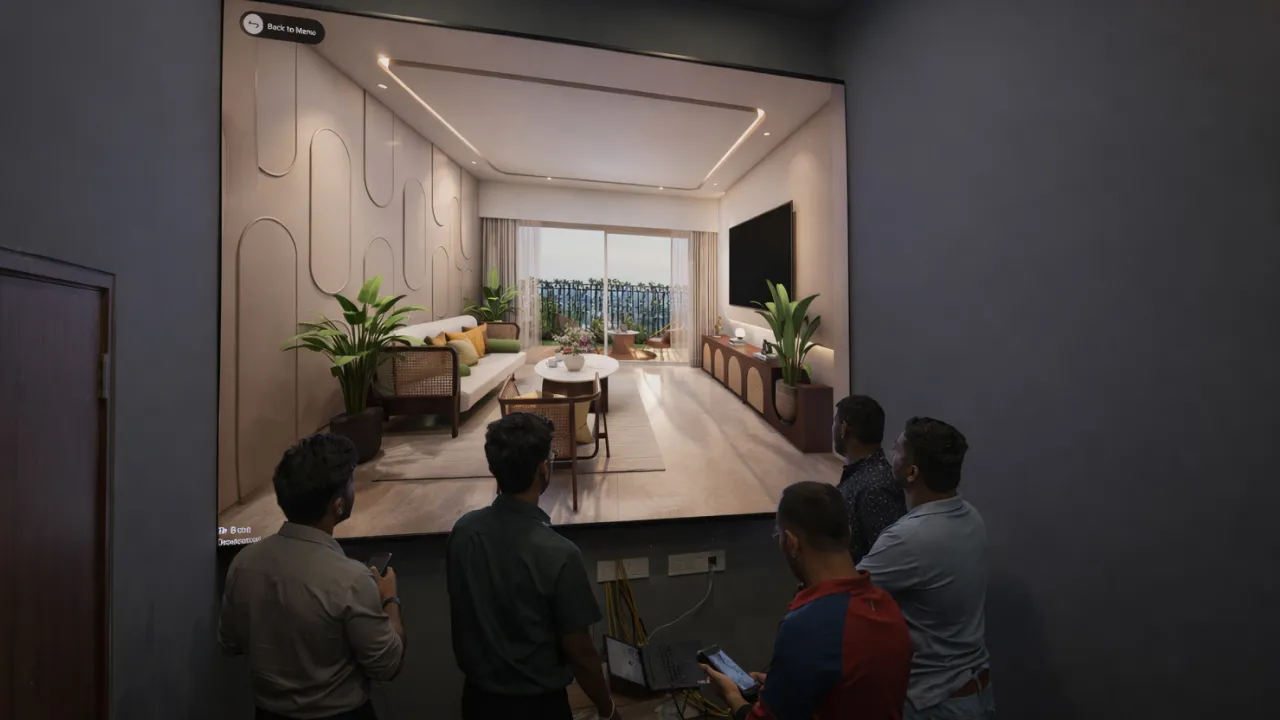
- Hardware integration — installing and calibrating the display technology, whether curved LED walls, large-format touchscreens, or iPad-controlled interfaces
- Sales training — preparing the team to guide buyers through the space as a structured conversation, not a self-serve kiosk experience
Skipping any one of these steps tends to produce a gallery that looks impressive on opening day and feels gimmicky within a month.
Which Sales Galleries Get the Most Value From This
Interactive galleries aren't necessary for every project, but they deliver outsized returns for:
- Ultra-luxury residential launches, where buyers expect construction transparency, not just design appeal
- Projects with genuine engineering differentiators — advanced waterproofing, seismic reinforcement, elevator systems — that are otherwise invisible to a buyer
- High-footfall launches, where consistent quality across multiple simultaneous buyer groups matters
- Developers building a repeatable format across future projects, rather than a one-time installation
If your project has real engineering or design substance behind it, an interactive gallery is how you actually get credit for it.
The Buyer's Journey Through an Interactive Gallery
A well-structured gallery visit typically follows a defined arc:
- Orientation briefing — a short introduction to the format, setting expectations for what's ahead
- Design and engineering storytelling — buyers move through installations that translate technical quality into visual, understandable proof
- Guided deep dive — a more detailed, often touchscreen-based exploration of specific systems or materials
- Q&A supported by visual evidence — sales executives answer questions with the installation as backup, not memory alone
- Pricing conversation — only introduced once the buyer has full engineering and design clarity
This sequencing is deliberate. Buyers arrive at pricing already convinced of quality — the sales executive is confirming a decision, not building one from scratch.
How Sales Teams Run the Floor Differently
For sales teams, an interactive gallery changes the shape of a shift. Instead of repeating the same verbal explanations to every visitor, executives become guides through a structured, repeatable journey — freeing up their attention for the parts of the conversation that actually require judgment: reading buyer intent, answering unscripted questions, and closing.
Case Study: Godrej Trilogy's "Fourth Dimension" Experience Centre, Worli
Godrej Properties took this challenge head-on with Godrej Trilogy, one of its most significant luxury launches in South Mumbai. Rather than lean on the brand's reputation alone, they chose to prove engineering quality directly, through V-Estate's interactive sales technology.
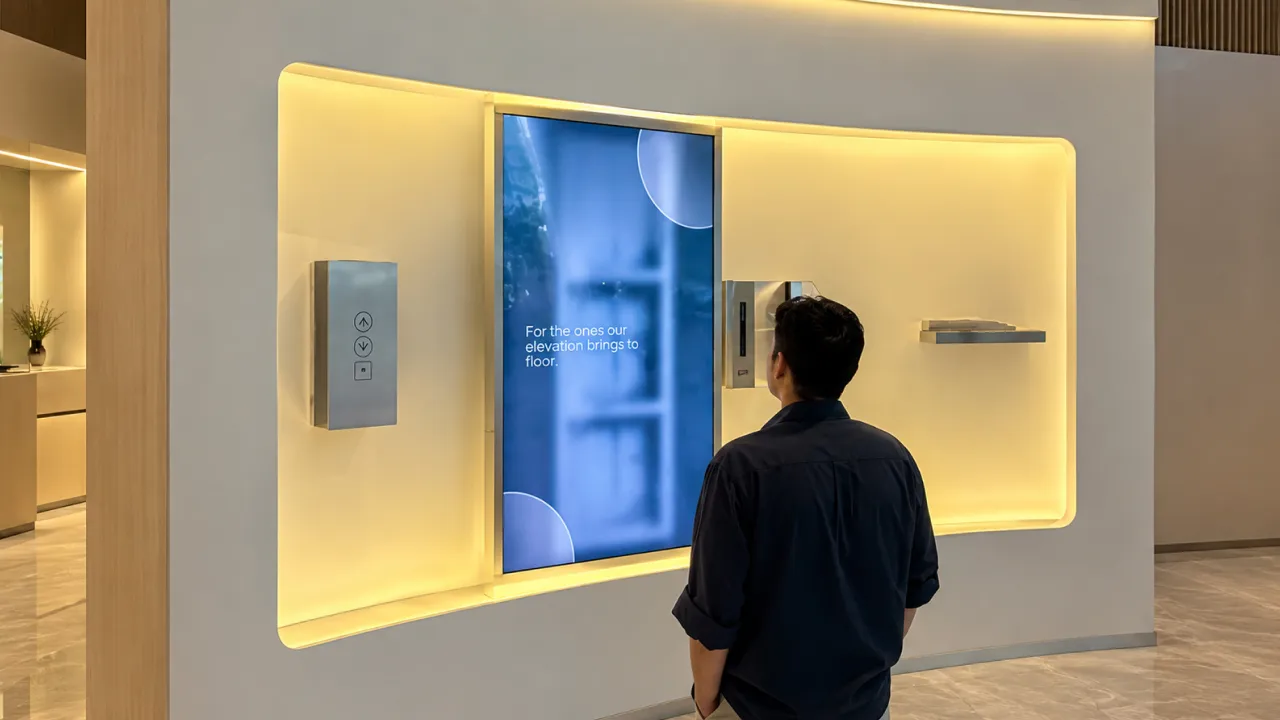
The result was The Fourth Dimension Experience Centre — an S-shaped spatial walkthrough connecting two immersive storytelling zones in one continuous, cognitively manageable flow.
Zone 1 — Curved Rotoscopic Wall. A 10-feet-high curved installation using motion-triggered kinetic animation to translate invisible construction features into visible proof — dual-layer waterproofing, high-speed elevator engineering, fire-rated shafts and FRLS wiring, and double-glazed windows built for coastal wind and noise resistance. Average engagement here ran to 15 minutes per visitor — buyers paused, discussed, and asked technical questions, exactly where conviction gets built.
Zone 2 — Interactive Touchscreen Wall. An 86-inch Samsung interactive touchscreen delivered short, 30–50 second animated explainers covering anti-capillary waterproofing, earthquake-compliant structural reinforcement, CPVC plumbing systems, and wind-tunnel structural validation by global engineering consultants. Buyers spent an average of 5 minutes in guided interaction here, with sales executives using this zone as their primary structured conversation platform.
The full sales journey followed a defined sequence: orientation briefing, rotoscopic wall walkthrough, touchscreen deep dive, guided Q&A, and only then, pricing and unit discussion.
Read the complete breakdown in the Godrej Trilogy case study, and see how this compares with the broader shift covered in how 3D visualization helps developers sell faster.
Verified Results
The outcomes at Godrej Trilogy were measured, not assumed:
- Average buyer engagement time rose to approximately 20 minutes per visit
- Buyers asked significantly more technical questions — a direct signal of higher purchase conviction
- Sales teams adopted both installations as their primary sales tools, not a novelty add-on
- The format became the first experiential tech sales format introduced across Godrej's luxury residential projects
Limitations and Planning Considerations
Before committing to a similar deployment, a few honest considerations:
- Interactive galleries need a real content strategy. Engineering and construction stories only land if the underlying detail is genuinely strong — the technology can't manufacture credibility that isn't there.
- Modular content matters. Design and specification changes happen during construction; content architecture should allow updates without a full hardware overhaul.
- Staffing and training take real commitment. An interactive gallery underperforms badly if the sales team treats it as a backdrop instead of a structured tool.
- This is a sales environment, not a substitute for site inspection or legal due diligence on the buyer's part.
FAQs
What's the real difference between a decorated sales gallery and an interactive one? A decorated gallery looks good but stays passive — buyers watch. An interactive gallery lets buyers explore, ask questions, and get visual proof in return, which is what actually drives conviction.
Is this only worth it for ultra-luxury projects? It delivers the strongest returns at the luxury end, where buyers expect construction transparency, but the same principles — self-guided exploration, layered storytelling — apply to any project with genuine design or engineering substance worth proving.
How long does average engagement time typically improve by? Results vary by project, but Godrej Trilogy saw engagement rise to roughly 20 minutes per visit, driven largely by buyers pausing to ask technical questions during the rotoscopic wall walkthrough.
Does an interactive gallery need constant staffing, or can buyers explore it alone? Both models exist, but the strongest results tend to come from a guided format, where sales executives use the installation as structured backup during the conversation rather than leaving buyers to explore entirely unassisted.
Turn Your Sales Gallery Into Your Strongest Sales Tool
If your project has real engineering and design substance behind it, don't let a brochure undersell it. V-Estate builds 3D walkthrough services that turn a static sales gallery into an interactive experience buyers actually trust — and remember.
Book a demo with V-Estate and see what an interactive gallery could do for your next launch.

























Sign in to leave a comment.