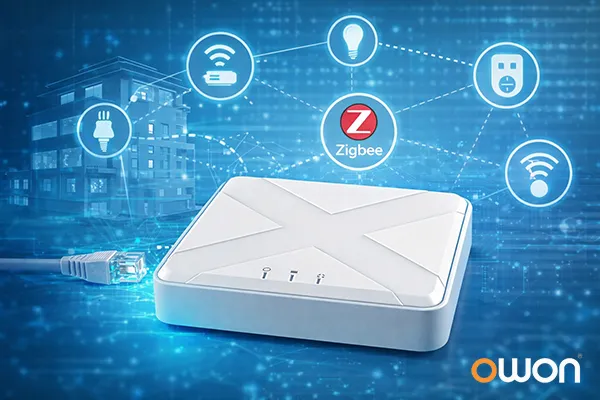

As energy costs continue to rise and sustainability regulations become stricter worldwide, smart building automation is rapidly transforming how energy is managed across commercial and residential properties. Smart building automation systems are increasingly relying on Zigbee gateway architecture to achieve scalable and efficient energy management.
From office buildings and hotels to residential complexes and industrial facilities, organizations are looking for more efficient ways to monitor, control, and optimize energy consumption. This is where smart building automation systems play a critical role.
The Growing Demand for Smart Energy Management
Traditional energy management approaches often rely on manual monitoring and isolated systems, making it difficult to achieve real-time visibility and control. As a result, energy waste, inefficient HVAC operation, and lack of system integration remain common challenges.
Modern smart building solutions address these issues by enabling:
• Real-time energy monitoring
• Automated control of HVAC and lighting systems
• Centralized management across multiple devices
• Data-driven optimization for long-term efficiency
According to the International Energy Agency, improving building energy efficiency is one of the most effective ways to reduce global energy consumption.
Why Building Automation Is the Key
Building automation systems (BAS) integrate multiple subsystems—such as HVAC, lighting, and energy meters—into a unified platform. However, achieving seamless communication between these devices requires a reliable and scalable network architecture.
This is where Zigbee-based systems have become increasingly important. Zigbee technology, standardized by the Zigbee Alliance, is widely used for reliable and low-power device communication in building automation systems.
The Role of Zigbee in Smart Building Systems
Zigbee technology is widely adopted in building automation due to its low power consumption, reliable mesh networking, and ability to support large numbers of connected devices.
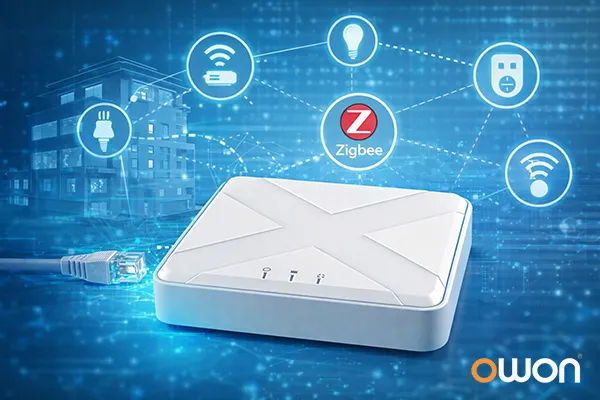
In a Zigbee system, sensors, thermostats, smart meters, and other devices communicate through a centralized gateway, which acts as the bridge between field devices and cloud or local management platforms. A Zigbee gateway plays a central role in smart building automation by enabling reliable communication between devices and energy management systems.
This architecture provides several key advantages:
• Stable and scalable device communication
• Reduced network congestion compared to WiFi-only systems
• Support for large-scale deployments
• Improved system reliability in complex environments
Why Gateways Matter in Energy Management Systems
At the core of any Zigbee-based building automation system is the gateway.
A gateway is responsible for:
• Coordinating communication between Zigbee devices
• Transmitting data to cloud or local platforms
• Enabling system integration with building management systems (BMS)
• Supporting automation logic and remote control
Depending on the deployment requirements, different types of gateways may be used.
For example, WiFi-based Zigbee gateways are often preferred for flexible installation and cost-effective deployment, especially in small to medium-sized projects.
On the other hand, Ethernet-based gateways provide higher stability and are better suited for large-scale or mission-critical environments such as commercial buildings, hotels, and energy infrastructure projects.
Choosing the Right Architecture for Your Project
In real-world applications, the choice between different gateway types depends on several factors:
• Project scale and complexity
• Network stability requirements
• Integration with existing systems
• Deployment flexibility
Many modern smart building automation projects adopt a hybrid approach, combining flexible wireless deployment with stable wired infrastructure to achieve both scalability and reliability.
This approach is particularly effective in applications such as:
• Smart hotels
• Office buildings
• Energy management systems
• HVAC automation
• Multi-site property management
The Future of Smart Energy Systems
As IoT technology continues to evolve, smart building automation will play an even greater role in energy optimization. Advanced analytics, AI-driven control, and deeper system integration will further enhance efficiency and reduce operational costs.
At the same time, the underlying infrastructure—especially communication protocols and gateways—will remain a critical foundation for system performance.
Organizations that invest in scalable smart building automation systems today will be better positioned to meet future energy challenges and sustainability goals.
Final Thoughts
Smart building automation is no longer a luxury—it is becoming a necessity for modern energy management.
By leveraging technologies like Zigbee and selecting the right gateway architecture, businesses can build more efficient, scalable, and future-ready systems that deliver long-term value. As smart building automation continues to evolve, deploying a reliable Zigbee gateway will be essential for achieving efficient and scalable energy management systems.

























Sign in to leave a comment.