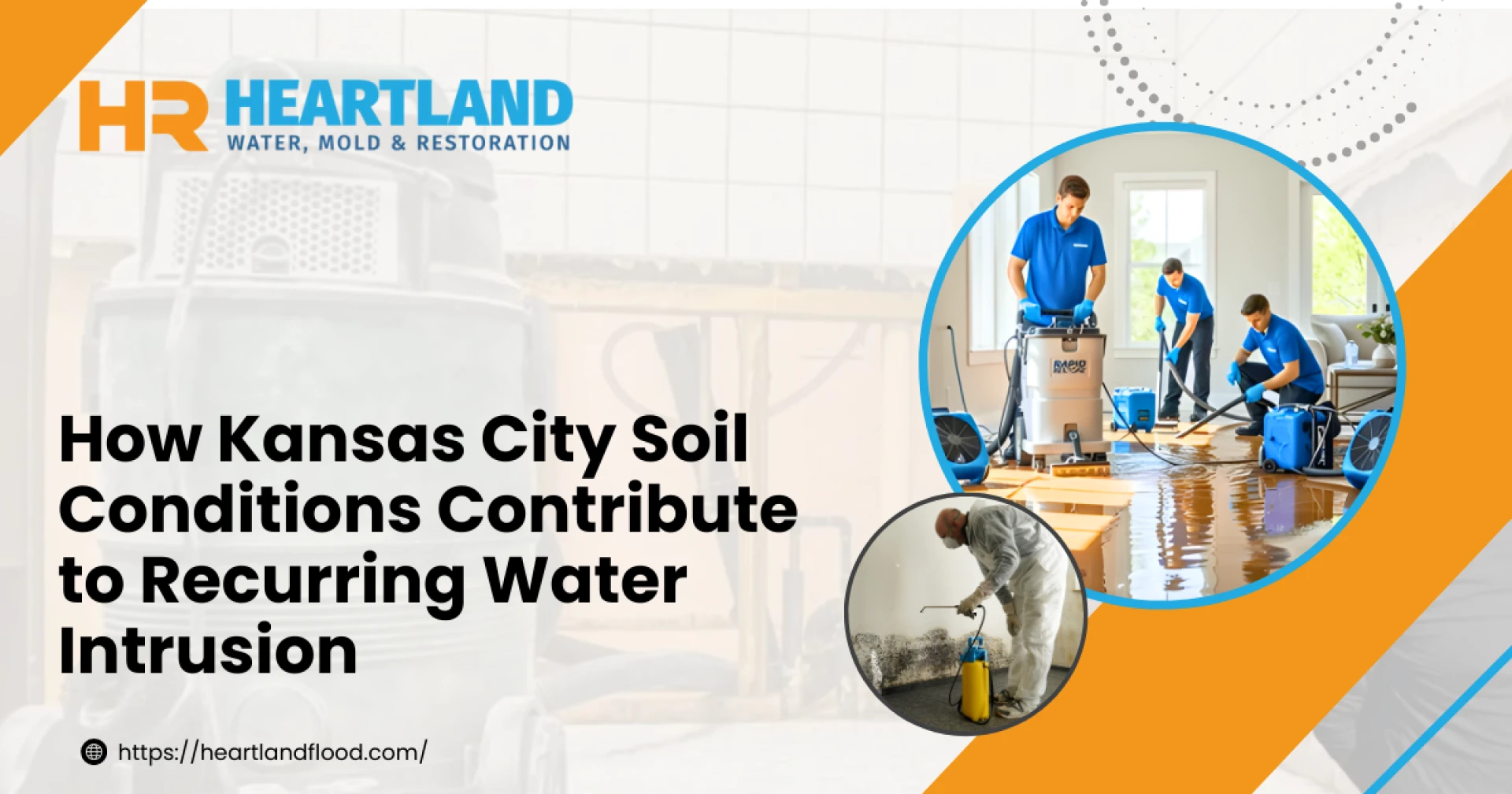

Water intrusion is rarely as simple as a visible leak. In Kansas City homes, moisture problems often return even after repairs appear successful. Homeowners replace drywall, improve drainage, or seal cracks—yet dampness shows up again months later. In many of these cases, the real contributor is outside the home, beneath the ground.
Soil behavior is a consistent factor behind repeated water damage in Kansas City. Property owners usually encounter these issues in basements and other below-grade areas of the home.
When moisture keeps returning, repair costs rise, insurance questions follow, and long-term structural damage becomes more likely.
Why Kansas City Soil Is a Factor
Much of the Kansas City region sits on clay-heavy soil. Unlike sandy or loamy soil, clay does not drain efficiently. It absorbs water slowly, holds it tightly, and releases it over time. When rainfall is prolonged or the ground stays saturated, this soil expands. During dry periods, it contracts.
That constant movement applies pressure to foundation walls. The process is gradual, which is why damage often develops unnoticed.
How Moisture Finds Its Way Inside
Water does not need a dramatic opening to enter a structure. Pressure from saturated soil pushes moisture through hairline cracks, seams near utility lines, and window well areas. Once inside, water tends to spread laterally and downward rather than pooling where it is easy to spot.
This is why water damage restoration in Kansas City frequently uncovers moisture behind finished walls or under flooring—areas that looked dry from the surface.
The Role of Seasonal Conditions
Kansas City weather compounds the issue. Heavy spring rainfall, sudden summer storms, and winter freeze–thaw cycles all influence soil density and movement. Wet soil increases hydrostatic pressure; freezing temperatures shift soil structure, and redirect water paths.
Water intrusion may surface weeks after weather events as a result.
Why Cosmetic Repairs Rarely Solve the Problem
Replacing damaged materials deals with the visible damage instead of its root cause. Moisture that is trapped in subflooring, insulation, or framework continues to move and evaporates unevenly. This eventually results in odors, material deterioration, and multiple repairs.
Effective water damage restoration in Kansas City, MO focuses on moisture detection and controlled drying, not just surface replacement.
Reducing the Chances of Repeat Intrusion
Preventing recurring issues requires a systematic approach. Professionals handling water damage remediation in Missouri usually assess moisture levels, identify likely entry paths, and dry affected materials thoroughly. In many cases, recommendations extend beyond cleanup to drainage or structural considerations that reduce soil-related pressure.
Addressing soil behavior alongside moisture removal is what limits repeat damage.
Left unaddressed, this type of retained moisture often leads to microbial growth, making mold prevention a critical part of the restoration process.
Example:
After a spring storm, a basement feels damp but dries within a day. No repairs are required. But staining and mold appear behind finished walls after a few months. Inspection reveals moisture retained by surrounding clay soil, pressing against the foundation long after rainfall ended.
Earlier evaluation would have reduced both damage and cost.
Why Professional Assessment Makes a Difference
Recurring water intrusion rarely has a single cause. Soil conditions, seasonal weather, and hidden moisture work together over time. Professionals have the tools to measure moisture accurately and the experience to recognize patterns that homeowners cannot see.
That combination is what leads to lasting solutions.
Expert Insight:
This article was reviewed by IICRC-certified water damage restoration professionals with experience evaluating soil-related moisture intrusion in Kansas City homes.
Choosing the Right Restoration Partner
When recurring water intrusion is involved, homeowners often look for restoration teams with local soil knowledge, moisture diagnostics, and experience working with insurance providers.
- IICRC-certified specialists
- Local knowledge of Kansas City construction conditions
- Insurance claim assistance
- 24/7 emergency availability
- Fully licensed and insured services
Their work includes water mitigation services, emergency water removal, structural drying, and mold prevention. Service areas include Overland Park, Olathe, Lenexa, Independence, Lee’s Summit, and Shawnee.
Frequently Asked Questions
Q: Why does basement moisture keep returning in Kansas City homes?
A: Clay soil retains water and applies pressure to foundations long after rainfall ends.
Q: Can water intrusion appear weeks after a storm?
A: Yes. Soil saturation and shifting can redirect moisture over time.
Q: What reduces repeat water damage?
A: Early assessment, proper drying, and addressing soil-related conditions.
A Practical Takeaway
In Kansas City homes, water intrusion usually occurs by underground activities instead of simply visible leaks. Repairs that ignore soil behavior tend to offer temporary relief at best.
Heartland Restoration provides inspection and drying services focused on resolving both current damage and the conditions that cause it to return for homeowners needing experienced support like water mitigation in Missouri.
A professional inspection today can prevent a major restoration tomorrow.
























Sign in to leave a comment.