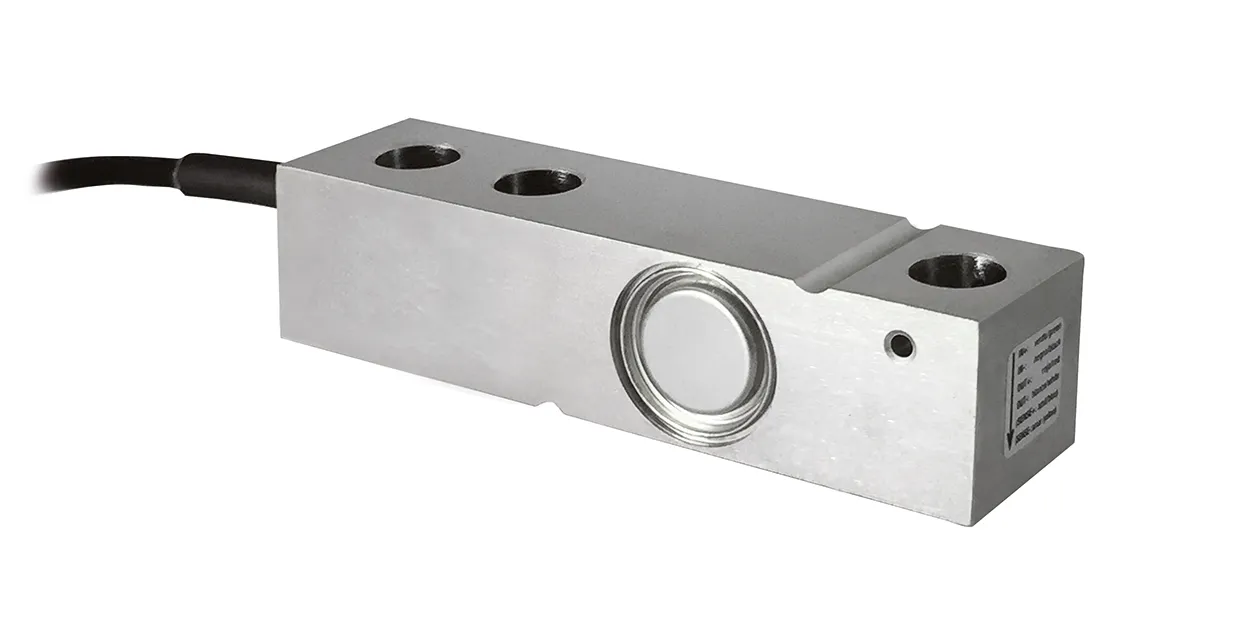

Compact scales may be small in size, but they rely on sophisticated technology to deliver accurate and repeatable weight measurements. At the heart of many modern digital scales is a load cell—a force sensor that converts the physical force created by an object’s weight into an electrical signal that can be processed and displayed as a weight reading.
From retail and food businesses to laboratories, healthcare, manufacturing, and portable weighing applications, load cell technology makes it possible to achieve reliable measurements without the mechanical complexity of traditional weighing systems.
But how does a load cell actually work, and why is this technology so important for compact scales?
What Is a Load Cell?
A load cell is a type of force transducer designed to measure an applied force and convert it into an electrical output. In weighing applications, that force is generally the downward force produced by the weight of an object.
Most modern weighing load cells use strain gauge technology. When weight is placed on the scale, the load cell's internal sensing element undergoes a very small amount of deformation. Strain gauges attached to that element detect the deformation by changing their electrical resistance.
The change is extremely small, but the electronics in the scale can measure and process it to calculate the weight.
How Does Load Cell Technology Work?
The operation of a load cell can be understood as a series of simple steps.
1. Weight Is Applied to the Scale
When an object is placed on a compact scale, its weight creates a downward force. That force is transferred through the weighing platform or pan to the load cell.
The load cell is engineered to respond predictably to the applied force.
2. The Load Cell Flexes Slightly
Inside the load cell is a specially designed metal element, sometimes called a flexure or spring element. When force is applied, it undergoes a very small amount of bending, stretching, or compression.
This deformation is generally too small to see with the naked eye, but it is enough to be detected electronically.
3. Strain Gauges Detect the Deformation
Strain gauges are small electrical sensing elements attached to the load cell's flexure. As the flexure changes shape under load, the strain gauges also deform.
This deformation changes their electrical resistance. The resistance change is proportional to the strain produced by the applied force.
4. The Wheatstone Bridge Measures the Change
The strain gauges are commonly arranged in a Wheatstone bridge circuit. This configuration is highly sensitive to very small changes in electrical resistance.
As weight is applied, the bridge becomes unbalanced and generates a small electrical output corresponding to the applied force.
5. Electronics Convert the Signal into a Weight Reading
The electrical signal from the load cell is processed by the scale's electronics. Signal conditioning and analogue-to-digital conversion allow the system to turn the sensor output into usable digital data.
The scale then uses calibration information to translate the signal into the weight shown on the display.
Why Are Load Cells Ideal for Compact Scales?
Compact scales have limited physical space, so their weighing components need to deliver reliable performance without taking up unnecessary room.
Load cell technology is well suited to this requirement because sensors can be manufactured in relatively small form factors while still providing sensitive force measurement. Miniature and bending-beam load cells, for example, are used in compact weighing applications and equipment where space is restricted.
The technology offers several important advantages.
Small and Space Efficient
Load cells can be integrated into compact scale designs without requiring large mechanical assemblies. This makes them suitable for portable and benchtop weighing equipment.
Accurate Measurements
Strain gauges can detect extremely small changes in deformation, allowing load cell-based systems to measure relatively small changes in applied force.
Repeatable Results
A properly designed and calibrated load cell can produce consistent output when the same load is applied repeatedly. Repeatability is particularly important in applications where consistent weighing results are required.
Fast Digital Readings
Because the load cell produces an electrical signal, the measurement can be electronically processed and displayed quickly. This supports efficient weighing in retail, production and other applications.
Flexible Applications
Load cell technology is used in scales across numerous industries, including food, agriculture, manufacturing, healthcare, laboratories and logistics.
What Types of Load Cells Are Used in Compact Scales?
Different load cell designs are available depending on the scale's size, capacity and application.
Bending beam load cells are particularly relevant to compact weighing equipment. They measure the small deflection of a beam when a force is applied and use strain gauges to convert that deformation into an electrical signal. Their compact dimensions make them suitable for scales and equipment where space is limited.
Other load cell configurations can be designed for compression, tension or specialised force measurement. The appropriate design depends on the mechanical construction and requirements of the weighing system.
What Affects Load Cell Accuracy?
The load cell itself is only one part of a weighing system. Accurate performance depends on the complete scale design, including mechanical installation, electronics, calibration and operating conditions.
Several factors can influence measurement performance:
- Temperature: Changes in temperature can affect sensor and electronic performance.
- Vibration: Movement or vibration around the scale can interfere with stable readings.
- Mounting: Incorrect installation can introduce unwanted mechanical forces.
- Overloading: Applying loads beyond the rated capacity can damage the sensor.
- Calibration: A scale needs appropriate calibration to translate sensor output into accurate weight readings.
- Environmental conditions: Moisture, dust and other conditions may affect equipment depending on the scale's construction.
Recent guidance on load cell integration also highlights factors such as temperature, vibration and mounting quality as important considerations for weighing accuracy.
Load Cells vs Traditional Mechanical Weighing
Traditional mechanical scales typically rely on physical mechanisms such as springs, levers or balances to indicate weight. Digital scales using load cells take a different approach by converting force into an electrical signal.
This enables compact scales to provide digital displays and opens the door to features such as data logging, connectivity, automation and integration with other systems.
For businesses that need fast and repeatable measurements, this electronic approach can provide significant operational advantages.
Applications of Load Cell Technology in Compact Scales
Load cell-based compact scales can be used wherever accurate weighing is required within a relatively small footprint.
Common applications include:
- Retail weighing: Measuring products sold by weight.
- Food preparation: Weighing ingredients and portions.
- Laboratories: Measuring samples and materials.
- Healthcare: Supporting weighing equipment where appropriate.
- Manufacturing: Checking components, materials and products.
- Packaging: Verifying product quantities before dispatch.
- Agriculture: Weighing smaller quantities of produce or materials.
The required load cell capacity, accuracy and construction will vary depending on the application.
How to Choose a Compact Scale with the Right Load Cell
When selecting a compact digital scale, consider more than its maximum capacity.
First, determine the typical and maximum loads that will be measured. The required readability and accuracy should also be considered, particularly if the scale will be used for precise measurements.
Next, consider the environment. A laboratory scale, food-processing scale and industrial scale may face very different operating conditions and therefore require different construction and protection.
The scale's platform size, available space, weighing frequency, connectivity requirements and applicable regulatory requirements should also be assessed.
Choosing a scale with a load cell appropriately matched to the application can help support reliable long-term performance.
Conclusion
Load cell technology is the foundation of many modern compact digital scales. By converting mechanical force into a measurable electrical signal, load cells allow relatively small weighing systems to deliver fast, consistent and accurate measurements.
The basic process is straightforward: weight creates force, the load cell flexes slightly, strain gauges detect the deformation, a Wheatstone bridge converts the resistance change into an electrical signal, and the scale's electronics process that signal into a weight reading.
Although the technology is compact, its performance depends on appropriate sensor selection, mechanical design, calibration and operating conditions. Understanding how load cells work can help businesses choose the right compact weighing solution for their specific requirements.
Frequently Asked Questions
What is a load cell in a weighing scale?
A load cell is a force sensor that converts the force produced by an object's weight into an electrical signal that can be processed into a weight measurement.
How does a load cell measure weight?
Weight creates a force on the load cell, causing a very small deformation. Strain gauges detect this deformation through a change in electrical resistance, and the resulting signal is processed to determine the weight.
Why are load cells used in compact scales?
Their compact design, sensitivity and ability to produce an electronic output make load cells well suited to small digital weighing systems.
What is a strain gauge load cell?
It is a load cell that uses strain gauges to detect deformation caused by an applied force. The change in resistance is measured electronically to determine the applied load.
Do load cells need calibration?
Yes. Calibration helps ensure that the electrical output from the load cell and scale electronics corresponds correctly to known weights. The frequency and process depend on the scale, application and required accuracy.
Can load cells be used for high-precision weighing?
Yes. Load cell technology is used across a wide range of weighing applications, from small measurements to large industrial weighing systems.


























Sign in to leave a comment.