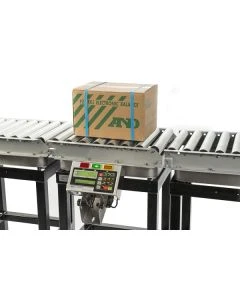
In today’s fast-paced manufacturing landscape, accuracy, efficiency, and compliance are non-negotiable. Industries such as food processing, pharmaceuticals, cosmetics, and logistics rely heavily on checkweighers to ensure product weight consistency and regulatory compliance. Traditionally, checkweighers have been precise mechanical systems designed to verify that products meet pre-set weight limits. However, the integration of artificial intelligence (AI) and automation is now transforming these systems into smart, connected quality control hubs.
From predictive maintenance to real-time data analytics, AI-powered checkweighers are redefining how manufacturers approach quality assurance, productivity, and cost control. Let’s explore how this technological evolution is shaping the future of industrial weighing.
The Evolution of Checkweighers
Conventional checkweighers operate on a straightforward principle: weigh products in motion and reject those that fall outside the acceptable tolerance range. While highly effective, earlier systems relied heavily on manual oversight, static programming, and reactive maintenance.
Modern production environments demand more. Higher output speeds, stricter regulatory standards, and the need for real-time insights have driven the adoption of AI and automation technologies. Today’s checkweighers are not just measuring devices—they are intelligent systems capable of learning, adapting, and optimizing processes autonomously.
1. Real-Time Data Analytics and Smart Decision-Making
AI-powered checkweighers can process vast amounts of production data in real time. Instead of simply flagging underweight or overweight products, these systems analyze patterns, detect trends, and provide actionable insights.
For example, if a filling machine begins to drift slightly out of specification, a traditional system might only reject faulty items. An AI-enhanced checkweigher, however, can detect the deviation early and alert operators—or automatically adjust upstream equipment—to prevent further errors.
This proactive approach reduces:
- Product giveaway (overfilling)
- Waste from rejected items
- Downtime caused by quality issues
- Compliance risks
By turning raw weight data into intelligent recommendations, AI significantly enhances operational efficiency.
2. Predictive Maintenance and Reduced Downtime
Unplanned downtime can be costly, particularly in high-volume production facilities. AI-driven predictive maintenance is one of the most impactful advancements in modern checkweighers.
Using sensors and machine learning algorithms, AI systems monitor:
- Load cell performance
- Conveyor speed consistency
- Vibration levels
- Environmental factors
By identifying subtle changes that indicate wear or malfunction, the system can predict potential failures before they occur. Maintenance teams receive alerts, allowing them to address issues during scheduled downtime rather than reacting to unexpected breakdowns.
This predictive capability extends equipment lifespan and ensures continuous production with minimal interruptions.
3. Enhanced Accuracy Through Machine Learning
Machine learning algorithms continuously improve system accuracy by analyzing historical weight data. Over time, AI models refine tolerance settings and optimize rejection thresholds based on real production patterns.
In industries like pharmaceuticals or high-value food production, even slight weight inconsistencies can lead to compliance violations or financial losses. AI-enabled checkweighers minimize variability by:
- Filtering out environmental noise
- Compensating for conveyor fluctuations
- Adjusting for temperature or humidity effects
The result is improved precision and fewer false rejects, which translates to cost savings and greater reliability.
4. Automated Feedback Loops for Process Optimization
One of the most transformative features of AI-integrated checkweighers is the ability to create automated feedback loops. Instead of operating in isolation, the checkweigher communicates directly with upstream filling or packaging machines.
For instance:
- If products are consistently trending overweight, the system can automatically reduce fill volume.
- If underweight trends are detected, adjustments can be made instantly.
- If abnormal patterns arise, production can pause automatically to prevent large-scale waste.
This closed-loop control improves consistency while reducing manual intervention. It also ensures that corrective actions happen immediately, not after hundreds of non-compliant products have already been produced.
5. Improved Compliance and Reporting
Regulatory compliance is a critical concern in industries such as food and pharmaceuticals. AI-powered checkweighers streamline documentation and reporting by automatically recording and storing detailed production data.
Key benefits include:
- Digital audit trails
- Automated compliance reports
- Secure data storage
- Real-time quality monitoring dashboards
With advanced analytics, manufacturers can quickly demonstrate adherence to industry standards and respond efficiently during audits. This transparency builds trust with regulators and customers alike.
6. Integration with Industry 4.0 and Smart Factories
AI-enabled checkweighers are central to Industry 4.0 initiatives. As factories become more connected, checkweighers serve as valuable data nodes within larger manufacturing ecosystems.
Through IoT connectivity, these systems integrate with:
- Enterprise Resource Planning (ERP) systems
- Manufacturing Execution Systems (MES)
- Warehouse Management Systems (WMS)
- Cloud-based analytics platforms
ighing
7. Advanced Quality Control Beyond Weight
AI is expanding the role of checkweighers beyond simple weight verification. When integrated with vision systems and metal detectors, checkweighers become part of a comprehensive inspection solution.
Combined systems can:
- Detect packaging defects
- Identify missing components
- Verify label accuracy
- Ensure product integrity
AI algorithms enhance defect detection accuracy by learning from past inspection data. This multi-layered quality control approach strengthens product safety and brand reputation.
8. Sustainability and Cost Efficiency
Sustainability is becoming a key priority for manufacturers. AI-driven checkweighers contribute to environmental and financial sustainability by reducing product giveaway and waste.
Overfilling products—even slightly—can lead to significant material loss over time. Intelligent systems minimize excess filling while ensuring compliance with minimum weight regulations. This precision:
- Reduces raw material costs
- Minimizes packaging waste
- Lowers energy consumption
- Supports corporate sustainability goals
In competitive markets, even small efficiency improvements can deliver substantial long-term savings.
9. Enhanced User Experience and Automation
Automation also improves the user experience. Modern checkweighers feature intuitive touchscreen interfaces, guided setup processes, and automated product changeovers.
AI systems can store product profiles and automatically adjust settings for different SKUs. This reduces setup time, minimizes human error, and increases line flexibility.
Operators benefit from:
- Clear visual dashboards
- Automated alerts
- Simplified troubleshooting
- Reduced manual calibration requirements
By reducing reliance on manual adjustments, AI-driven automation empowers staff to focus on higher-value tasks.
10. The Future of AI in Checkweighing
As AI technologies continue to evolve, the future of checkweighers looks even more promising. Emerging innovations may include:
- Self-learning systems that optimize performance without human input
- Advanced anomaly detection using deep learning
- Greater integration with robotics and automated packaging lines
- Cloud-based AI platforms for global production oversight
These advancements will further enhance efficiency, reliability, and compliance in high-speed manufacturing environments.
Conclusion
AI and automation are fundamentally transforming checkweighers from standalone inspection tools into intelligent, connected quality control systems. Through real-time analytics, predictive maintenance, automated feedback loops, and Industry 4.0 integration, modern checkweighers are helping manufacturers reduce waste, improve compliance, and enhance operational efficiency.
For businesses aiming to stay competitive in increasingly demanding markets, investing in AI-powered checkweighing technology is no longer a luxury—it’s a strategic necessity. By embracing these innovations, manufacturers can achieve greater precision, lower costs, and build more resilient production systems for the future.
The evolution of checkweighers reflects a broader shift toward smarter manufacturing, where data-driven decisions and automation drive sustainable growth and long-term success.



























Sign in to leave a comment.