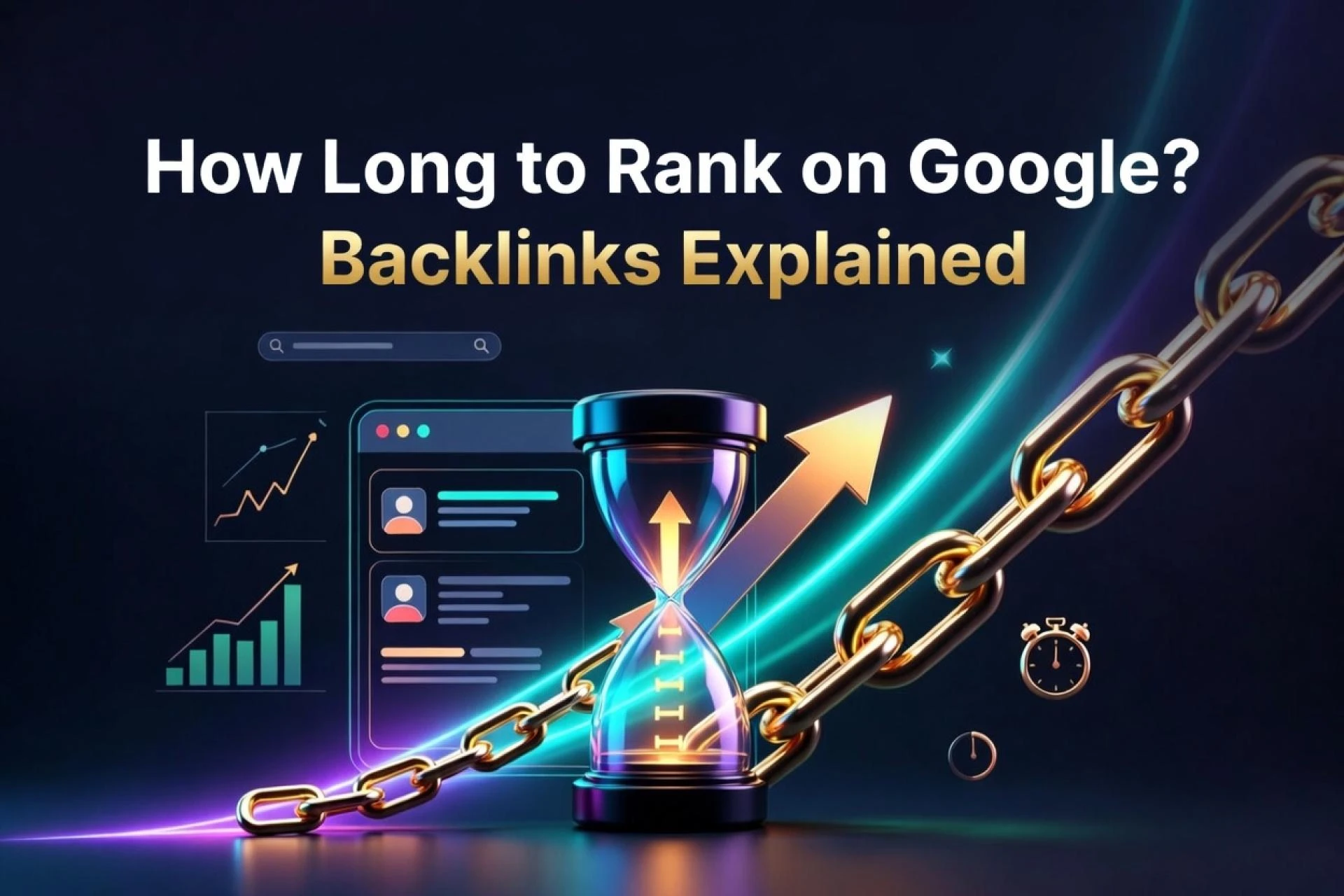

If you've ever published a piece of content and then refreshed Google every day waiting for it to appear on page one, you're not alone. It's one of the most common frustrations in SEO. You do everything right, and still nothing seems to move. The honest answer to "how long does it take to rank on Google?" is that it depends. But what it depends on is far more controllable than most people realise, and backlinks sit right at the centre of it.
The Reality of Google's Ranking Timeline
Most websites don't rank overnight. According to a study by Ahrefs, the average top-ranking page on Google is over two years old, and the pages sitting in positions one through three are typically three or more years old. That sounds discouraging until you understand why it takes that long, because when you understand the reason, you can directly influence the timeline.
Google ranks pages it trusts. Trust is built through relevance, user signals, and most critically, authority. Authority in Google's eyes is largely determined by the quality and quantity of backlinks pointing to your site. This is the lever most people ignore while they obsess over on-page tweaks that make a fraction of the difference.
New websites typically go through what's informally called the Google Sandbox, a period of anywhere from three to six months where Google is essentially evaluating whether your site is legitimate. During this period, even well-optimised content may struggle to rank regardless of how good it is. Backlinks are one of the strongest signals that can shorten this window.
What Backlinks Actually Do for Your Rankings
A backlink is a vote of confidence from one website to another. When a credible, topically relevant site links to your page, it passes what SEOs call link equity, essentially telling Google that this content is worth reading. The more of these signals you accumulate from quality sources, the faster Google builds confidence in your site.
But not all backlinks are equal. A single link from a high-authority site in your niche will do more for your rankings than 50 links from unrelated, low-quality directories. This is why niche relevance has become one of the most important factors in modern link building. Google's own documentation confirms that the quality and context of links matters significantly more than raw numbers.
Here is what backlinks practically influence. They determine how quickly Google discovers and indexes your content, because Googlebot follows links and more quality links pointing to your pages means faster crawling. They also influence how high you rank for competitive keywords, since on-page SEO can only get you so far and backlinks are usually what separates page one results from page two. Beyond that, they affect how stable your rankings are over time, as sites with strong backlink profiles tend to hold their positions even after algorithm updates. And perhaps most underrated, they lift your domain's overall authority, which benefits every page on your site, not just the ones being linked to directly.
A Realistic Ranking Timeline Based on Backlink Activity
Here's a rough breakdown of how timelines typically shift depending on your link building activity.
With no active link building, expect anywhere from 12 to 24 months to see meaningful rankings for low to medium competition keywords. High competition keywords may never rank without links, full stop.
With basic link building of around 5 to 10 quality links per month, you're looking at 6 to 12 months for low competition keywords and 12 to 18 months for medium competition. Results vary significantly by niche.
With consistent, niche-relevant link building of 10 to 20 or more quality links per month, you can see traction in 3 to 6 months for low competition keywords and 6 to 12 months for medium competition. This is where serious growth starts to compound.
That compounding effect is worth paying attention to. Unlike paid ads that stop working the moment you stop paying, backlinks continue to deliver ranking value for as long as they exist on the web. Every quality link you build today is an asset that keeps working in the background.
The Type of Backlinks That Move the Needle Fastest
Not all link building tactics are created equal in 2026. Some that worked five years ago now carry little weight or, worse, can trigger a manual penalty. Here is what actually works.
Guest post backlinks remain one of the most effective and Google-compliant methods for building authority. When your content is published on a real, niche-relevant website with its own organic traffic, the link you receive carries genuine editorial weight. For businesses that want to build links at scale without doing cold outreach, services like UpBuild's guest post backlink network do the work for you directly, building quality and affordable backlinks with verified publishers in your niche, cutting months off the prospecting and negotiation process.
Digital PR and linkable assets like original research, data studies, and tools attract natural backlinks from journalists and bloggers. These are high effort but yield exceptionally high authority links.
Niche edits, also called link insertions, involve placing your link into existing content on relevant websites. When done through legitimate, high-traffic publishers, these can deliver faster results since the page already has authority built up.
HARO and expert quotes are great for earning links from news sites and high authority publications. They are time-consuming but the link quality is hard to beat.
What to actively avoid is link farms, private blog networks, spammy directory submissions, and any service offering hundreds of links for a few dollars. These can earn you a Google penalty that takes far longer to recover from than it would have taken to rank organically in the first place.
The Bottom Line
There is no universal answer to how long Google rankings take, but there is a clear pattern. Websites that invest consistently in quality, relevant backlinks rank faster, rank higher, and hold their positions longer than those relying on content alone. The difference between a site that ranks in four months and one that takes two years is, more often than not, a deliberate and well-executed link building strategy.
If you're starting from zero, set realistic expectations. Give yourself three to six months of consistent effort before you expect meaningful traction. But don't let that timeline discourage you. Every backlink you build today is shortening the gap between where you are now and page one. Start now, stay consistent, and the results will compound in ways that paid traffic simply cannot replicate.






















Sign in to leave a comment.