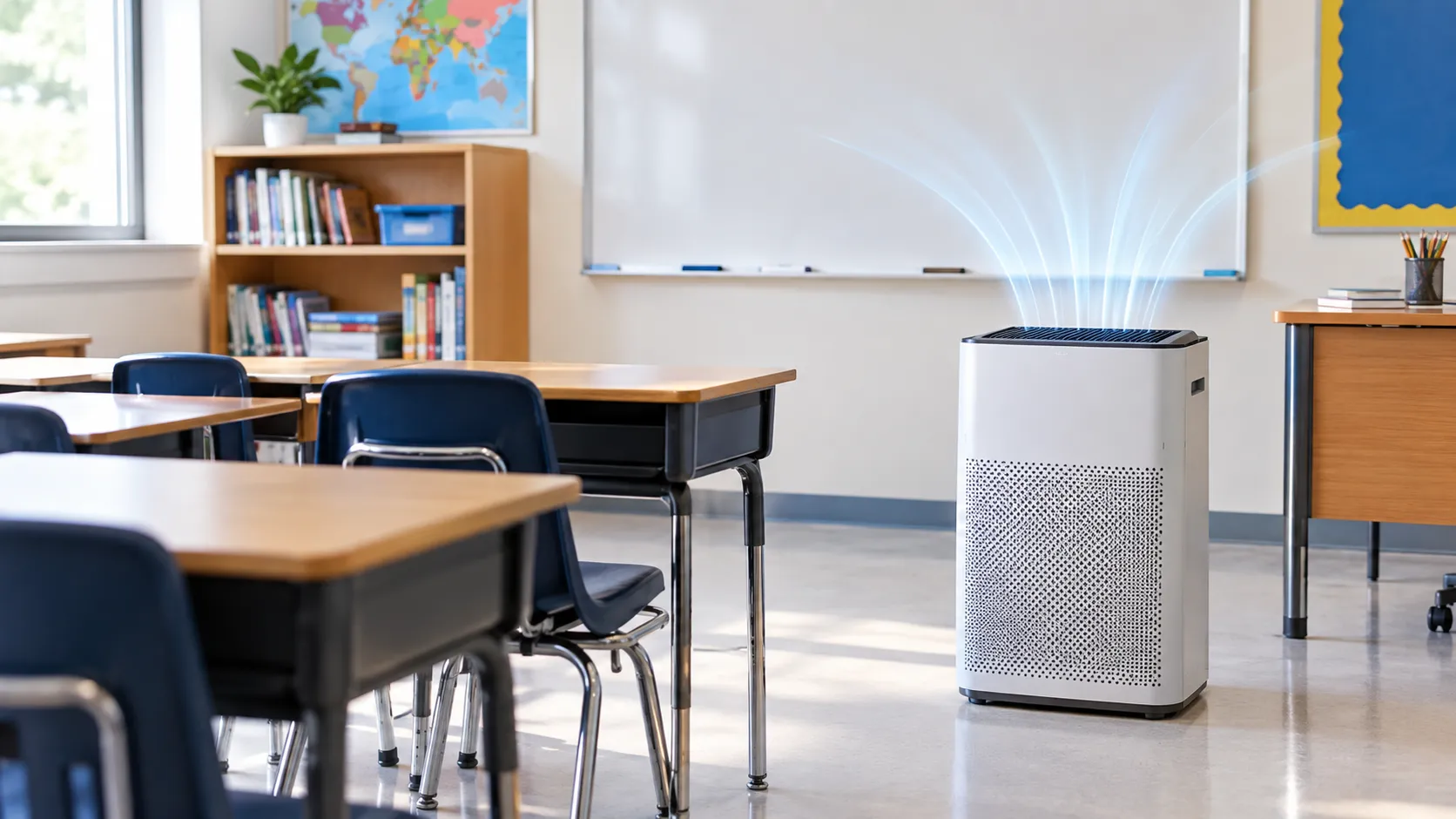

A teacher unpacks a box, sets up a classroom air purifier, and wonders: is one enough? It's a fair question. Guess too low, and the air barely gets cleaned. Guess too high, and you pay for noise and filters you didn't need. The good news is that the math is simple. All you need is a tape measure and a calculator. This guide shows how to size an air purifier for classroom use, walks through a real example, and answers the questions schools ask most.
The Short Answer: Most Classrooms Need One or Two Units
Most standard classrooms of 500 to 1,000 square feet need one or two air purifiers. The right number depends on room size, ceiling height, and how many times per hour you want the air cleaned. Size the unit to the room, not the headcount.
More students do add more germs and dust, so aim toward the higher end when a room is crowded.
The Formula for Sizing an Air Purifier for Classroom Use
You need three steps.
- Find the room's volume. Multiply floor area by ceiling height. A 900-square-foot room with a 9-foot ceiling holds 8,100 cubic feet.
- Pick a target for air changes per hour, or ACH. This is how many times the room's air passes through the purifier each hour. The CDC suggests about five or more for shared indoor spaces. Some school guidance uses a range of three to six.
- Calculate the CADR you need. Multiply volume by ACH, then divide by 60.
CADR stands for clean air delivery rate. It's a tested rating of how much clean air a unit produces per minute.
Worked Example: A 900-Square-Foot Classroom
Volume: 900 × 9 = 8,100 cubic feet.
Target: 5 ACH.
Math: 8,100 × 5 = 40,500. Divide by 60 and you get about 675 CADR.
A single unit rated at 400 CADR gives this room about 3 ACH. That's decent, but short of the target. Two units rated around 350 each get you to roughly 5 ACH, and each can run on a quieter setting.
| Classroom size | Volume (9 ft ceiling) | CADR for 5 ACH | Typical setup |
|---|---|---|---|
| 600 sq ft | 5,400 cu ft | About 450 | One large or two small units |
| 900 sq ft | 8,100 cu ft | About 675 | Two units |
| 1,200 sq ft | 10,800 cu ft | About 900 | Two or three units |
Why Bigger Isn't Always Better
It's tempting to buy the strongest machine. But a very powerful unit is loud, and a loud room is hard to teach in. Students also start asking to turn it off, which defeats the purpose.
Speed matters in another way too. Air needs enough time inside the filters to get cleaned. Engineers call this dwell time. You can think of it like a dose: too fast a pass means less contact with the filter. Two or three quiet units often beat one loud one, because they clean the air well and stay on all day.
What Schools Are Asking About in 2026
A few questions keep coming up as budgets and habits change.
- Funding. Pandemic-era relief money has largely wound down, so districts now weigh the cost per room. Check current state programs, district budgets, and PTA fundraising before you buy.
- More than one threat. People used to ask only about COVID. Now they're also asking about flu, RSV, and wildfire smoke.
- Teacher-owned units. Many teachers want to bring their own. Districts often have rules about electrical and fire safety, so ask first.
Ozone concerns. Skip any machine that produces ozone. The EPA warns that it can irritate the lungs.
How to Choose the Best Air Purifier for Classroom Use
Shopping for the best air purifier for classroom use gets easier with a short checklist.
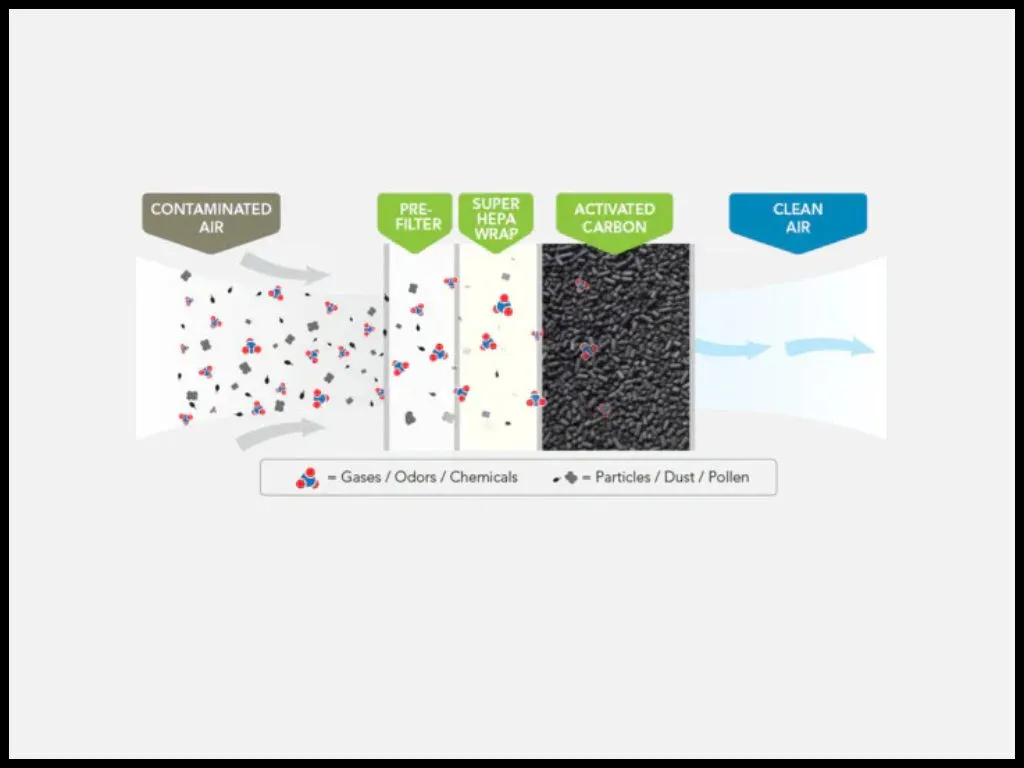
- True HEPA filter. Avoid "HEPA-like" labels.
- A tested CADR that fits your room size.
- Low noise. Check decibels at the setting you'll actually use.
- Reasonable filter costs. Ask for the yearly price up front.
- No ozone, and a cord that won't become a trip hazard.
When it comes to air purifiers for classrooms, placement counts too. Keep units a foot or more from walls and away from curtains. Point the airflow away from students' desks.
Frequently Asked Questions
How many air purifiers does a classroom need?
Most classrooms need one or two. Calculate room volume, choose an ACH target, and divide by 60 to find the CADR you need.
Does the number of students change the answer?
Not directly, since sizing uses room volume. But a packed room adds more germs and dust, so aim for a higher ACH.
Are classroom air purifiers loud?
They can be. Look for models that stay quiet on the setting you'll run all day, and compare decibel numbers.
How often should filters be changed?
Many HEPA filters last 6 to 12 months. Follow the maker's schedule, and change them sooner if the room is dusty or smoky.
Can an air purifier replace ventilation?
No. Fresh air and purification work well together. Many older school buildings have weak ventilation, so a purifier can fill the gap.
Conclusion
Choosing an air purifier for classroom use doesn't have to be a guessing game. Measure the room, pick an ACH target, and use the simple formula to find the CADR you need. Most classrooms land on one or two quiet units. Whether you're comparing air purifiers for schools in bulk or picking one for a single teacher, focus on true HEPA, a tested rating, and a noise level people can live with.

























Sign in to leave a comment.