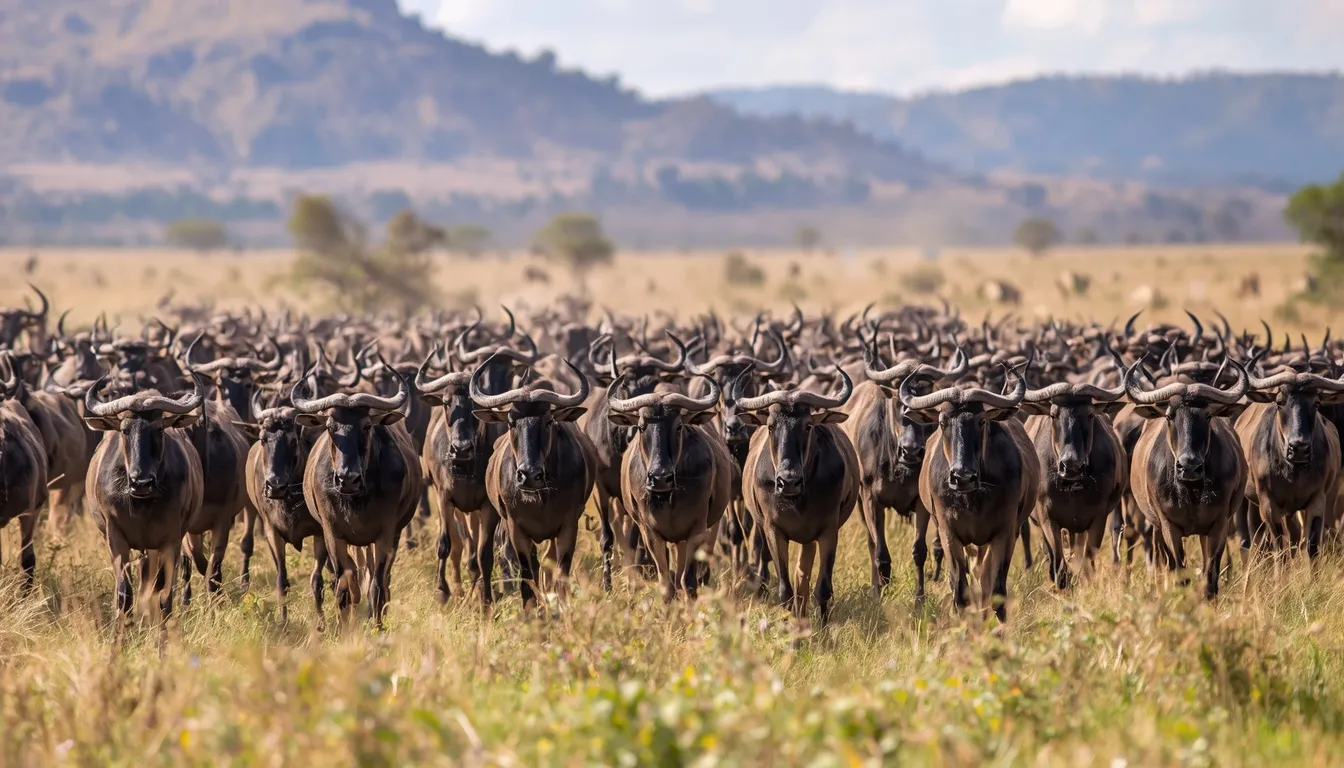

The wildebeest migration Masai Mara experience is one of the most famous wildlife events on Earth. Every year, millions of animals move across the Serengeti–Mara ecosystem in search of fresh grazing, but only a portion of this massive herd actually reaches Kenya’s Masai Mara National Reserve.
So, how many wildebeest reach the Masai Mara during the migration?
The answer is: around 1 to 1.5 million wildebeest are part of the overall migration, but at peak season, roughly 200,000 to 500,000 wildebeest may be present in the Masai Mara at one time. The number changes constantly depending on rainfall, river conditions, and grazing availability.
Understanding this movement helps explain why the Masai Mara is one of the best places in the world to witness the Great Wildebeest Migration.
Understanding the Wildebeest Migration Masai Mara Route
The wildebeest migration is not a straight journey. It is a continuous circular movement between Tanzania’s Serengeti and Kenya’s Masai Mara ecosystem.
The herds follow rainfall patterns:
- Fresh grass in Tanzania (start of cycle)
- Movement north toward Kenya
- Arrival in Masai Mara during dry season
- Return to Serengeti when rains begin again
This means not all wildebeest arrive in Masai Mara at the same time. Instead, they move in waves over several months.
How Many Wildebeest Actually Reach Masai Mara?
During the peak migration season (usually July to October), estimates suggest:
- Total migration population: ~1.5 million wildebeest
- Wildebeest in Masai Mara at peak: 200,000 – 500,000
- Zebras and gazelles also present in large numbers
At any given moment, the number in Masai Mara depends on:
- River crossing success (especially Mara River)
- Predator pressure
- Rainfall and grass availability
- Movement back and forth across the border
Some herds stay only a few days, while others remain for weeks before moving again.
Why Don’t All Wildebeest Stay in Masai Mara?
A common misconception is that the entire migration stays in Kenya. In reality, the wildebeest migration Masai Mara phase is just one stage of a much larger ecosystem cycle.
There are several reasons not all animals remain:
1. Limited Grazing Space
The Masai Mara is much smaller than the Serengeti. It cannot sustain the entire migration for long periods.
2. Continuous Movement
Wildebeest are always following fresh grass. Even within Masai Mara, herds keep moving.
3. River Risks
Crossing the Mara River is dangerous. Some herds delay crossing or turn back if conditions are risky.
4. Predator Pressure
Lions, hyenas, and crocodiles influence herd movement patterns.
When Do the Most Wildebeest Reach Masai Mara?
The highest concentration of wildebeest in Masai Mara usually occurs between:
July to October (Peak Migration Season)
- Massive river crossings
- Highest herd density
- Best wildlife viewing opportunities
- Most dramatic predator interactions
During this time, visitors are most likely to witness:
- Mara River crossings
- Large moving herds
- Intense predator-prey interactions
The Role of Mara River Crossings
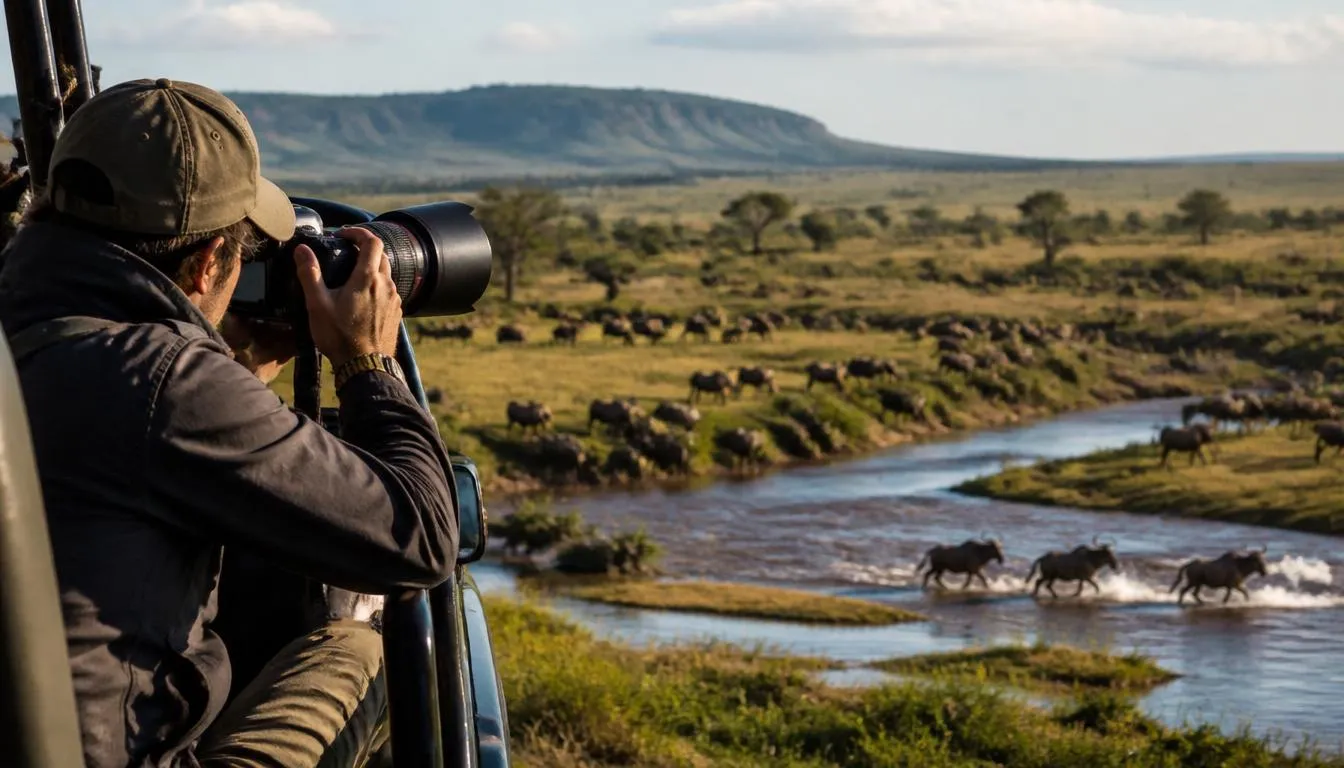
The Mara River is the defining feature of the wildebeest migration Masai Mara experience.
Every year:
- Herds gather on riverbanks for hours or days
- Crocodiles wait in deep waters
- Wildebeest cross in chaotic waves
- Some animals successfully cross, others do not
These crossings are unpredictable, but they are the main reason Masai Mara is world-famous.
Why Masai Mara Feels So Full of Wildlife
Even though only a portion of the migration enters Masai Mara, the area feels incredibly dense with wildlife because:
- The reserve is smaller and more concentrated than Serengeti
- Animals cluster around limited water sources
- Predators follow the herds closely
- Open landscapes improve visibility
This makes sightings easier and more dramatic for visitors.
Serengeti vs Masai Mara Migration Numbers
To understand the bigger picture:
- Serengeti: Hosts the majority of the migration for most of the year
- Masai Mara: Receives peak seasonal influx between July and October
So while Serengeti holds the full cycle, Masai Mara delivers the most intense short-term wildlife action.
Is Masai Mara the Best Place to See the Migration?
For many travelers, yes—especially if the goal is to see:
- River crossings
- Large predator activity
- High-density wildlife viewing
- Short, action-packed safari experiences
However, Serengeti offers a longer and more continuous migration experience.
Final Thoughts
The wildebeest migration Masai Mara is only one part of a much larger natural cycle, but it is also the most dramatic phase of the journey.
While the full migration includes about 1.5 million wildebeest, only 200,000 to 500,000 animals typically occupy the Masai Mara at peak times. This concentrated movement is what creates the famous river crossings and unforgettable safari experiences.
Whether you see a few thousand or hundreds of thousands at once, witnessing the Great Wildebeest Migration in Masai Mara remains one of the most powerful wildlife spectacles on Earth.
Frequently Asked Questions
How many wildebeest are part of the migration to Masai Mara?
Approximately 1 to 1.5 million wildebeest participate in the overall migration each year. However, during peak season, around 200,000 to 500,000 wildebeest may be present in the Masai Mara at any given time, depending on environmental factors.
What factors influence the number of wildebeest in Masai Mara?
The number of wildebeest in the Masai Mara is influenced by several factors, including rainfall, grass availability, river crossing conditions, and predator pressure. These elements cause the herds to move in waves rather than all arriving at once.
Why don’t all wildebeest stay in Masai Mara?
Not all wildebeest stay in the Masai Mara due to limited grazing space, continuous movement in search of fresh grass, the dangers of crossing the Mara River, and predator pressure. The Masai Mara is smaller than the Serengeti and cannot sustain the entire herd for long periods.
When is the best time to see the wildebeest migration in Masai Mara?
The best time to witness the wildebeest migration in the Masai Mara is between July and October, during the peak migration season. This period features the highest concentration of wildebeest, dramatic river crossings, and intense predator interactions.
What makes the Mara River crossings so special?
The Mara River crossings are a highlight of the wildebeest migration experience, as herds gather on the banks and attempt to cross while facing threats from crocodiles and other predators. These chaotic and unpredictable crossings are what make the Masai Mara a world-renowned wildlife viewing destination.
Is the Masai Mara the best place to see the wildebeest migration?
Many travelers consider the Masai Mara the best place to see the migration, especially for witnessing river crossings and high predator activity. However, the Serengeti offers a longer and more continuous migration experience, so it depends on the type of adventure you're seeking.
Why does the Masai Mara feel so full of wildlife?
The Masai Mara feels dense with wildlife despite only a portion of the migration entering the reserve. Its smaller size, concentrated water sources, and open landscapes allow for easier visibility and attract both prey and predators, creating dramatic wildlife viewing opportunities.























Sign in to leave a comment.