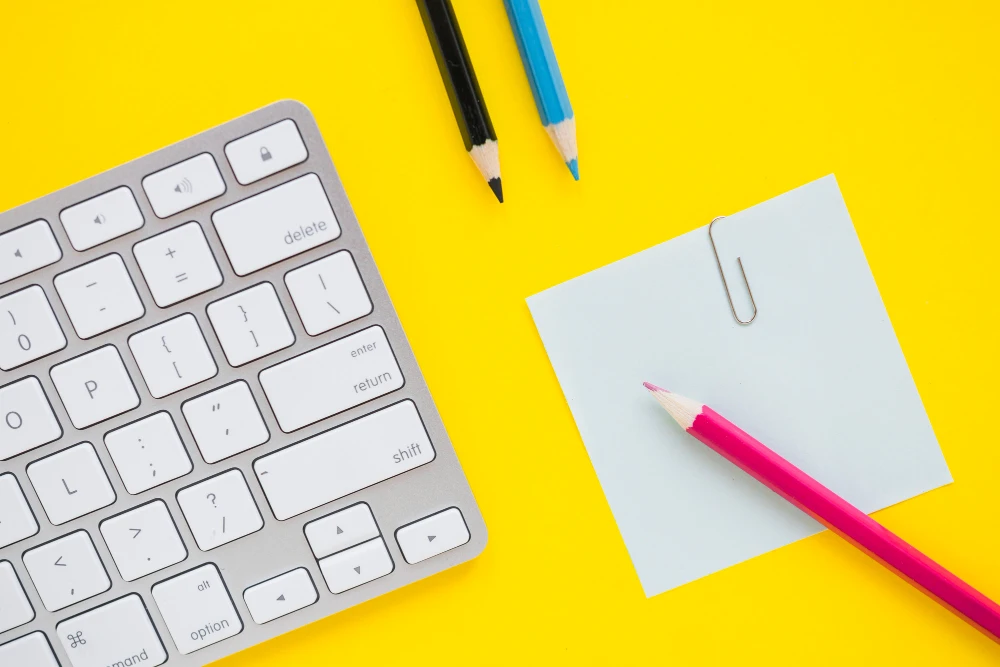

When the pandemic shuttered offices across the country in March 2020, Jennifer Ortiz found herself staring at a laptop on her kitchen table, surrounded by the chaos of remote work and virtual schooling for her two children. A paralegal at a bustling D.C. law firm, Ortiz had always considered herself reasonably tech-savvy. But within weeks, the volume of emails, legal briefs, and digital documentation had tripled. Her two-finger hunting-and-pecking method, which had served her adequately for two decades, suddenly felt like trying to navigate the Beltway on a bicycle.
“I was drowning,” Ortiz, 43, recalled during an interview last month, her fingers now flying across a mechanical keyboard with the confidence of a concert pianist. “My boss would send me a draft at 9 a.m. and need revisions by noon. I’d be up until midnight, hunting for keys while my kids fought over the good tablet in the background. Something had to change.”
What changed, for Ortiz and millions of Americans, was a quiet revolution in how we value the most fundamental digital skill: typing. While headlines focused on Zoom fatigue and the great resignation, a parallel transformation was occurring in living rooms and home offices. Americans were discovering that their economic survival depended on a skill many had neglected since high school.
The numbers tell a striking story. According to a Bureau of Labor Statistics report released in January, jobs requiring “advanced digital literacy” a category that explicitly includes typing proficiency above 60 words per minute grew by 34% between 2020 and 2023. The average office worker now spends approximately 3.1 hours per day typing, up from 2.4 hours in 2019. But perhaps more revealing is what happened in the hidden corners of the internet, where millions turned in desperation.
Typing test websites, those forgotten relics of the early internet era, experienced a renaissance that few could have predicted. Traffic to online typing assessment platforms surged by over 400% during the first year of the pandemic, according to web analytics firm SimilarWeb. The phenomenon caught even industry veterans off guard. “We were running on a server designed for maybe 50,000 users a month,” said Marcus Webb, founder of a popular typing practice platform. “In April 2020, we hit 2 million users in a single week. The site crashed for three days. I thought it was a DDoS attack at first.”
The new users weren’t just office workers. They were teachers suddenly creating digital lesson plans, retail workers applying for data entry positions, students navigating remote learning, and retirees returning to the workforce to supplement inflation-ravaged savings. What united them was a stark realization: in a touch-screen world, the keyboard remained king.
Dr. Amanda Richardson, a digital ergonomics researcher at Georgetown University, has spent the last three years studying this phenomenon. “We’ve witnessed the largest voluntary upskilling event in American history,” she explained in her campus office, surrounded by motion-capture equipment used to analyze typing mechanics. “But unlike traditional education, this was driven by pure economic anxiety. People weren’t learning for a credential. They were learning because their mortgage depended on it.”
Her research, published in the Journal of Occupational Health Psychology last fall, surveyed over 5,000 remote workers. The findings were stark: employees who typed fewer than 40 words per minute were 2.7 times more likely to report job insecurity and 3.4 times more likely to experience workplace anxiety. Those above 70 WPM reported significantly higher job satisfaction and perceived productivity.
The implications extend beyond individual workers. Companies began quietly screening for typing speed in ways they hadn’t since the 1980s. A mid-sized insurance firm in Cleveland made headlines in 2022 when it began including typing assessments in its hiring process for customer service positions. The company’s HR director defended the move in a LinkedIn post that went viral: “We’re not looking for secretaries from a 1950s typing pool. We’re looking for people who can think and communicate at the speed of business. In a remote environment, if you can’t type quickly and accurately, you can’t collaborate effectively. It’s that simple.”
The post drew fierce criticism from labor advocates but also thousands of private messages from hiring managers asking for the assessment software they used.
The pandemic didn’t create this shift; it accelerated trends that had been simmering for years. The modern workplace had been gradually demanding more written communication Slack messages, project management comments, email threads that never end. What changed was the margin for error. In an office, a slow typer could compensate with charisma, quick hallway conversations, or expressive body language. On a flat Zoom screen, with asynchronous communication dominating, typing speed became a proxy for competence itself.
Consider the experience of David Kim, a 28-year-old project manager at a tech startup in Austin. Pre-pandemic, his 45 WPM typing speed hardly mattered. He worked in an open office where questions were answered aloud and decisions were made in stand-up meetings. Then his company went remote-first and adopted a “documentation-first” culture.
“Suddenly, every decision had to be written down. Every meeting needed detailed notes. We had Slack channels with hundreds of messages per hour,” Kim said. “I’m a fast thinker, but I’d watch conversations move past me because I couldn’t get my thoughts down fast enough. My manager took me aside and suggested I ‘work on my written communication skills.’ That’s corporate code for ‘type faster.’”
Kim spent three months practicing for 20 minutes each evening. He tracked his progress obsessively, posting screenshots of his improving scores to a private Discord channel where others were doing the same. “It felt like being back in high school athletics, except the sport was typing,” he laughed. “But it worked. I went from 45 to 78 WPM. My performance reviews improved immediately. It’s ridiculous, but that’s the reality.”
The reality is that typing speed has become a gatekeeper skill, and Americans are responding with characteristic determination. The typing renaissance has spawned subcultures: mechanical keyboard enthusiasts who spend hundreds of dollars on custom switches, Reddit communities where users compete for high scores, and TikTok influencers who post “typing ASMR” videos that garner millions of views.
But beneath the quirky internet culture lies a serious economic story. The Federal Reserve Bank of San Francisco estimated in a March report that the typing speed gap the productivity difference between workers in the top and bottom quartiles of typing proficiency now accounts for approximately $187 billion in lost productivity annually. That’s roughly 0.7% of GDP being left on the table because workers can’t move their fingers fast enough.
The educational system, caught flat-footed, is scrambling to respond. School districts that had eliminated keyboarding classes in the 2010s to make room for coding and digital media are now reversing course. Fairfax County Public Schools in Virginia reintroduced mandatory keyboarding instruction for third graders in 2022, with superintendent Dr. Michelle Reid acknowledging the shift bluntly: “We thought voice recognition and touch interfaces would make typing obsolete. We were wrong. It’s more essential than ever.”
Private industry has moved faster. Dozens of online platforms now offer typing certification programs recognized by employers. The most popular among them, found at online typing tests portals, have become the de facto standard for self-assessment. These platforms offer more than just speed measurement; they provide detailed analytics on accuracy, rhythm, and common errors, turning a mundane skill into a data-driven optimization problem.
The gamification of typing practice has proven particularly effective. Many platforms now incorporate elements from video games achievement badges, leaderboards, daily challenges to maintain user engagement. Dr. Richardson’s research shows that users who engage with gamified practice sessions are 40% more likely to reach proficiency above 60 WPM compared to those using traditional drills.
But the road to typing proficiency is not without pitfalls. Medical professionals report a surge in repetitive strain injuries as ambitious typists push themselves too hard, too fast. Dr. James Liu, a hand surgeon at Johns Hopkins, has seen a 60% increase in patients with typing-related injuries since 2021. “People are going from zero to 60 in a matter of weeks,” he warned. “They’re practicing for hours with poor ergonomics, no breaks, and terrible posture. A skill that’s supposed to make work easier is literally disabling them.”
His clinic now offers “typing boot camps” that focus on technique over speed, emphasizing the importance of proper hand positioning, regular breaks, and ergonomic equipment. The irony is not lost on him: “We’re treating typing like an extreme sport, which in some ways it has become.”
The social implications are equally complex. As typing speed becomes a more visible metric of professional competence, it risks exacerbating existing inequalities. Workers with access to high-quality keyboards and flexible practice time have a clear advantage. Age-related declines in manual dexterity put older workers at a disadvantage, creating a new form of digital ageism. And for workers with certain disabilities, the emphasis on typing speed can create barriers that have nothing to do with their actual competency.
Disability rights advocates have begun pushing back. The National Federation of the Blind filed complaints last year against several major employers, arguing that rigid typing speed requirements discriminate against workers who use adaptive technologies. “We can be just as productive using screen readers and speech-to-text software,” said spokesperson Angela Carter. “Reducing job performance to a single metric like WPM is reductive and discriminatory.”
The tension highlights a broader question: as we optimize for typing speed, are we optimizing for the right thing? Dr. Richardson is cautious in her assessment. “There’s no question that typing proficiency correlates with perceived productivity in our current remote work environment,” she said. “But correlation isn’t causation. We may be mistaking speed for thoughtfulness, and that’s dangerous.”
Indeed, some companies are beginning to recognize the limits of speed. A notable tech giant quietly removed typing speed requirements from its customer service positions last year after internal data showed no correlation between WPM and customer satisfaction scores. Their solution? Asynchronous communication tools that allow employees more time to craft thoughtful responses.
Yet for every company reconsidering, three more are adopting typing assessments. The market for employee productivity monitoring software, which often includes keystroke logging and typing speed tracking, has exploded into a $1.7 billion industry. Privacy advocates raise alarms, but HR departments see data.
Amid this complex landscape, the individual stories remain compelling. Back in Silver Spring, Jennifer Ortiz now teaches evening classes at a community center, helping other professionals learn the skill that saved her career. Her students range from recent immigrants seeking office jobs to retirees reentering the workforce to young people who never learned proper technique in the first place.
She begins each class with the same exercise: “Close your eyes. Feel the bumps on the F and J keys. That’s your anchor.” It’s a simple lesson, but one that has taken on new weight in our digital age. The keyboard, once a tool, has become a gateway. And Americans, ever pragmatic, are learning to navigate it with renewed purpose.
The question is no longer whether typing speed matters. The data, the job postings, the lived experiences of millions have settled that debate. The question now is what we sacrifice in our single-minded pursuit of speed and whether the keyboard, designed to slow typists down to prevent mechanical keys from jamming, has become an unlikely determinant of economic fate in the 21st century.
As the hybrid work model solidifies and AI tools promise to augment our written communication, the role of human typing skill will continue to evolve. But for now, in coffee shops and home offices across America, the sound of fingers on keys has become the new rhythm of economic survival. And millions are learning to type to its beat.


























Sign in to leave a comment.