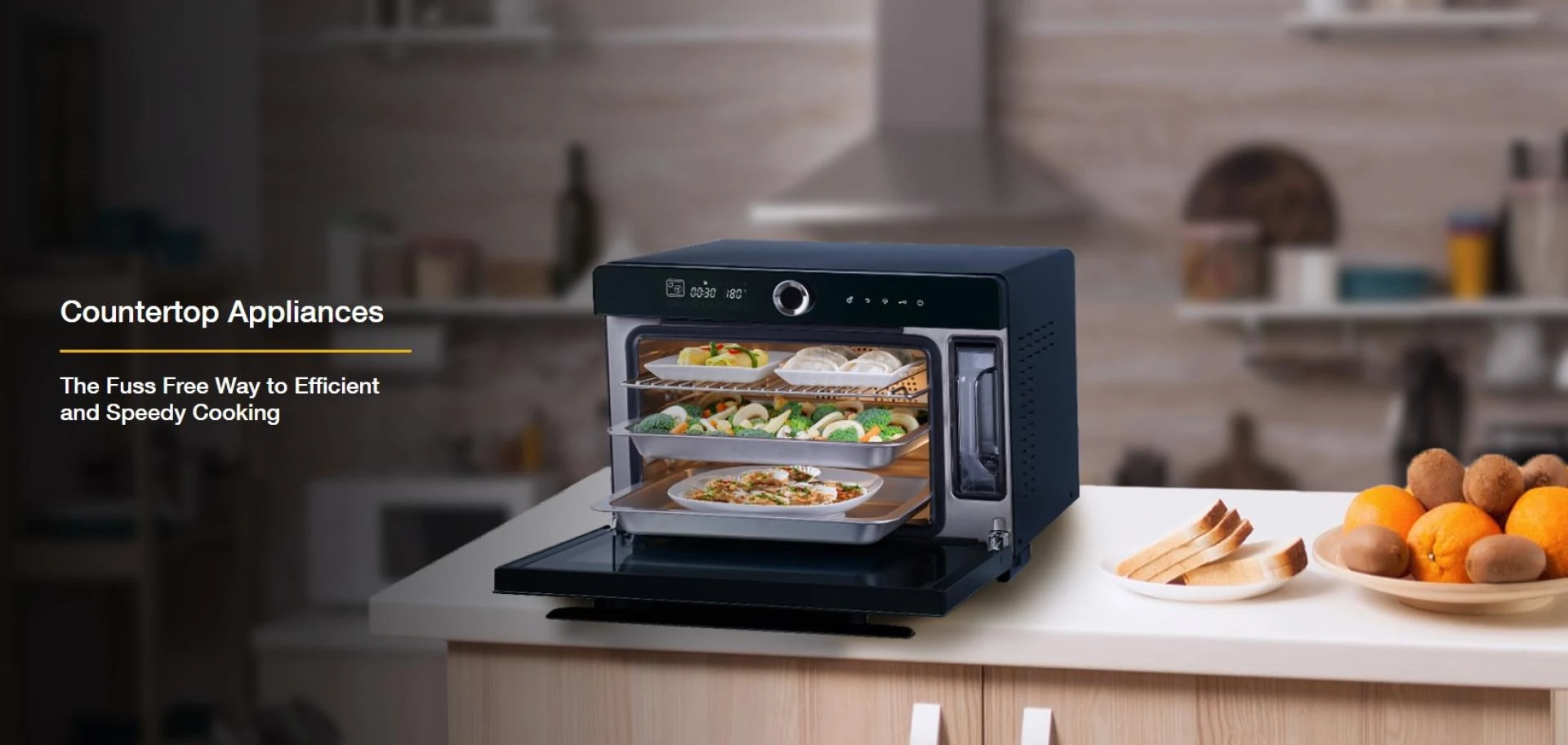

The microwave oven has become a staple in modern kitchens, yet questions around health and safety continue to surface from time to time. From myths about radiation to doubts about nutrient loss, many people still hesitate before using one for daily cooking. That said, today’s microwave ovens have evolved far beyond basic reheating, offering features that actively support healthier cooking choices. This article looks at microwave cooking through a health-focused lens, explaining how safe it really is, how it affects nutrition, and which microwave oven features genuinely help you cook better at home.
Is Cooking in a Microwave Oven Safe?
One of the most common questions people ask is whether cooking in a microwave oven is safe for regular use. The short answer is yes.
Microwave ovens use non-ionising electromagnetic waves to heat food. These waves cause water molecules in food to vibrate, generating heat. Unlike ionising radiation used in medical imaging or nuclear processes, microwave radiation does not alter the chemical structure of food or make it radioactive.
Modern microwave ovens are designed with multiple safety layers, including metal enclosures and interlocking doors that prevent radiation leakage. When used as intended, they meet international safety standards and pose no health risk. In practical terms, microwave cooking is no more dangerous than using a gas hob or electric oven.
Does Microwave Cooking Destroy Nutrients?
Another widespread concern is whether microwave cooking destroys nutrients. In reality, microwave cooking often preserves nutrients better than many traditional methods.
Because microwaves cook food quickly and require little or no water, they reduce the loss of water-soluble vitamins such as vitamin C and certain B vitamins. By contrast, boiling vegetables for long periods can cause nutrients to leach into the cooking water.
For everyday meals, especially vegetables, grains, and reheated home-cooked food, microwave cooking can be an efficient and nutritionally sound option.
What Makes a Microwave Oven a Healthier Cooking Appliance?
A microwave oven supports healthier cooking by simplifying the cooking process, thereby encouraging better habits.
Microwave cooking typically uses less oil than pan-frying or deep-frying. The cooking controls often feature preset functions, encouraging even non-cooks to try out recipes at home. Cooking times are shorter, which reduces overcooking and nutrient degradation. Portion sizes are easier to control, making it simpler to reheat home-prepared meals rather than relying on processed alternatives. As features have evolved, multifunction microwave ovens now allow several cooking styles that align well with modern health priorities, such as reduced oil use and gentler cooking methods.
Microwave Oven Features Explained: From a Healthy Cooking Perspective
Understanding features clearly is essential before deciding which model suits your lifestyle.
- Solo Microwave Oven
A solo microwave oven focuses on core microwave heating without additional cooking modes.
Health relevance: It is ideal for reheating home-cooked food, steaming simple dishes, and defrosting ingredients without added fats.
Best for: Individuals or households who cook traditionally and use the microwave mainly for reheating and basic preparation.
- Microwave Oven with Grill
A microwave oven with a grill includes a heating element that allows food to brown and grill.
Health relevance: Grilling reduces the need for pan-frying and can lower oil usage when cooking items such as vegetables, paneer, or sandwiches.
Best for: People who want occasional crisp textures without turning to deep frying.
- Microwave Oven with Air Fry
The microwave oven with an air fry feature uses rapid air circulation to create crisp textures with minimal oil.
Health relevance: This feature supports oil-reduced cooking, making it easier to prepare snacks and meals that would traditionally require deep frying.
Best for: Health-conscious households aiming to reduce fat intake while still enjoying familiar foods.
- Microwave Oven with Combi Steamer
A combi steamer combines microwave heating with controlled steam.
Health relevance: Steam cooking helps retain moisture and nutrients, making it suitable for vegetables, fish, and light meals.
Best for: Those prioritising nutrient preservation and gentle cooking methods.
- Crisp, Fry, and Brown Functions
These functions use a combination of heat sources to improve texture.
Health relevance: They allow better texture without excessive oil, encouraging home cooking over processed or takeaway foods.
Are Microwave Utensils and Containers Safe?
Safe microwave cooking also depends on using the right containers.
Glass, ceramic, and labelled microwave-safe plastics are suitable for microwave use. These materials are designed to withstand heat without releasing harmful substances. Metal should never be used, as it reflects microwaves and can cause sparking.
Choosing appropriate cookware ensures both safety and consistent cooking results.
Does Using a Microwave Increase Electricity Consumption?
Many people assume microwave ovens consume excessive electricity, but this is rarely the case.
Because microwaves cook food quickly and directly, they often use less energy than conventional ovens or stovetops for small to medium portions. Short cooking cycles and efficient heat transfer contribute to lower overall power usage.
For everyday tasks such as reheating meals or cooking vegetables, a microwave oven is an energy-efficient choice.
Common Myths About Microwave Cooking Debunked
Several myths continue to circulate around microwave ovens. Here’s what science and real-world use actually show:
- Myth: Microwave ovens cause cancer
Fact: Microwave ovens use non-ionising radiation, which does not damage DNA or cause cancer. When used as intended, they meet international safety standards.
- Myth: Microwaved food becomes radioactive
Fact: Microwave energy does not remain in food. Once the oven stops, the radiation stops, and the food is no different from food cooked by any other method.
- Myth: Microwave cooking destroys all nutrients
Fact: Shorter cooking times and minimal water use often help retain nutrients better than boiling or prolonged cooking on a stovetop.
- Myth: Microwaves are unsafe for daily cooking
Fact: Modern microwave ovens are designed for regular use and include multiple safety mechanisms to prevent radiation leakage.
- Myth: Using plastic in a microwave is always dangerous
Fact: Only non-microwave-safe plastics pose a risk. Glass, ceramic, and labelled microwave-safe containers are safe when used correctly.
- Myth: Microwave ovens cook food unevenly and are unreliable
Fact: Uneven heating is usually due to incorrect placement or container choice. Using turntables and appropriate cookware improves consistency.
These clarifications help separate outdated misconceptions from how microwave ovens actually function in modern kitchens.
Final Takeaway
A microwave oven is not a shortcut to unhealthy eating, nor is it a replacement for healthy cooking. When used properly, it supports safe, efficient, and nutrient-conscious meal preparation. Modern features such as air fry and steam functions simply make it easier to adopt healthier habits at home. Ultimately, the right microwave oven is the one that matches your cooking style and encourages you to prepare food at home more often.
























Sign in to leave a comment.