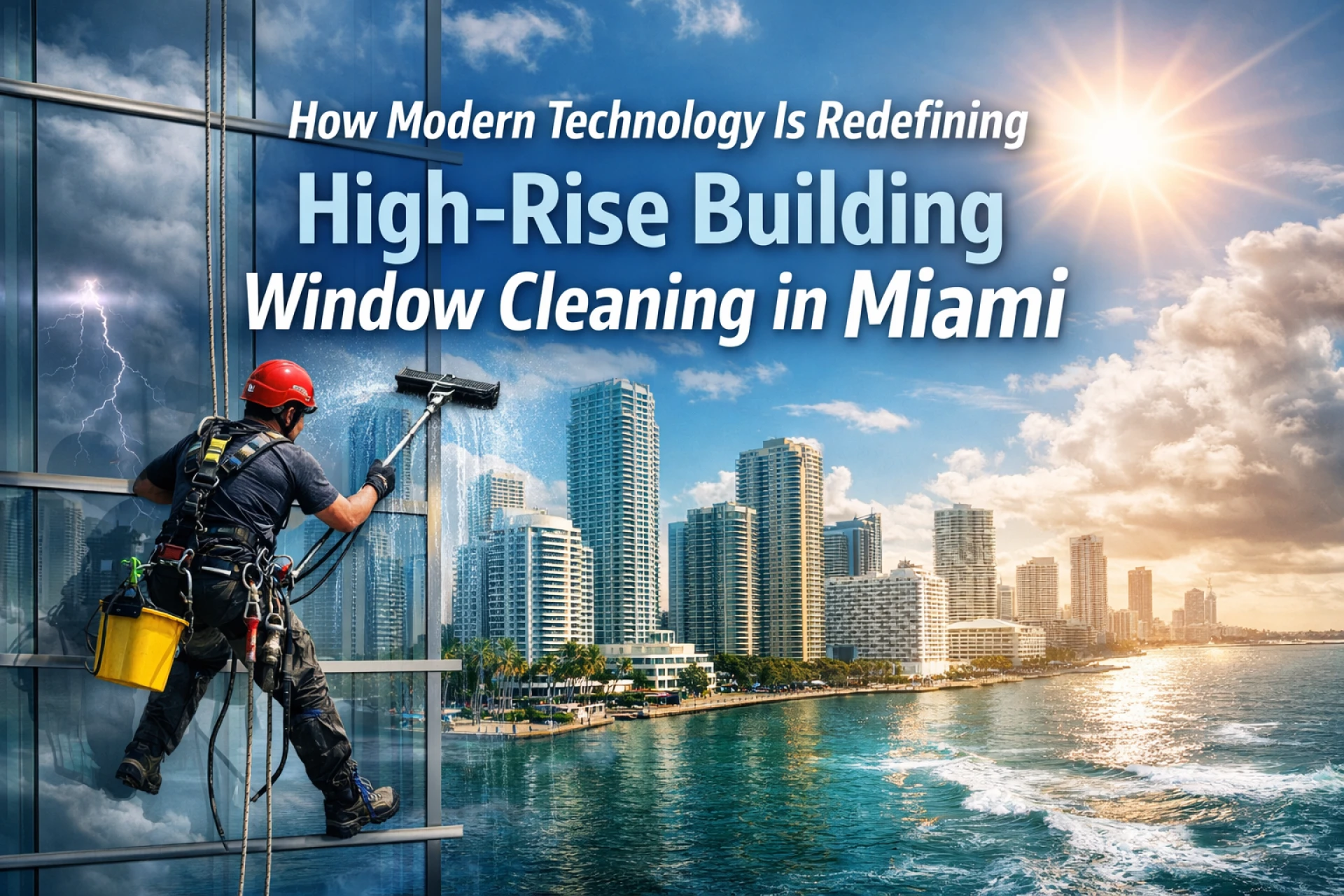
From a professional exterior-maintenance perspective, few environments are as demanding as Miami. Constant humidity, salt-laden air, intense sunlight, and sudden tropical storms place relentless pressure on glass and façade systems. In this climate, high-rise building window cleaning is no longer a cosmetic task—it’s a technical service focused on material preservation, safety, and long-term performance.
What many property owners don’t immediately see is that exterior degradation often begins long before windows appear dirty. Microscopic salt crystals, airborne pollutants, and mineral residue quietly weaken surfaces, making proactive, climate-aware maintenance essential in South Florida.
Why Miami’s Environment Accelerates Window Wear
Persistent Humidity and Biological Growth
Miami’s humidity frequently exceeds 70%, allowing moisture to cling to frames, tracks, and screens for extended periods. This creates ideal conditions for mold, mildew, and algae—especially on shaded elevations of tall buildings.
Left untreated, organic buildup can:
- Stain glass and surrounding materials
- Restrict window operation and drainage
- Contribute to unpleasant odors and indoor air-quality concerns
Unlike drier regions, routine rinsing isn’t sufficient here. Effective removal requires targeted techniques that eliminate growth without damaging coatings or finishes.
Salt Air and Chemical Glass Damage
Salt is one of the most corrosive elements affecting exterior surfaces. Even properties several miles inland experience salt accumulation carried by coastal winds. Over time, salt exposure can:
- Chemically bond to glass
- Cause permanent etching and haze
- Accelerate the corrosion of aluminum frames
- Shorten the lifespan of seals and gaskets
This is why generic cleaning approaches often fail in South Florida. Coastal conditions demand methods specifically designed to address salt contamination.
Sun Exposure, Heat, and Thermal Stress
South Florida receives intense UV exposure year-round. Dirt and residue on glass can trap heat, increasing thermal stress and accelerating material fatigue.
Professionally maintained windows:
- Reflect heat more efficiently
- Preserve factory-applied protective coatings
- Help stabilize interior temperatures
Over time, this supports energy efficiency and reduces stress on HVAC systems—an often overlooked benefit for both residential and commercial buildings.
Storm Activity and Airborne Contaminants
Miami’s storms don’t just bring rain. High winds carry sand, dust, and industrial pollutants that strike glass at high velocity. After storm season, many buildings develop a dull or cloudy appearance even if they were cleaned recently.
This haze is often caused by:
- Micro-abrasion from wind-driven debris
- Mineral residue from rainwater
- Pollutants embedded into glass pores
Correcting this requires professional-grade tools and controlled pressure—not abrasive scrubbing that can worsen damage.
Window Cleaning as Preventive Maintenance, Not Appearance Care
In Miami, window maintenance plays a preventive role similar to roof inspections or façade sealing.
Protecting Long-Term Property Value
Glass replacement is costly, especially for high-rise buildings. Regular professional care helps:
- Extend the service life of glass
- Preserve frames and sealing systems
- Maintain consistent curb appeal
- Reduce long-term capital expenditures
Buildings that follow proactive exterior-care schedules typically experience fewer moisture-related issues over time.
Safety and Compliance in Vertical Environments
High-rise work introduces serious safety considerations. Improper access methods or untrained labor can create liability risks for property owners.
Experienced window cleaning Miami providers understand:
- Anchor and tie-off systems
- Wind-speed and weather limitations
- Load requirements and access planning
- OSHA-aligned safety practices
This expertise protects both occupants and technicians while ensuring consistent, damage-free results.
Technologies Advancing High-Rise Window Cleaning
Modern exterior maintenance relies on specialized systems engineered for vertical structures.
Rope Descent Systems (RDS)
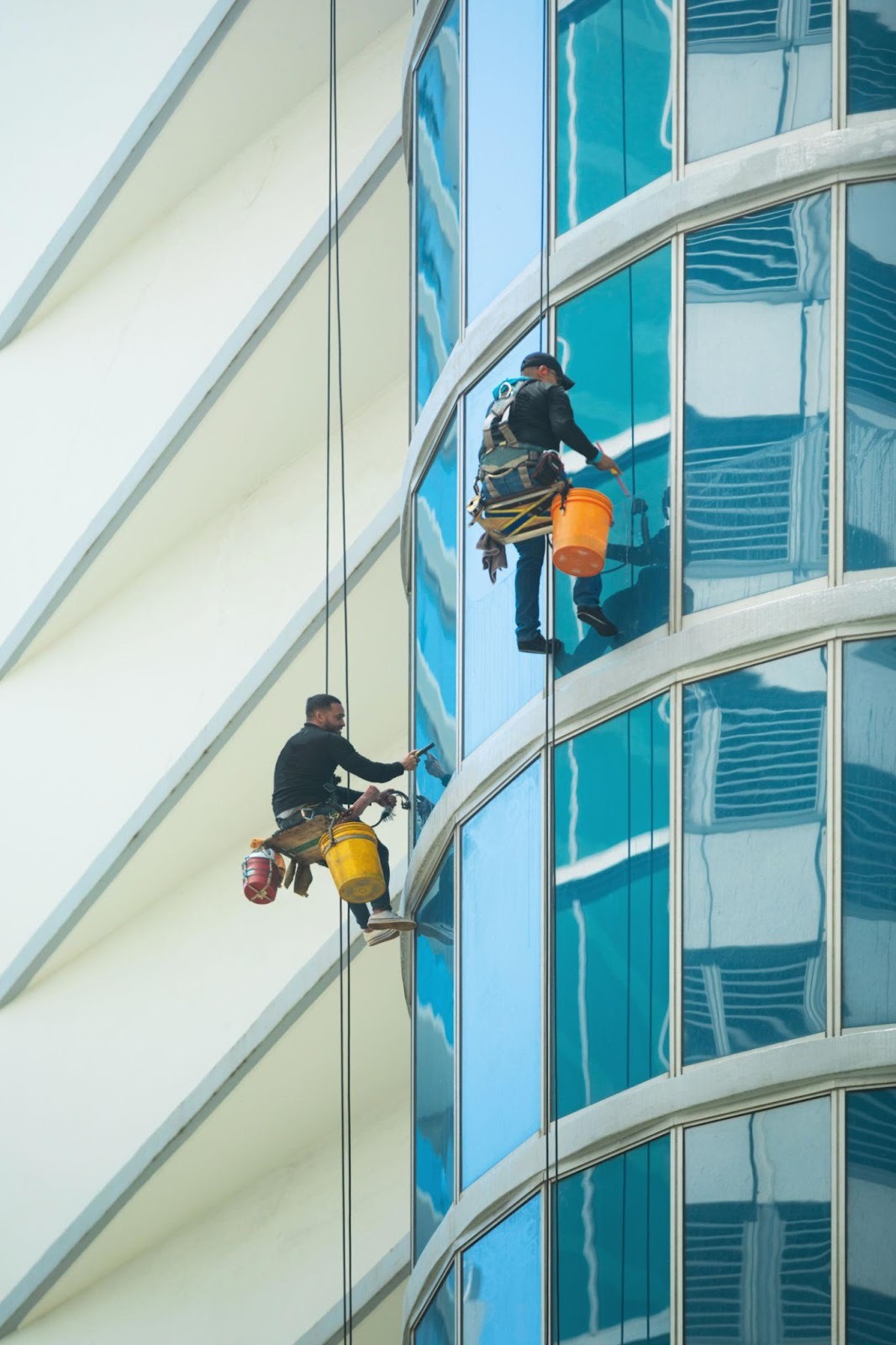
Certified rope access allows technicians to reach complex façades efficiently without scaffolding. Benefits include:
- Faster setup and reduced ground disruption
- Precision access to architectural features
- Greater flexibility on glass-heavy towers
RDS is particularly effective for buildings with irregular designs or limited ground clearance.
Purified Water Cleaning Systems
Deionized water removes minerals before contacting the glass, allowing surfaces to dry without streaks or residue. When combined with water-fed poles:
- Harsh chemicals become unnecessary
- Scratching risk is minimized
- Results are more consistent in salt-heavy environments
Used correctly, these systems allow skilled window cleaning experts to maintain clarity while preserving modern glass coatings.
Why Frames, Tracks, and Screens Matter as Much as Glass
True exterior maintenance goes beyond visible surfaces. Dirt trapped in tracks can grind against seals, while clogged screens restrict airflow and retain moisture.
Comprehensive care typically includes:
- Frame cleaning to remove salt and pollutants
- Track flushing to maintain proper drainage
- Screen washing and inspection
- Early identification of seal or hardware wear
Addressing these areas helps prevent performance issues and extends the lifespan of windows.
Local Knowledge Makes a Measurable Difference
Miami’s architecture ranges from historic Art Deco buildings to modern curtain-wall towers. Each reacts differently to moisture, heat, and cleaning agents.
Local professionals understand:
- How older materials respond to humidity
- Which methods are safe for modern coatings
- Differences between beachfront and inland exposure
This insight reduces accidental damage and ensures consistent outcomes across building types.
Frequently Asked Questions
How often should high-rise windows be cleaned in Miami?
Most properties benefit from professional cleaning every 3–6 months. Buildings closer to the coast may require more frequent service due to salt exposure.
Is rain enough to keep windows clean?
No. Rain often contains pollutants and minerals and does not remove salt residue or biological buildup.
Can improper cleaning damage windows?
Yes. Abrasive tools, incorrect chemicals, or excessive pressure can scratch glass and strip protective coatings.
Is professional high-rise window cleaning safe?
When performed by trained, insured technicians using proper equipment, it is significantly safer and more effective than untrained methods.
A Practical Step Toward Long-Term Protection
In Miami’s coastal climate, exterior glass care isn’t cosmetic—it’s preventive. Proactive maintenance protects materials, minimizes costly repairs, and helps high-rise buildings perform reliably year after year.
At Klean Windows Miami, we specialize in climate-aware window and exterior cleaning engineered for South Florida’s salt exposure, humidity, and severe weather conditions—so property owners can protect their investment with confidence.



























Sign in to leave a comment.