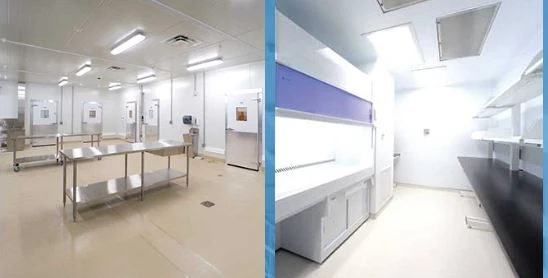
In industries where precision, hygiene, and contamination control are critical, modular clean rooms have become an essential solution. From pharmaceuticals and biotechnology to electronics and aerospace, these controlled environments allow companies to maintain strict air quality and particle control standards. Unlike traditional clean rooms that require extensive construction, modular systems are flexible, scalable, and easier to maintain. Let’s explore how modular clean rooms work, their design structure, key components, and why they’re becoming the preferred choice in modern manufacturing.
What Is a Modular Clean Room?
A modular clean room is a controlled environment built using prefabricated panels, structural frames, and integrated filtration systems designed to regulate temperature, humidity, and airborne particle levels. The modular design allows for quick installation, customization, and expansion. These rooms are especially useful for industries that must comply with ISO and GMP cleanroom standards to ensure product integrity and safety.
Unlike permanent clean rooms built from concrete and drywall, modular clean rooms are assembled from lightweight panels made of aluminum, stainless steel, or PVC. This makes them portable, reconfigurable, and cost-efficient for businesses that need adaptable cleanroom solutions.
Core Design Principles of Modular Clean Rooms
The effectiveness of a modular clean room depends on its design layout and engineering precision. The goal is to maintain a controlled atmosphere by minimizing particle entry and ensuring continuous air circulation.
Here are the main design elements that make modular clean rooms functional:
Zoning and Airflow Patterns
Modular clean rooms use a combination of laminar (unidirectional) and turbulent (non-unidirectional) airflow systems. In laminar flow designs, filtered air moves uniformly from the ceiling to the floor, pushing contaminants downward and away from critical work areas. Airlocks, pass-through chambers, and gowning zones also help reduce cross-contamination between controlled and non-controlled areas.
HEPA and ULPA Filtration Systems
Air cleanliness is achieved using HEPA (High-Efficiency Particulate Air) or ULPA (Ultra-Low Penetration Air) filters. These filters capture particles as small as 0.3 microns, ensuring that the air inside the room remains pure and within ISO cleanliness standards. Regular monitoring ensures the filters maintain peak performance.
Positive and Negative Pressure Control
Depending on the application, a clean room may maintain positive pressure (to prevent outside contaminants from entering) or negative pressure (to keep hazardous particles contained within). For example, positive pressure is essential in pharmaceutical production, while negative pressure is used in biohazard labs.
Temperature and Humidity Regulation
Advanced HVAC systems control the temperature, humidity, and air change rates within modular clean rooms. This ensures both worker comfort and process stability, especially in environments sensitive to moisture or temperature fluctuations.
Key Components of a Modular Clean Room
Every modular clean room is built from standardized, high-performance components designed for durability and easy maintenance. Here are the essential elements:
Wall and Ceiling Panels: Typically made from insulated materials like aluminum honeycomb or PVC-coated steel. These panels form airtight seals that prevent particle infiltration.
Doors and Windows: Flush-mounted doors with automatic closing mechanisms and sealed glass windows maintain visibility while ensuring a contamination-free environment.
Flooring: Antistatic vinyl or epoxy flooring minimizes particle generation and allows easy cleaning.
Lighting Systems: LED fixtures with smooth surfaces reduce dust accumulation and provide optimal illumination for precision tasks.
Air Handling Units (AHUs): Central to maintaining proper air pressure, temperature, and filtration throughout the clean room.
Pass-Through Chambers: Enable safe material transfer between controlled and uncontrolled spaces without compromising air purity.
Monitoring Systems: Sensors and control panels continuously track air pressure, particle count, and environmental parameters to ensure compliance.
Advantages of Modular Clean Rooms
The growing popularity of modular clean rooms stems from their ability to combine efficiency, flexibility, and compliance. Some of the major advantages include:
Quick Installation: Prefabricated panels and modular components reduce construction time significantly compared to traditional clean rooms.
Scalability: Businesses can expand or reconfigure their clean room layouts as production needs change.
Cost Efficiency: Lower construction and maintenance costs make modular systems an economical choice for both startups and established manufacturers.
Regulatory Compliance: Modular clean rooms can be designed to meet ISO 14644, GMP, and FDA standards.
Easy Maintenance: Panels can be removed and replaced without major structural changes, making repairs straightforward.
Applications Across Industries
Modular clean rooms serve a wide range of industries, including:
Pharmaceutical and Biotechnology: For sterile manufacturing, packaging, and research.
Semiconductor and Electronics: To prevent static and particle contamination during microchip production.
Medical Devices: For precise assembly and testing of equipment in contamination-free conditions.
Aerospace: To maintain high precision and prevent foreign object damage during component manufacturing.
Food and Beverage: For quality assurance and hygienic packaging processes.
The Future of Modular Clean Room Technology
With rapid advancements in manufacturing, modular clean rooms are evolving toward smart cleanroom systems. These integrate IoT-enabled sensors, automated airflow control, and AI-based monitoring to ensure predictive maintenance and real-time adjustments. The trend toward energy-efficient clean room design also promotes sustainability without compromising compliance or performance.
Conclusion
Modular clean rooms represent the future of contamination control — flexible, efficient, and built for modern industry demands. Their ability to adapt to changing workflows, maintain strict cleanliness standards, and minimize operational downtime makes them indispensable in critical sectors. As technology advances, modular clean rooms will continue to shape the next generation of precision manufacturing environments.































Sign in to leave a comment.