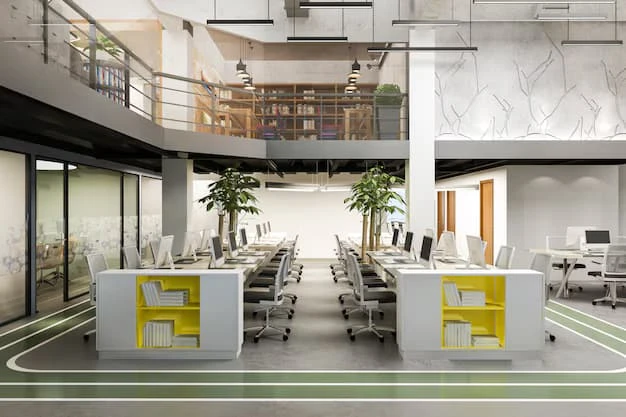

In the ever-evolving landscape of modern business, the quest for flexibility and productivity has led to innovative solutions in workplace design. One such solution that has gained significant traction is the modular office. These dynamic workspaces offer businesses the ability to adapt and grow without the constraints of traditional office environments. This article delves into how modular offices are transforming workplaces, enhancing employee productivity, and fostering a culture of collaboration.
The Rise of Modular Offices: A Response to Change
As organizations navigate the complexities of today's market, the need for adaptable workspaces has become paramount. Traditional office setups often fall short in accommodating rapid changes in team size, project demands, and technological advancements. In contrast, modular offices present a flexible alternative that can be reconfigured with ease.
These spaces are designed with mobility in mind, allowing companies to scale up or down based on their current needs. For instance, a growing startup can quickly expand its workspace to accommodate new team members without the lengthy and costly process of relocating to a larger building. This level of flexibility not only saves time and resources but also allows businesses to respond swiftly to market demands, ultimately giving them a competitive edge.
Moreover, the modular design often encourages a creative flow of ideas. With movable walls and adaptable layouts, teams can collaborate in various configurations, fostering an environment that nurtures innovation. The ability to reconfigure spaces encourages employees to think outside the box, leading to more dynamic brainstorming sessions and productive work environments.
Enhancing Productivity through Thoughtful Design
The layout of an office can significantly impact employee productivity. Modular offices are designed with the understanding that a well-thought-out environment can enhance focus and efficiency. For example, by incorporating quiet zones alongside collaborative areas, businesses can cater to different working styles and preferences.
Employees often require varying levels of privacy depending on the task at hand. A modular office allows for the creation of soundproof meeting pods where teams can engage in discussions without disturbing others. Conversely, open spaces can be utilized for brainstorming sessions or team collaborations, fostering a sense of community and collective problem-solving.
Furthermore, the design of modular offices typically incorporates natural light and ergonomic furniture, contributing to a healthier work environment. Studies have shown that access to natural light not only boosts mood but also enhances overall well-being, leading to improved productivity. When employees feel comfortable and valued in their workspace, their motivation levels rise, resulting in higher output and job satisfaction.
Promoting Collaboration and Team Dynamics
In today's business landscape, collaboration is key to success. Modular offices inherently promote a collaborative spirit by allowing teams to work together more effectively. The flexibility of these spaces means that teams can adjust their environment to suit specific projects or tasks, fostering an atmosphere of cooperation.
For example, when a team is engaged in a project that requires intensive collaboration, they can easily rearrange their workspace to facilitate open communication. This can lead to more frequent interactions, idea sharing, and ultimately, better outcomes. The ability to adapt the workspace encourages a culture of teamwork, where employees feel comfortable seeking input and sharing insights.
Moreover, the use of modular offices often encourages cross-departmental collaboration. When different teams are situated in close proximity, the likelihood of spontaneous conversations and idea exchanges increases. This not only enhances creativity but also breaks down silos that can hinder organizational growth. In a world where collaboration often drives innovation, modular offices serve as a catalyst for building strong team dynamics.
Sustainability and Cost-Effectiveness of Modular Solutions
In addition to flexibility and productivity, sustainability has become a crucial consideration for modern businesses. Modular offices are typically constructed using sustainable materials and practices, making them an environmentally friendly choice. As organizations aim to reduce their carbon footprint, modular solutions offer a viable path forward.
The modular approach often results in reduced waste during construction and can be designed for energy efficiency. This aligns with the growing trend of corporate responsibility, where businesses are increasingly held accountable for their environmental impact. By investing in modular offices, companies can not only create a flexible workspace but also position themselves as leaders in sustainability.
Furthermore, modular offices tend to be more cost-effective over time. While the initial investment may vary, the long-term savings associated with flexibility, reduced renovation costs, and lower energy consumption can be substantial. Businesses that opt for modular solutions often find that they can allocate resources more effectively, leading to improved financial performance.
Conclusion: Embracing the Future of Work with Modular Offices
In conclusion, modular offices represent a transformative approach to workplace design that addresses the evolving needs of modern businesses. By embracing the principles of flexibility, productivity, collaboration, and sustainability, organizations can create environments that empower their employees and drive success. As companies navigate the complexities of the contemporary business landscape, those that prioritize adaptable workspaces will undoubtedly find themselves at the forefront of innovation and growth. The future of work lies in the ability to evolve, and modular offices stand as a testament to that promise.

























Sign in to leave a comment.