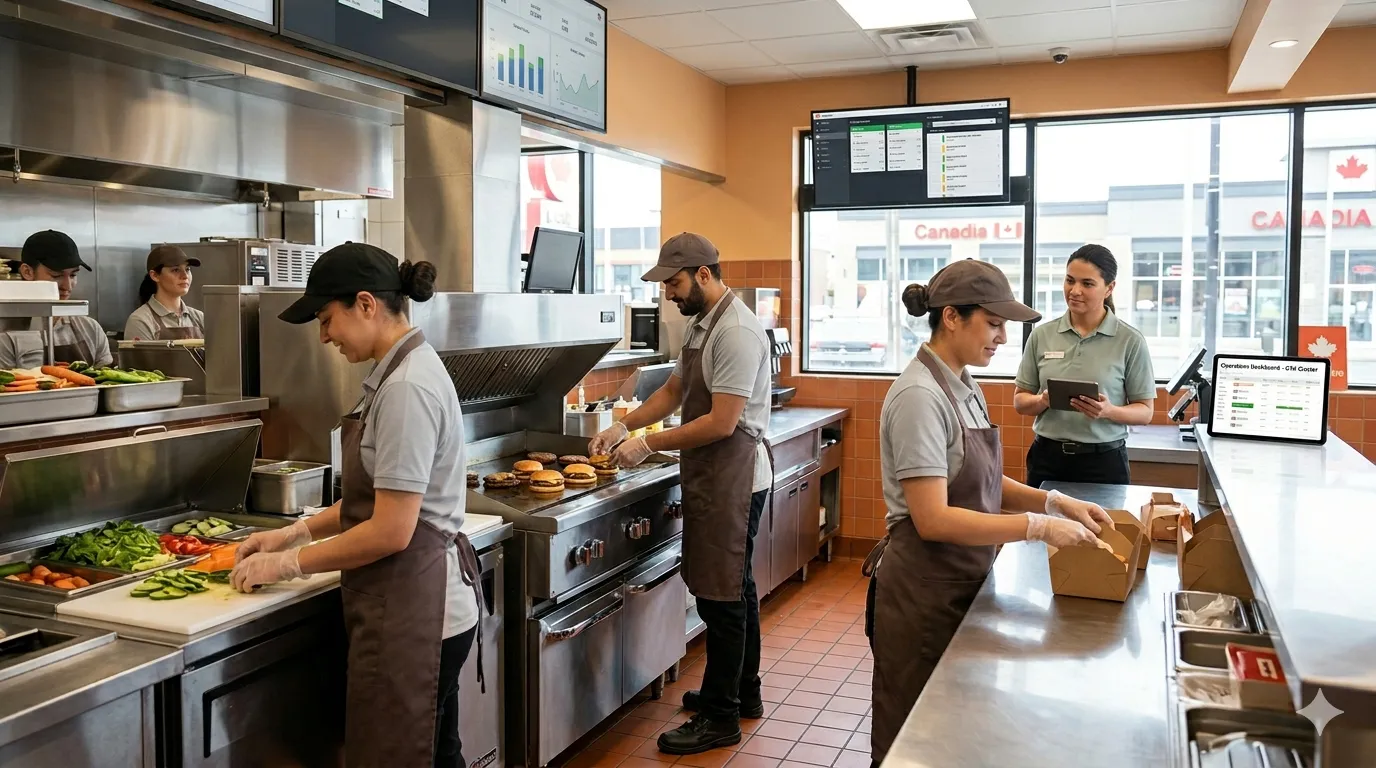
In the fast-paced world of food service, consistency and speed are everything. For a single location, maintaining high standards is a daily juggling act. But when scaling a quick service restaurant chain, the complexity multiplies exponentially. How do you ensure that the guest experience, food quality, and speed of service remain identical across 5, 10, or nearly 30 locations?
The answer lies in the strategic approach of an experienced multi unit operator.
By centralizing resources, standardizing workforce solutions, and building dedicated operational pipelines, multi-unit management turns geographic fragmentation into a competitive edge. Here is how top-tier operators maximize efficiency across multiple locations—and why partnering with an established leader is the key to scaling successfully in the Canadian hospitality market.
1. Centralizing Essential Operations
When restaurants operate in silos, costs skyrocket and inefficiencies creep in. Every location ends up solving the exact same problems independently—whether it’s dealing with an equipment breakdown or launching a local marketing campaign.
A seasoned multi unit operator eliminates this duplication of effort by centralizing core administrative and operational functions. At AWGTA, we streamline this by managing critical back-end services from a unified hub:
- In-House Maintenance & Repair: Instead of relying on expensive, unpredictable third-party contractors for every broken fryer or HVAC issue, centralized maintenance ensures rapid response times and lower overhead costs.
- Cohesive Marketing: Aligning local promotions and digital campaigns across entire regions maximizes brand visibility without draining the resources of individual store managers.
- Unified Oversight: Centralized general operations management gives leadership clear, data-driven visibility into food costs, waste, and performance metrics across the entire footprint.
2. Solving the Recruitment and Staffing Puzzle
The heartbeat of any successful quick service restaurant company is its people. However, high turnover and localized labor shortages frequently disrupt daily service rhythms, leading to slower drive-thru times and stressed management teams.
This is where a specialized quick service restaurant company in Ontario makes a massive difference. Multi-unit operators build comprehensive, proactive talent pipelines rather than reacting only when a position opens up.
By leveraging scaled recruitment networks—including localized job fairs, dedicated talent pools, and automated screening—a multi-unit partner can rapidly source, onboard, and train both permanent and on-call food service professionals. If one location experiences an unexpected staffing crunch, a robust regional network allows for seamless workforce sharing, ensuring that guest satisfaction never dips.
3. Creating Cross-Location Training and Career Pathways
True efficiency doesn't just come from software or systems; it comes from leadership continuity. When a quick service restaurant chain can develop talent internally, it reduces onboarding friction and fosters deep brand loyalty.
Multi-unit frameworks create clear, motivating career paths that simply aren't possible in standalone operations. A team member can start as a front-counter associate, grow into a Restaurant General Manager, and eventually step up as an Area Manager overseeing multiple locations. This internal mobility ensures that your high-performing leaders already understand the operational culture, compliance standards, and efficiency benchmarks required to keep every kitchen running smoothly.
4. Capitalizing on Bulk Purchasing and Shared Resources
Scaling physical locations naturally opens the door to economies of scale. Multi-unit operators can leverage their footprint to negotiate better vendor terms, optimize supply chains, and reduce waste.
When inventory, equipment parts, and even training resources are shared across a regional cluster of locations, the cost per unit plummets. This structural advantage allows operators to protect their profit margins even during periods of fluctuating food costs and shifting economic landscapes.
Scaling Your Presence in the Ontario QSR Market
Scaling a restaurant brand requires a rare combination of local market expertise, robust infrastructure, and a relentless focus on execution.
As a premier family-owned quick service restaurant company in Ontario, AWGTA has built a proven blueprint for multi-unit success. Managing a robust portfolio of 20+ A&W locations across the Greater Toronto Area and broader Ontario, we specialize in complete restaurant maintenance, end-to-end operational management, and advanced recruitment solutions.
Whether you are looking to expand your franchise footprint through multi-unit ownership or seeking an expert operations partner to drive efficiency across your existing locations, our team is built to set you up for success.
Ready to elevate your restaurant operations? Connect with the AWGTA team today to explore professional management and partnership opportunities.




























Sign in to leave a comment.