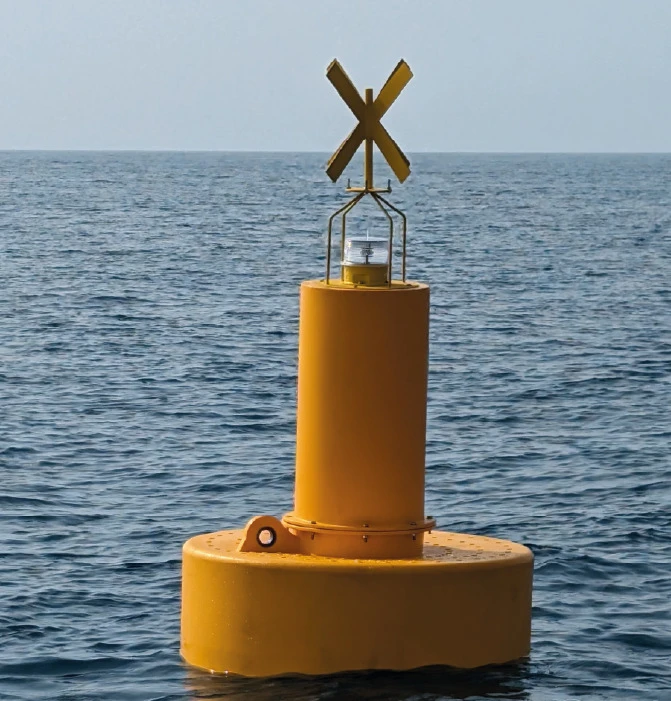

Oceans and rivers across the world can be dangerous, particularly for ships travelling busy or unknown routes. By directing ships and other boats, assisting them in avoiding dangers, and preserving orderly maritime commerce, navigation buoys and markers have become a crucial aspect of maintaining maritime safety. This article examines their significance, working principles, and the role of specialised companies in enhancing navigational systems.
Understanding Navigation Buoys and Markers
In the enormous bodies of water, navigation buoys and markers serve as signposts. They are intended to mark safe areas for marine transportation, warn of potential dangers, and designate channels. They provide critical information to vessel operators through the use of certain colour codes, forms, and light qualities. For instance, when entering a waterway from the sea, green buoys show the starboard (right) side, whereas red buoys usually identify the port (left) side.
To guarantee uniform standards around the globe, the International Association of Marine Aids to Navigation and Lighthouse Authorities (IALA) created a standardised buoyancy system. With distinct rules for designating safe navigation paths, this system is separated into two regions, A and B.
Types of Navigational Aids
Navigational aids, including buoys and beacons, fall into the following categories:
- Lateral Marks
- Lateral marks indicate the edges of navigable channels. For example:
- Port Hand Marks: Red buoys guide mariners to keep them on the port side.
- Starboard Hand Marks: Green buoys direct vessels to keep them on the starboard side.
- Cardinal Marks
- These marks guide vessels around hazards using compass points (north, south, east, and west). They feature black and yellow bands and unique top marks, making them distinguishable even in adverse weather conditions.
- Special Marks
- Special marks highlight areas like underwater pipelines or recreational zones.
- Safe Water Marks
- These red-and-white striped buoys indicate clear, navigable water around them.
Coastal Engineering and Navigation Safety
Coastal engineering projects are crucial to improving safety in areas with high marine traffic. To safeguard ships and coastal infrastructure, for instance, a coastal engineering and beach protection company in the UAE can install and maintain navigational aids. These businesses use cutting-edge technology to create buoy systems that are resilient to environmental factors and guarantee the best possible visibility.
They also work on shoreline stabilisation projects, which are essential for preserving harbours and ports, which are important components of marine safety.
Importance of Maintenance and Technological Integration
Regular maintenance of navigation aids ensures their reliability. Damaged or missing buoys can lead to accidents, making it critical to monitor and repair them promptly. Modern systems integrate GPS tracking and real-time monitoring, allowing authorities to address issues proactively.
For instance, partnerships with advanced service providers enable the installation of automated buoy systems equipped with solar-powered lights and sensors. These innovations reduce maintenance costs while increasing efficiency.
Conclusion
Navigation buoys and markers are indispensable for maritime safety, guiding vessels through safe waters and alerting them to potential dangers. Supported by navigational aids and robust coastal engineering, these systems ensure smooth and secure maritime operations. Companies specializing in these fields, such as a coastal engineering and beach protection company in the UAE, enhance safety with innovative solutions. As maritime traffic continues to grow, these markers remain pivotal in safeguarding vessels and coastal regions.















Sign in to leave a comment.