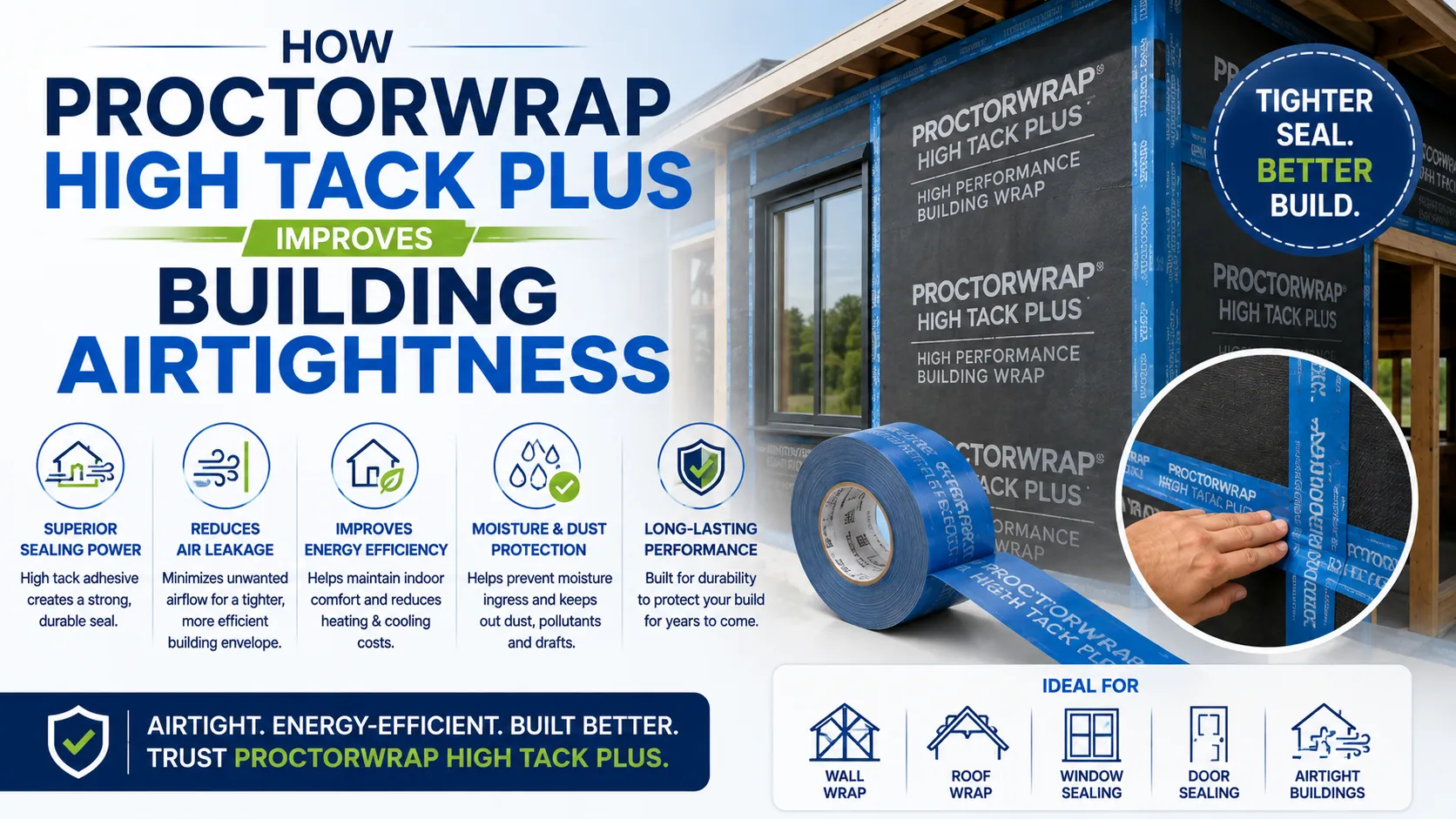

Achieving energy efficiency and thermal comfort in modern construction requires far more than simply adding wall insulation. Air leakage through unsealed laps, timber joints, and membrane penetrations can account for up to 40% of a building’s heating and cooling energy loss. Creating a continuous, airtight building envelope relies heavily on selecting specialized joining tapes engineered to withstand harsh site conditions.

The Role of Advanced Tapes in Airtight Envelopes
A building membrane—whether an internal vapour control barrier or an external wall wrap—is only as effective as its joins. Standard duct tape or low-grade packaging tapes rapidly lose adhesion when exposed to temperature swings, dust, and humidity, causing wall wraps to sag and unseal over time.
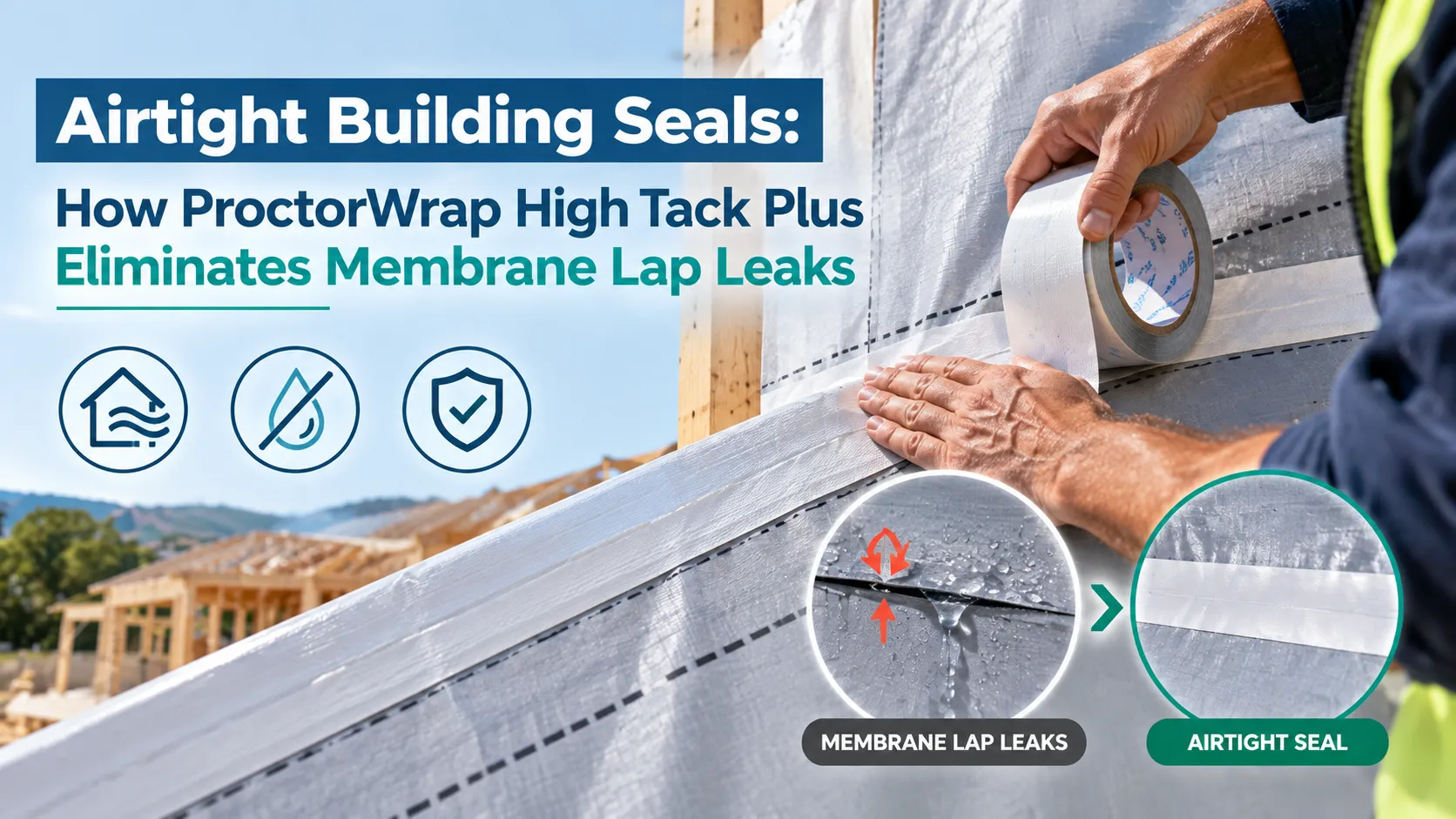
To maintain building envelope integrity, builders use high-performance wall wrap tape made with pressure-sensitive acrylic adhesives. These specialized tapes bond permanently to polyolefin membranes, timber framing, and rigid insulation boards.
Why Standard Tapes Fail vs. High-Performance Acrylic Lap Tapes
| Performance Criterion | Standard Utility / Duct Tape | Proctorwrap High Tack Plus Tape |
|---|---|---|
| Adhesive Strength | Low initial tack; degrades over time | High initial tack with superior peel adhesion (≥45N/25mm) |
| Substrate Versatility | Limited to clean, smooth plastic | Bonds to timber, polyolefin wraps, metal, & MDF |
| Thermal & UV Stability | Dries out and peels under summer heat | Engineered for high heat and UV exposure |
| Crease Resistance | Pushes up over membrane folds | Thin, pliable carrier conforms smoothly over creases |
| Vapour & Air Barrier Seal | Prone to pinhole air leaks | Creates an airtight, weather-resistant join |
Key Technical Features of Proctorwrap High Tack Plus
Building science specialists at WP Supplies highlight that utilizing specialized membrane joining tape ensures that energy efficiency standards (such as NatHERS ratings) are realized on the construction site.
- Superior Bond Strength: Formulated as proctorwrap high tack plus, this tape delivers exceptional peel strength on both smooth and slightly rough building substrates.
- Semi-Transparent Carrier: The white, semi-transparent carrier of hightack plus tape allows installers to see underlying membrane alignment and check for full contact without air bubbles.
- High Pliability: Unlike stiff plastic tapes, proctorwrap hightack tape flexes naturally over overlaps and corners without lifting off.
- All-Weather Resilience: Upgrading to Hightac plus ensures the adhesive won't bleed or degrade when exposed to site heat and UV exposure during construction framing stages.
Best Practices for Installing Lap Tapes
To achieve maximum adhesion when applying an acrylic lap tape, follow these fundamental steps on site:
- Clean the Surface: Ensure membrane edges are free of dust, grease, water, or construction debris.
- Apply Firm Pressure: Always use a squeegee or hand roller to press the tape firmly into place, activating the pressure-sensitive acrylic compound.
- Ensure Rear Support: Ensure the membrane join has solid backing (such as timber studs or rigid sheathing) when applying pressure.
For further guidance on building sealing strategies, check out WP Supplies' range of membrane tapes and sealing solutions. Investing in quality lap tapes ensures your building envelope stays energy efficient, dry, and structurally sound for years to come.
Frequently Asked Questions (FAQs)
Can I use general duct tape instead of Proctorwrap High Tack Plus for membrane joins?
No. General duct tape uses rubber-based adhesives that dry out, lose grip, and break down under UV and temperature fluctuations. Proctorwrap High Tack Plus uses an aggressive polyacrylate adhesive specifically formulated to bond permanently with polyolefin membranes, maintaining airtight seals as the building moves and ages.
Does High Tack Plus tape bond to rough building materials like timber or concrete?
Yes. Proctorwrap High Tack Plus is compatible with both smooth and slightly rough construction surfaces. It bonds effectively to polyolefin wraps, metal framing, clean concrete, smooth timber, and MDF sheathing.
Is temperature an issue when applying acrylic lap tape on-site?
For optimal initial adhesion, surfaces should be dry and applied within a temperature range between +5°C and +40°C. Once cured under firm pressure, the high-performance acrylic adhesive maintains its structural seal across extreme seasonal temperature variations.

























Sign in to leave a comment.