

Retail shelves rarely stay static anymore. A product trending on social media in the morning can disappear from stores by evening. Seasonal demand changes faster, customer expectations are higher, and omnichannel shopping has made inventory movement significantly more unpredictable than it was a few years ago.
In this environment, replenishment and restocking are no longer routine backend activities. They directly influence sales continuity, customer satisfaction, and operational profitability. Yet many retailers still rely on fragmented inventory tracking, delayed reporting cycles, or manual stock coordination processes that cannot respond quickly enough to modern retail demand patterns.
This growing operational pressure is why Retail Stock Management has become central to retail scalability. Businesses are beginning to realize that inventory accuracy alone is not enough. What matters is how quickly inventory systems can respond to real-world demand shifts across stores, warehouses, and online channels.
The Hidden Cost of Delayed Replenishment
Most stock-related retail losses do not come from complete inventory failure. They happen gradually through delayed reactions.
A fast-selling SKU remains unavailable for two days before replenishment happens. A warehouse receives excess inventory for a slow-moving category because planning was based on outdated reports. Store teams manually escalate stock requests while customers encounter empty shelves repeatedly.
These operational gaps create a chain reaction:
- Missed revenue opportunities
- Increased markdown dependency
- Poor customer retention
- Higher inventory carrying costs
Retailers with large SKU volumes face even greater pressure because replenishment decisions must happen continuously rather than during fixed planning cycles.
Without real-time stock visibility, replenishment becomes reactive instead of predictive.
Why Retail Stock Management Needs Real-Time Visibility
Retail operations today are interconnected across stores, warehouses, marketplaces, and e-commerce channels. Inventory movement in one channel immediately affects stock availability elsewhere.
Traditional inventory systems struggle because they operate in reporting intervals rather than live operational environments. By the time decision-makers review stock reports, actual inventory conditions may already have changed significantly.
Modern Retail Stock Management depends on real-time visibility into:
- Current stock availability
- Store-level inventory movement
- SKU-wise sales velocity
- Reorder thresholds
- Inter-store transfer requirements
This visibility enables businesses to identify replenishment needs before stockouts begin affecting customer experience.
More importantly, it allows inventory teams to prioritize high-impact restocking decisions instead of manually reviewing endless spreadsheets.
Replenishment Works Better When Data Flows Across Departments
One of the biggest reasons replenishment slows down is disconnected operational communication.
Store teams identify stock shortages. Merchandising teams focus on category planning. Warehouse teams manage dispatch priorities. Finance teams monitor working capital exposure. When these functions operate independently, replenishment decisions become fragmented and inconsistent.
An effective retail stock management environment connects these workflows into a unified operational process.
For example, when sales velocity increases for a specific product category, the inventory system should automatically reflect that demand trend across procurement, warehousing, and allocation planning. This reduces dependence on manual escalations and improves response time significantly.
The operational advantage is not simply faster replenishment. It is coordinated replenishment.
Smarter Restocking Improves Inventory Efficiency
Restocking is often misunderstood as simply adding more inventory to shelves. In reality, efficient restocking is about balancing availability with profitability.
Overstocking creates locked working capital and higher storage costs. Understocking damages customer trust and reduces repeat purchases. Retailers must continuously navigate this balance across hundreds or thousands of products simultaneously.
This is where intelligent Retail Stock Management systems become operationally valuable.
Instead of relying only on historical sales reports, advanced systems analyze multiple demand signals together, including:
- Seasonal buying patterns
- Regional demand variations
- Promotional sales spikes
- Store-specific performance trends
That level of visibility improves replenishment precision while reducing inventory waste.
For retailers managing high SKU complexity, even small improvements in replenishment accuracy can significantly impact margins over time.
Omnichannel Retail Has Changed Inventory Expectations
Customers no longer think in channels. They expect inventory consistency regardless of whether they shop online, visit a physical store, or purchase through a marketplace.
This expectation creates operational pressure on retailers because inventory inaccuracies become immediately visible to customers. A product shown as available online but unavailable during fulfillment damages trust quickly.
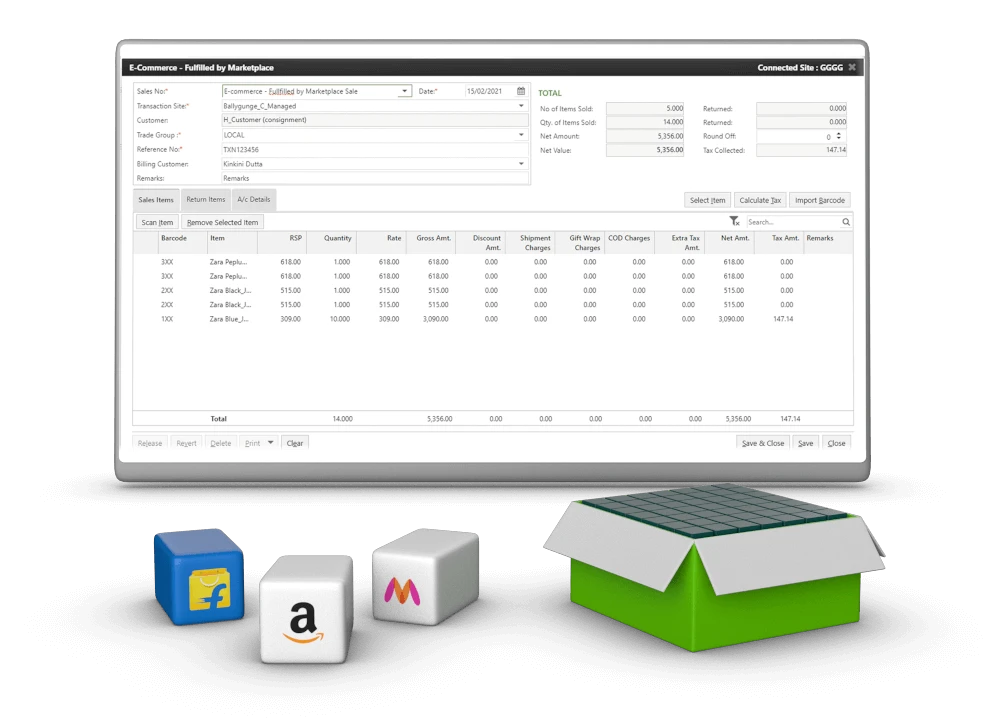
Retail Stock Management systems now need to synchronize inventory movement across all customer touchpoints continuously.
An ideal platform should support:
- Unified inventory visibility
- Real-time stock synchronization
- Automated replenishment triggers
- Centralized allocation planning
Without this operational coordination, omnichannel retail expansion often increases inventory confusion instead of improving efficiency.
Automation Reduces Manual Inventory Dependency
Many replenishment inefficiencies are still caused by manual intervention. Teams export reports, compare spreadsheets, send approval emails, and manually verify stock conditions before decisions are finalized.
As retail operations scale, these processes become increasingly unsustainable.
Automated stock management workflows help businesses reduce operational delays by enabling exception-based inventory monitoring.
Instead of reviewing every SKU manually, teams can focus only on inventory conditions requiring immediate action.
This changes the role of inventory teams from repetitive data handling to strategic inventory optimization.
Retailers that automate replenishment workflows typically gain faster response cycles, improved inventory accuracy, and more consistent product availability across locations.
Conclusion
Retail replenishment today requires far more than inventory tracking. Businesses need connected systems capable of synchronizing stock visibility, demand forecasting, allocation planning, and real-time replenishment workflows across every sales channel.
GinesysOne offers a unified retail management platform that supports real-time inventory visibility, automated stock coordination, omnichannel synchronization, and centralized retail operations management.
Its integrated ecosystem is designed to help retailers improve replenishment efficiency while maintaining inventory accuracy across stores and digital channels.
























Sign in to leave a comment.