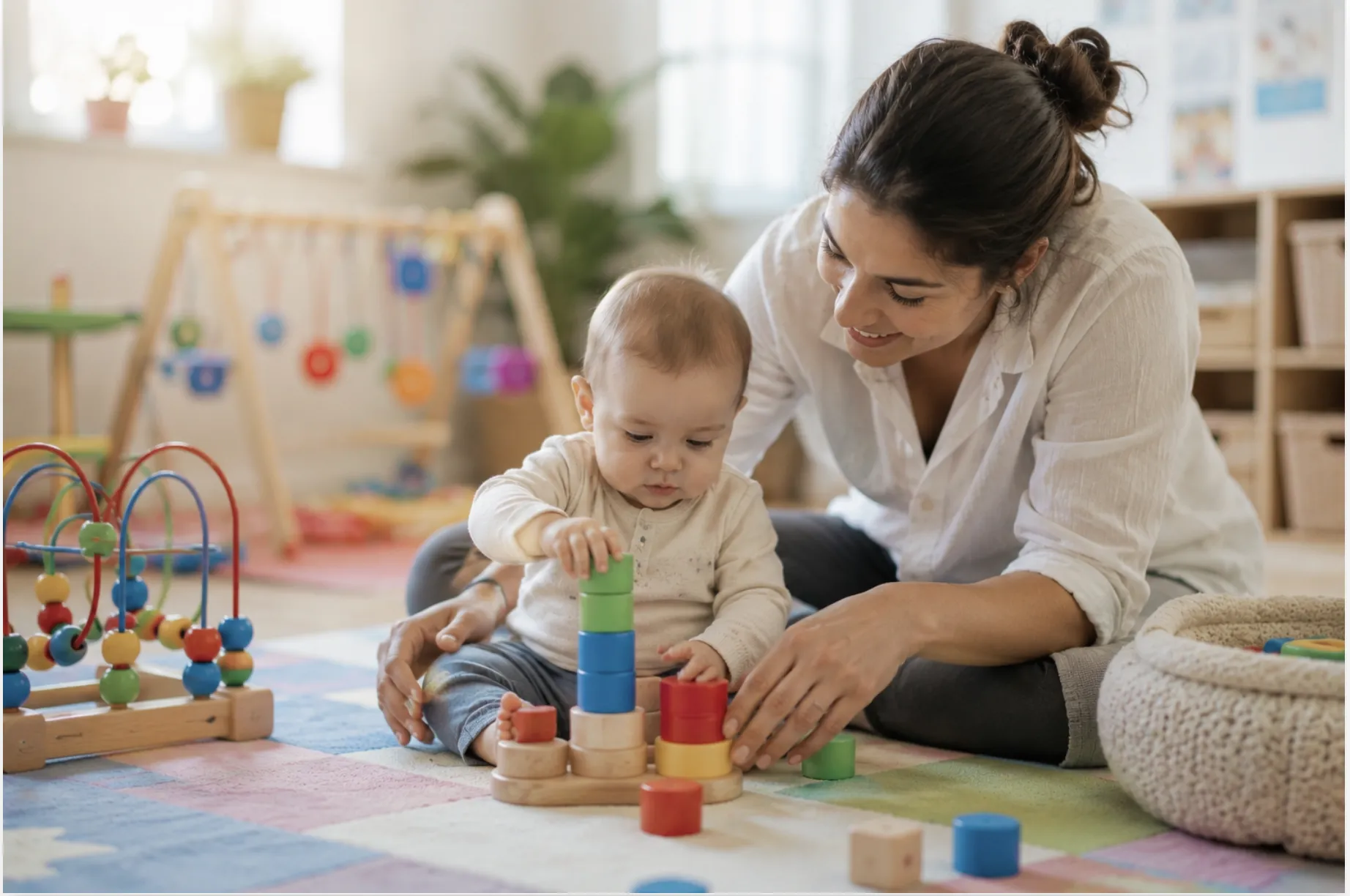

The first year of a baby's life is extraordinary. During these twelve short months, the brain forms more than a million new neural connections every second, laying the foundation for learning, emotional security, language, and social development. While loving care at home plays a vital role, many parents also discover that choosing the right infant daycare and toddler school can provide experiences that actively support this remarkable stage of growth.
For families in Sherman Oaks, where busy careers and family life often go hand in hand, selecting quality childcare has become about far more than convenience. Parents are looking for environments that nurture curiosity, encourage healthy development, and provide individualized attention during the most important months of early childhood.

Why the First Year Matters More Than Most Parents Realize
Scientists have long understood that early experiences shape the architecture of a child's brain. Every smile, conversation, cuddle, song, and sensory activity strengthens neural pathways that influence future learning and emotional well-being.
A baby's brain doesn't simply grow through age it grows through interaction.
That is why high quality infant daycare and toddler school programs focus on responsive caregiving instead of passive supervision. Caregivers constantly engage babies through eye contact, gentle conversation, music, movement, and age-appropriate play, helping the brain build stronger connections every day.
Rather than keeping infants occupied, experienced educators intentionally create opportunities that encourage exploration in a safe and nurturing environment.
The Power of Consistent Relationships
One of the greatest misconceptions about infant daycare is that babies only need food, naps, and diaper changes.
In reality, emotional security fuels healthy brain development.
When infants consistently interact with familiar caregivers who respond quickly to their needs, they develop secure attachments. These positive relationships help regulate stress hormones while building confidence and trust.
Many respected infant daycare and toddler school programs maintain low teacher-to-child ratios because meaningful one-on-one interaction simply cannot be rushed.
A caregiver who notices a baby's smile, responds to their babbling, or comforts them after frustration is doing far more than offering care—they are strengthening essential neural pathways linked to emotional intelligence and communication.
Everyday Activities Become Powerful Learning Moments
To adults, stacking soft blocks or listening to nursery rhymes may appear simple.
For an infant, these experiences are brain-building exercises.
Throughout the day, quality caregivers naturally introduce activities that stimulate multiple areas of development, including:
- Sensory exploration through textures, sounds, and colors
- Music and rhythm to support auditory processing
- Tummy time for motor development
- Storytelling and conversation for language acquisition
- Guided social interaction with other infants
Each activity encourages babies to observe, process information, and respond, strengthening cognitive development in ways that cannot be measured by milestones alone.
Why Sherman Oaks Parents Are Prioritizing Early Learning
Sherman Oaks continues to attract young professionals and growing families because of its excellent schools, walkable neighborhoods, and family-friendly atmosphere. As more parents balance demanding careers with raising children, expectations for childcare have evolved significantly.
Families no longer search for a place that simply watches their baby during work hours.
Instead, they seek infant daycare and toddler school programs that combine safety, education, nurturing relationships, and structured developmental activities.
This local shift reflects a broader understanding that early education begins long before preschool.
Parents increasingly schedule daycare tours months before their baby arrives, recognizing that high-quality infant programs often have waiting lists due to strong community demand.
Language Development Begins Earlier Than You Think
Many parents assume speech development starts with the first words.
In reality, language learning begins from birth.
Babies absorb sounds, facial expressions, tone, and rhythm long before they speak. Caregivers who narrate everyday activities, read books aloud, sing songs, and respond to infant sounds help establish the language centers of the brain.
For example, something as simple as saying, "Now we're putting on your blue socks," while maintaining eye contact introduces vocabulary, emotional connection, and communication patterns simultaneously.
Over hundreds of daily interactions, these seemingly ordinary conversations create extraordinary developmental outcomes.
Play Isn't Just Fun It's Brain Science
Researchers consistently emphasize that play is one of the most effective ways infants learn.
When babies reach for toys, crawl toward objects, or experiment with cause and effect, they are strengthening problem-solving abilities and memory formation.
A thoughtfully designed infant daycare and toddler school provides safe spaces where infants can move freely, explore different materials, and interact with caring adults who encourage discovery without overwhelming them.
Practical learning doesn't require expensive technology.
It requires intentional experiences, patient guidance, and environments designed around how babies naturally learn.
Choosing a Program That Supports Whole Child Development
Not every childcare program approaches infant development the same way.
Parents should look beyond classroom appearance and ask meaningful questions about caregiver consistency, developmental activities, communication with families, health practices, and individualized learning approaches.
The strongest programs understand that every baby develops at their own pace while providing opportunities that encourage physical, cognitive, emotional, and social growth together.
This balanced approach creates children who feel secure enough to explore confidently as they transition into toddlerhood.
Final Thoughts
The first year passes quickly, but its impact lasts a lifetime. Every comforting interaction, playful conversation, and sensory experience contributes to the foundation of a child's future learning and emotional health. Choosing the right infant daycare and toddler school is not simply about childcare, it is an investment in healthy brain development during life's most important stage.
For families exploring trusted early childhood education in Sherman Oaks, Wevillage is worth considering. Its nurturing environment, experienced educators, and child-centered philosophy reflect the qualities many parents seek when supporting their baby's earliest developmental journey.
Frequently Asked Questions
1. At what age should a baby start infant daycare?
There is no universal age that works for every family. Many infants begin daycare between 3 and 6 months, while others start later. The most important factor is selecting a program with experienced caregivers, low child-to-teacher ratios, and a nurturing environment that supports healthy development.
2. Can infant daycare really improve brain development?
Yes. High quality infant daycare encourages healthy brain development through responsive caregiving, language-rich interactions, sensory play, movement, music, and consistent emotional support. These everyday experiences strengthen the neural connections that support learning, communication, and emotional well-being throughout childhood.




























Sign in to leave a comment.