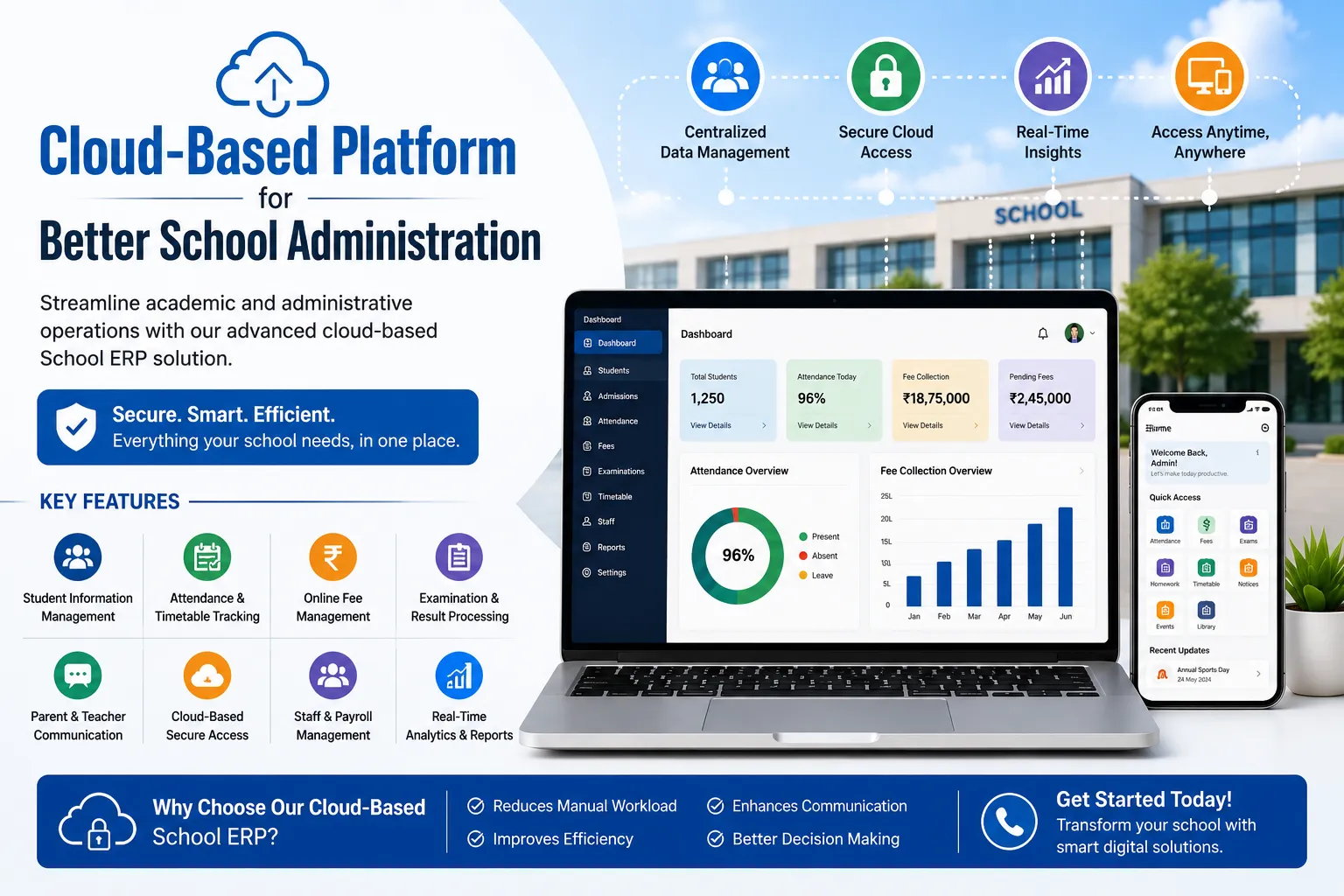

Educational institutions are rapidly adopting digital solutions to improve academic operations and administrative productivity. Managing student records, attendance, examinations, fee collection, and communication manually can consume valuable time and reduce institutional efficiency. This is where School Management Software plays a vital role in transforming educational administration.
Modern schools require centralized systems that streamline workflows, reduce paperwork, and improve collaboration between teachers, students, parents, and administrators. With advanced automation and cloud-based accessibility, school management systems help institutions focus more on delivering quality education and less on repetitive administrative tasks.
What is School Management Software?
School Management Software is a digital platform designed to automate and manage the core functions of educational institutions. It integrates multiple academic and administrative processes into a single centralized system.
A modern school management system typically includes modules such as:
Student information management
Attendance tracking
Fee management
Examination management
Timetable scheduling
Parent communication
Staff management
Reporting and analytics
By digitizing these operations, schools can improve efficiency, accuracy, and overall academic performance.
Streamlined Administrative Processes
One of the biggest advantages of School Management Software is the automation of routine administrative tasks. Manual paperwork often leads to delays, data duplication, and human errors. Automation reduces these issues significantly.
Faster Student Data Management
Schools handle large volumes of student information every academic year. A centralized digital platform allows administrators to manage admissions, academic records, attendance, and performance data efficiently.
This saves time while ensuring accurate record maintenance.
Automated Attendance Tracking
Traditional attendance systems consume classroom time and increase the chances of errors. With automated attendance tracking, teachers can record attendance instantly through mobile apps, biometric systems, or RFID technology.
Real-time attendance monitoring also helps parents stay informed about student presence and academic discipline.
Improved Communication Between Stakeholders
Effective communication is essential for academic success. School Management Software improves collaboration among teachers, parents, students, and administrators through centralized communication tools.
Parent Engagement
Parents can receive instant notifications regarding:
Attendance updates
Homework assignments
Examination schedules
Fee reminders
Academic performance
This transparency strengthens parent involvement in student education.
Teacher Collaboration
Teachers can share lesson plans, assignments, reports, and academic updates through a unified platform. This improves coordination and ensures better classroom management.
Efficient Examination and Result Management
Managing examinations manually can be time-consuming and stressful for educational institutions. School Management Software simplifies examination planning and evaluation processes.
Schools can:
Schedule exams digitally
Generate hall tickets
Publish results online
Create report cards automatically
Analyze student performance
Automated reporting helps educators identify academic strengths and areas requiring improvement.
Better Academic Planning and Scheduling
Academic scheduling plays an important role in institutional productivity. School management systems help schools organize timetables, classroom allocations, and faculty schedules more effectively.
Automated scheduling reduces conflicts and ensures optimal resource utilization.
Schools can also plan:
Academic calendars
Events and activities
Holiday schedules
Examination timetables
This improves operational coordination across departments.
Data-Driven Decision Making
Modern educational institutions rely on accurate data to improve academic performance and operational efficiency. School Management Software provides advanced reporting and analytics features that help administrators make informed decisions.
Real-Time Reports
Administrators can monitor:
Student attendance trends
Fee collection status
Staff performance
Academic progress
Admission growth
These insights help institutions optimize performance and improve educational quality.
Enhanced Security and Data Management
Educational institutions manage sensitive student and staff information that must be protected securely. Cloud-based School Management Software offers secure storage, role-based access, and encrypted data management.
This minimizes the risk of data loss, unauthorized access, and manual record damage.
Cloud technology also allows institutions to access important information anytime and from anywhere.
Increased Productivity for Teachers
Teachers often spend significant time handling administrative tasks instead of focusing on teaching. School Management Software reduces administrative workload by automating repetitive processes.
Teachers can:
Upload assignments online
Manage attendance digitally
Share learning materials
Evaluate student performance faster
This allows educators to dedicate more time to classroom engagement and academic improvement.
Scalability for Educational Institutions
Whether it is a small school or a large educational institution, School Management Software can scale according to operational needs. Schools can customize features and modules based on their academic structure and administrative requirements.
This flexibility makes digital school management systems a long-term investment for educational growth.
Conclusion
School Management Software is transforming educational institutions by improving academic efficiency, reducing administrative burden, and enhancing communication. From attendance tracking and examination management to data analytics and parent engagement, these systems streamline school operations and create a more productive academic environment.
As schools continue embracing digital transformation, adopting advanced school management solutions has become essential for delivering quality education and improving institutional performance. Institutions that invest in smart automation today will be better prepared to meet the evolving demands of modern education.



























Sign in to leave a comment.