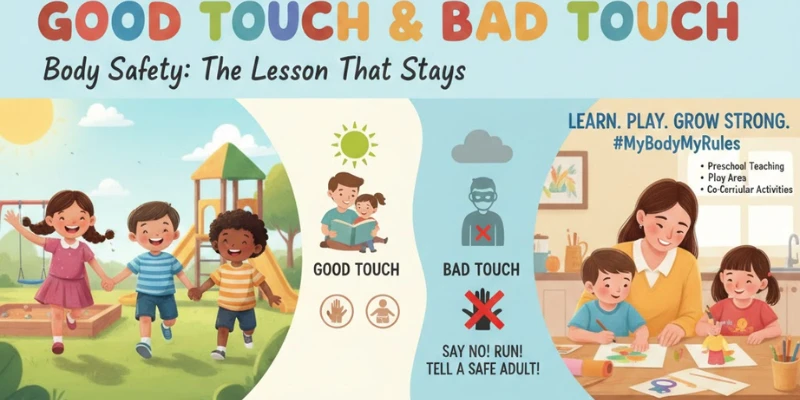
Teaching children about good touch & bad touch can feel daunting, but it’s one of the most important lessons we can impart. Think about a typical day in a preschool or primary school: kids are running around the play area, laughing, learning, and exploring. Amid all this fun, schools have a unique opportunity to weave good education about personal safety into everyday interactions, ensuring children understand boundaries in a safe and supportive environment.
Starting Early: The Importance of Age-Appropriate Education
The importance of education around personal safety starts early. Even toddlers can begin to understand simple concepts about their bodies and personal space. Using play-based learning, teachers can introduce the difference between touches that feel safe and comfortable versus those that make them uneasy.
For example, during circle time, a teacher might use puppets or storytelling to show scenarios of friendly hugs versus inappropriate touches. This approach keeps lessons light, engaging, and relatable, making it easier for young children to absorb important concepts without fear or anxiety.
Incorporating Co-Curricular Activities
Schools can also integrate co-curricular activities to reinforce these lessons. Art projects, role-playing exercises, or group games can help children express themselves while learning boundaries.
Imagine an activity where children draw situations that make them feel safe versus uncomfortable. Not only does this encourage activities for kids that are fun, but it also gives teachers and caregivers insight into each child’s understanding and comfort level. These small interactions lay the groundwork for healthy communication and awareness.
Using the Play Area for Learning Opportunities
The play area isn’t just for physical activity it’s an ideal setting for lessons about consent and personal space. Teachers can supervise games that teach taking turns, asking permission before touching, or respecting others’ boundaries. Simple, everyday interactions like these make the concepts of good touch & bad touch tangible and memorable.
Even during outdoor activities, educators can model and encourage respectful behavior. By linking personal safety lessons to real-life play scenarios, children learn that boundaries are part of normal social interactions.
Partnering With Parents for Home Learning
Education doesn’t stop at school. Encouraging home learning is essential to reinforce these messages. Schools can provide resources, storybooks, or activity guides for parents to continue discussions about personal safety at home.
For instance, parents might read bedtime stories that highlight respect for personal space or practice role-play exercises. When children see consistent messaging both at school and at home, the lessons become part of their natural understanding of boundaries.
The Role of Preschool Teaching
For preschool teaching, integrating these lessons seamlessly into daily routines is key. Simple phrases like “My body belongs to me” or games that emphasize consent can be woven into snack time, storytime, or art projects. By normalizing conversations about good touch & bad touch, teachers help children gain confidence in expressing discomfort or asking for help when needed.
Conclusion: Building a Safe and Empowered Generation
Educating children about good touch & bad touch isn’t a single lesson it’s a continuous, thoughtful process that combines classroom activities, play-based learning, co-curricular exercises, and home learning. Schools play a vital role in giving kids the tools to understand boundaries and feel safe.
By fostering a supportive environment, integrating fun and engaging activities, and partnering with parents, educators can ensure children grow up confident, aware, and empowered. Small, consistent steps today will make a lasting impact on their safety and well-being tomorrow.

Sign in to leave a comment.