

Communication is the foundation of every successful business. Whether you are handling customer inquiries, coordinating with vendors, or closing sales, the quality of your phone system directly affects your results. For small businesses operating in the competitive U.S. market, legacy landline systems are no longer a practical or affordable solution.
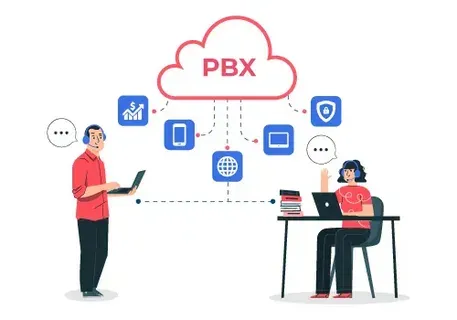
A VoIP phone system for small business Voice over Internet Protocol routes voice calls through the internet rather than traditional copper phone lines. Instead of paying for physical infrastructure, your team makes and receives calls through internet-connected devices including desktop phones, laptops, or mobile apps. The result is a flexible, feature-rich communication system at a fraction of traditional costs.
According to industry estimates, businesses switching to VoIP save between 30 and 50 percent on their monthly phone bills. For small businesses watching every dollar, that difference matters.
How Does a VoIP Phone System Actually Work?
Understanding the technology helps you make a confident buying decision. When you speak into a VoIP-enabled device, your voice is converted into digital data packets. Those packets travel over your internet connection to the recipient, where they are reassembled into clear audio in real time.
The process requires three things:
- A reliable broadband internet connection
- VoIP-compatible hardware or software (desk phones, apps, or softphones)
- A VoIP service provider managing your call routing and features
Modern VoIP phones for business are plug-and-play ready, meaning setup takes hours rather than days. There is no need to install new wiring or purchase expensive on-premise equipment.
Key Features of a VoIP Phone System for Small Business
One of the biggest advantages VoIP holds over traditional systems is the depth of features included at no extra cost. Where legacy carriers charge add-on fees for call forwarding or voicemail, VoIP providers typically bundle everything into one monthly plan.
Call Management Features
- Auto-attendant: Greets callers professionally and routes them to the right department
- Call forwarding and routing: Redirect calls to mobile devices or remote team members
- Voicemail to email: Receive voice messages as audio files directly in your inbox
- Call recording: Maintain records for compliance or training purposes
Collaboration and Mobility Features
- Video conferencing integration: Host meetings without a separate platform
- Mobile apps: Take business calls from anywhere using your smartphone
- Softphone support: Use your laptop as a fully functional business phone
- Multi-line extensions: Add team members without new hardware
Analytics and Reporting
Track call volume, wait times, missed calls, and agent performance from a centralized dashboard. For small businesses trying to improve customer experience, this data is invaluable.
Benefits of VoIP for Small Business Owners
The benefits of VoIP for business extend well beyond cost savings, though that alone is compelling enough for most small business owners.
1. Lower Monthly Costs
Traditional phone systems carry setup fees, per-line charges, and long-distance billing. VoIP consolidates all of this into a predictable monthly subscription. Domestic and often international calls are included, eliminating surprise charges at the end of the billing cycle.
2. Easy Scalability
Growing your team does not require new infrastructure. Adding a new user to a VoIP system takes minutes inside a web dashboard. Whether you are hiring one person or ten, your phone system scales with zero friction.
3. Remote Work Compatibility
Post-pandemic work models have made location-independent communication essential. VoIP allows your team to stay connected from home, co-working spaces, or client sites without any drop in call quality or professionalism.
4. Professional Business Image
Auto-attendants, custom hold music, and branded greetings give even solo operators the appearance of a well-staffed organization. First impressions matter, and VoIP delivers a polished one every time.
What Does a VoIP Phone System Cost for Small Businesses?
Understanding the cost of VoIP for small business is essential before making any purchasing decision. Pricing models vary, but the structure is straightforward.
Most providers offer tiered plans:
- Basic plans: $15–$25 per user per month includes core calling features
- Standard plans: $25–$35 per user per month adds video, messaging, and integrations
- Premium plans: $40+ per user per month includes analytics, CRM integrations, and advanced routing
For a five-person team on a standard plan, total monthly costs typically fall between $125 and $175 often less than a single traditional phone line with comparable features.
Hardware costs are optional. Many businesses operate entirely through softphone apps, eliminating upfront equipment investment. If physical desk phones are preferred, quality VoIP handsets start around $50 per unit.
How to Choose the Right VoIP Provider for Your Small Business
Not every VoIP provider is built for small business needs. When evaluating options, focus on these criteria:
Reliability and uptime: Look for providers guaranteeing 99.9 percent uptime backed by SLAs.
Customer support: Small businesses need responsive support. Prioritize providers offering 24/7 phone or chat assistance.
Integration compatibility: Confirm the system works with your existing CRM, helpdesk, or productivity tools.
Contract flexibility: Avoid long-term lock-ins when starting out. Month-to-month plans give you freedom to switch if your needs change.
Number porting: Ensure your existing business number transfers to the new system without disruption.
Conclusion
A modern VoIP phone system for small business is not a luxury, it is a practical communication infrastructure that reduces overhead, improves customer experience, and supports the flexibility today's business environment demands. Whether you are transitioning from a landline, launching a new operation, or scaling a growing team, VoIP delivers the reliability and features that match your ambitions.
If you are ready to explore a purpose-built voice solution for your business, Voxtium offers comprehensive VoIP services designed specifically for U.S. small businesses. From transparent pricing to enterprise-grade call management tools, Voxtium helps you communicate smarter without overpaying for the infrastructure to do it.
FAQs:
Q1: Can a small business use VoIP with just one employee?
Yes. VoIP is fully scalable and works for solo operators. A single-user plan with auto-attendant and call routing creates a professional setup at minimal cost.
Q2: What internet speed do I need for VoIP?
Each active call requires approximately 100 Kbps of upload and download bandwidth. A standard broadband connection easily supports multiple simultaneous calls.
Q3: Will my existing phone number transfer to a VoIP system?
In most cases, yes. Number porting is a standard offering among reputable VoIP providers and typically completes within 5–10 business days.

























Sign in to leave a comment.