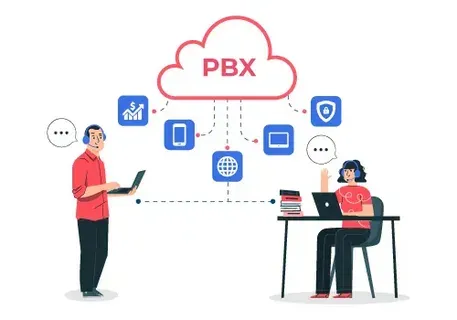

Effective communication is the backbone of any successful business. Whether you run a startup or a growing enterprise, having a reliable, scalable phone infrastructure is non-negotiable. A PBX phone system short for Private Branch Exchange is one of the most powerful solutions businesses in the USA use today to manage internal and external calls efficiently. In this guide, we break down everything you need to know about PBX systems and how they can transform your business communications.
What Is a PBX Phone System?
A PBX phone system is a private telephone network used within a company that allows employees to communicate internally (between offices) and externally (with the outside world). Unlike traditional phone lines where each desk requires its own public line, a PBX system routes calls through a central hub dramatically reducing costs and improving flexibility.
Modern PBX systems come in several forms: traditional hardware-based, IP-based, cloud-hosted, and hybrid models. Each type serves different business needs, budgets, and infrastructure preferences.
How Does a PBX Business Phone System Work?
At its core, a PBX business phone system connects all internal extensions within an organization through a shared set of external lines. When a call comes in, the system routes it to the right department or individual using programmable rules. Here is how the process works step by step:
- Incoming calls arrive at the main business number.
- The PBX system reads the routing rules (IVR menus, time conditions, etc.).
- The call is forwarded to the correct extension, voicemail, or department.
- For outbound calls, extensions share a pool of external lines, reducing per-line costs.
This intelligent routing is what makes PBX business phone systems indispensable for companies managing high call volumes.
Types of PBX Phone Systems Explained
Traditional (Analog) PBX
The original form of PBX uses physical hardware installed on-site. While reliable, it requires significant upfront investment and ongoing maintenance. Most US businesses are now migrating away from legacy analog systems toward more flexible, modern alternatives.
PBX IP Phone System
A PBX IP phone system uses Voice over Internet Protocol (VoIP) technology to transmit calls over the internet rather than traditional copper wires. This dramatically lowers call costs, especially for long-distance and international calls, while enabling advanced features like video conferencing, voicemail-to-email, and mobile app integration.
Cloud PBX Phone System
A cloud PBX phone system is hosted entirely off-site by a third-party provider. There is no hardware to maintain on your end, updates happen automatically, and your team can use it from anywhere with an internet connection. This model is ideal for remote teams and businesses looking to scale quickly without heavy IT investment.
Hosted / Managed PBX
Managed PBX solutions are operated and maintained by a dedicated provider. If you are looking at the 10 best managed PBX providers in the US, you will find options that cover everything from setup to 24/7 support making it a completely hands-off experience for business owners.
Why PBX Phone Systems Are Ideal for Small Businesses
Many small business owners assume PBX is only for large enterprises but that is simply not true. A PBX phone system for small business delivers enterprise-grade features at a fraction of the cost, especially when deployed in the cloud.
Key advantages for small businesses include:
- Professional call handling with auto-attendants and IVR menus
- Low upfront costs with monthly subscription models
- Easy scalability add or remove lines as your team grows
- Remote work support with mobile and desktop softphone apps
- Voicemail-to-email, call recording, and analytics tools
For a growing company in the USA, a best-managed PBX phone system can give you the same credibility and functionality as a Fortune 500 company's phone setup without the enterprise price tag.
Key Features to Look for in a PBX Business Phone System
Not all PBX business phone systems offer the same feature set. When evaluating options, look for:
- Auto-attendant and IVR (Interactive Voice Response)
- Call forwarding, transfer, and routing rules
- Conference calling and video meeting integration
- Voicemail-to-email and call transcription
- CRM integration (Salesforce, HubSpot, Zoho, etc.)
- Mobile softphone apps for remote and hybrid workers
- Call analytics and reporting dashboards
- 99.99% uptime SLA from the provider
The right mix of features depends on your team size, industry, and communication workflows. Always request a demo before committing to any provider.
PBX IP Phone System: The VoIP Advantage
The shift toward a PBX IP phone system is one of the most significant trends in US business communications. Because calls are transmitted over the internet, businesses unlock a range of concrete benefits:
- Lower domestic and international call costs
- Seamless integration with collaboration tools like Microsoft Teams and Zoom
- Easier deployment across multi-site or remote work environments
- Advanced call features without additional hardware purchases
VoIP-based PBX systems are also more resilient during disruptions when paired with cloud failover solutions, ensuring business continuity even when physical infrastructure is affected.
How to Choose the Right PBX System for Your Business
With so many options on the market, selecting the right PBX business phone system can feel overwhelming. Here is a simple framework to guide your decision:
- Assess your call volume: How many concurrent calls does your team handle daily?
- Evaluate your infrastructure: Do you have reliable high-speed internet at all locations?
- Consider scalability: Will this system grow with you over the next 3–5 years?
- Compare total cost of ownership: Include setup, licensing, hardware, and support fees.
- Review provider reputation: Look for customer reviews, uptime records, and US-based support availability.
Taking time on this evaluation prevents costly migrations down the road and ensures your team adopts the system smoothly.
Conclusion
Choosing the right PBX phone system is more than a technology decision; it is a strategic investment in your company's communication infrastructure, customer experience, and operational efficiency. Whether you are a small business seeking an affordable cloud PBX solution or an enterprise evaluating a feature-rich PBX IP phone system, the right provider makes all the difference.
That is where Voxtium comes in. Voxtium is a trusted voice solutions provider in the USA, specializing in delivering reliable, scalable, and cost-effective PBX business phone systems tailored to businesses of all sizes. From cloud PBX deployments to fully managed solutions, Voxtium helps companies modernize their communications without the complexity.
Frequently Asked Questions (FAQs)
Q1: What is the difference between a PBX and a VoIP phone system?
A PBX is a private telephone exchange that manages call routing within a business. VoIP is the technology that transmits voice over the internet. A PBX IP phone system combines both using VoIP as the transmission method within a PBX architecture. Most modern PBX systems in the USA today are VoIP-based.
Q2: Is a PBX phone system suitable for a business with only 5–10 employees?
Absolutely. Cloud-based PBX phone systems for small businesses are designed to be affordable and scalable, making them a smart investment even for micro-businesses. Many providers offer entry-level plans with no hardware costs and unlimited domestic calling.
Q3: How much does a PBX business phone system cost in the USA?
Costs vary widely depending on the type. Cloud PBX plans typically start at $15–$30 per user per month. On-premise systems can require $500–$2,000+ in upfront hardware. Managed PBX plans bundle hardware, software, and support into one monthly fee, often ranging from $30–$75 per user.























Sign in to leave a comment.