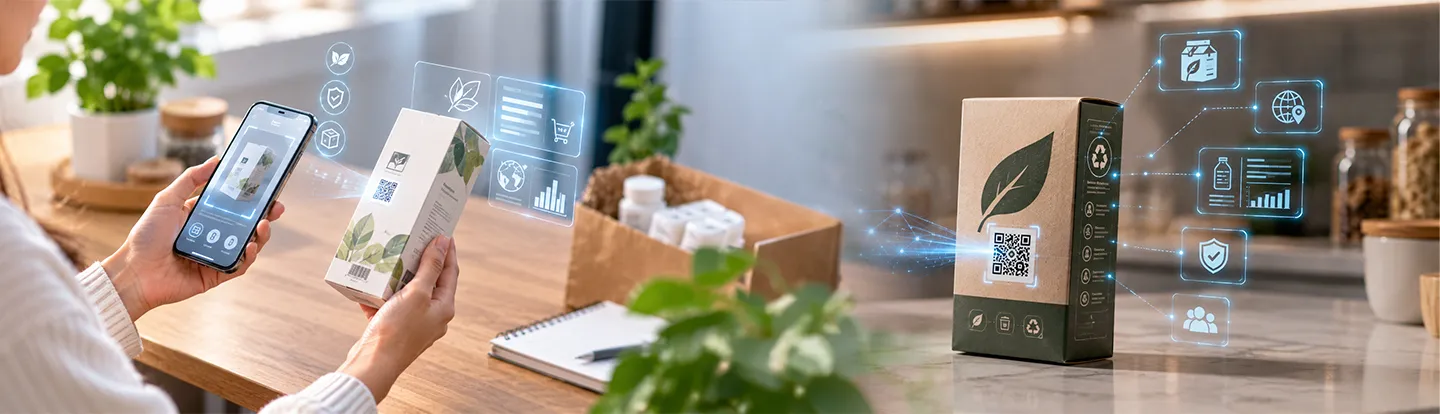

A customer picks up two similar products from a supermarket shelf. Both are priced almost the same. One simply displays basic information on the pack. The other allows the customer to instantly access detailed product information, usage instructions, manufacturer and manufacturing details, and brand updates with a quick scan. The purchase decision often shifts in that moment.
For consumer brands, packaging is no longer just about protecting a product or attracting attention on the shelf. It has become a direct communication channel. As retailers, marketplaces, and consumers expect faster access to reliable information, brands are rethinking how packaging can support not only product sales but also consumer trust, engagement, and post-purchase experiences.
Why are brands investing in packaging that goes beyond the label?
Modern retail is no longer limited to the physical shelf. A product may first appear on an online marketplace or on a quick-commerce app, and finally in a retail store before reaching the consumer. Customers expect the same information regardless of where they interact with the product. This shift has made packaging a critical part of the retail experience rather than just a branding element.
For brands selling through marketplaces, a unique product identity also supports smoother product onboarding. Whether a business is obtaining an Amazon product barcode for marketplace listings or preparing products for retail shelves, that unique identification forms the foundation on which smarter consumer experiences can be built. Smart packaging extends that identity by connecting consumers to trusted information long after the product has left the warehouse.
What retail challenges is smart packaging helping brands solve?
Retailers and consumer brands frequently deal with information gaps that affect both operations and customer confidence. Packaging updates may reach retail shelves before digital product pages are updated. Product variants may carry different information across marketplaces. Store teams may answer questions that consumers expect to resolve themselves by scanning a product. These situations create unnecessary friction throughout the buying journey.
Smart packaging helps reduce these gaps by allowing consumers to access product information directly instead of relying only on printed packaging. This becomes particularly valuable for brands selling through multiple retail formats, including quick-commerce platforms, where Barcodes for Blinkit support product identification while connected packaging helps deliver richer information to consumers within seconds.
Why does smart packaging start before the package is printed?
Many businesses associate smart packaging with QR codes or connected labels. In reality, it begins much earlier. The process starts with creating a unique identity for every product that remains consistent across manufacturing, warehousing, retail, and digital commerce.
Businesses exploring how to create barcode for product often focus on meeting retailer or marketplace requirements. However, that same product identity also becomes the link that enables consumers to access reliable product information through smart packaging solutions. Without accurate product identification, delivering consistent digital experiences becomes significantly more difficult.
How does smart packaging strengthen consumer trust after purchase?
Consumer interaction doesn't end at checkout. Customers often revisit product information after purchasing, whether to understand usage instructions, verify authenticity, register warranties, or learn about recycling and disposal.
Brands that continue engaging consumers after purchase are better positioned to strengthen loyalty and reduce customer support enquiries. This is also why businesses that obtain an Amazon product barcode increasingly view product identification as more than a listing requirement. It becomes part of a connected retail ecosystem where the same product identity supports marketplace operations, retail visibility, and consumer engagement. When information remains consistent throughout the product journey, trust becomes easier to build.
What should brands prioritise before adopting smart packaging?
The success of smart packaging depends less on technology and more on the quality of the information behind it.
Before introducing connected packaging, brands should review:
- Whether product information is consistent across retail and marketplace channels
- How packaging updates are reflected in digital product records
- Whether consumers receive the same information across every touchpoint
- How product identification supports future digital initiatives
While some businesses begin with a product barcode generator, long-term success depends on maintaining accurate and trusted product information throughout the product lifecycle. Smart packaging delivers the greatest value when the digital experience behind every scan is as reliable as the product itself.
Conclusion
Smart packaging is changing the role of product packaging from a static label to an active source of information and engagement. The opportunity extends beyond improving customer interactions. It lies in creating consistent experiences that connect physical products with trusted digital information, helping consumers make informed decisions before, during, and after every purchase.
FAQs
1. What is smart packaging?
Smart packaging connects physical products with digital information, allowing consumers to access additional product details through technologies such as QR codes or connected labels.
2. How does smart packaging improve consumer engagement?
It gives consumers instant access to product information, authenticity details, usage guidance, and post-purchase support from the packaging itself.
3. Why is product identification important for smart packaging?
A unique product identity helps ensure consumers receive accurate and consistent information across retail stores, marketplaces, and digital platforms.
4. Can smart packaging benefit retailers as well as brands?
Yes. It reduces information gaps, supports consistent product communication, and helps retailers provide a better shopping experience.
5. What should businesses prepare before implementing smart packaging?
They should establish accurate product identification, maintain consistent product information, and ensure digital content is updated across all customer touchpoints.
























Sign in to leave a comment.