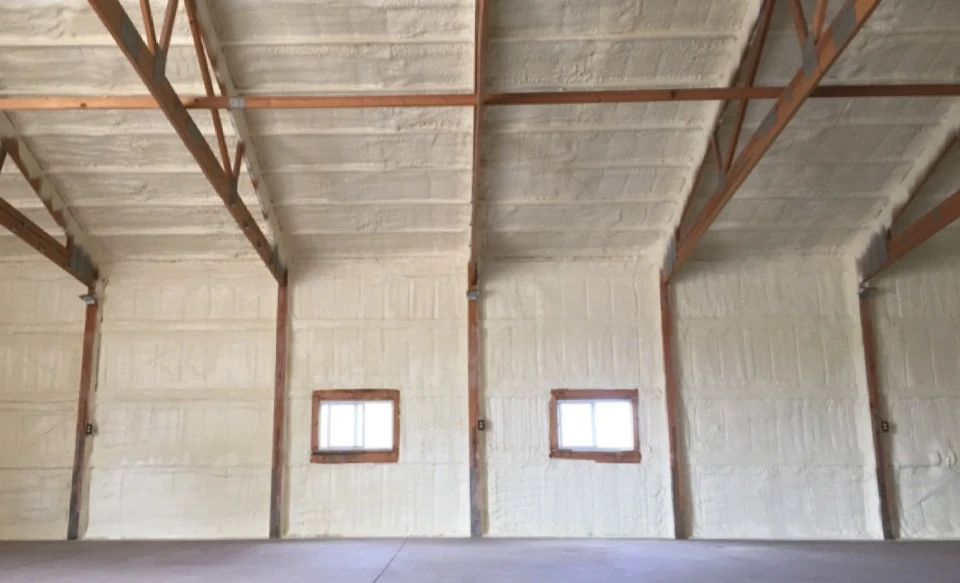

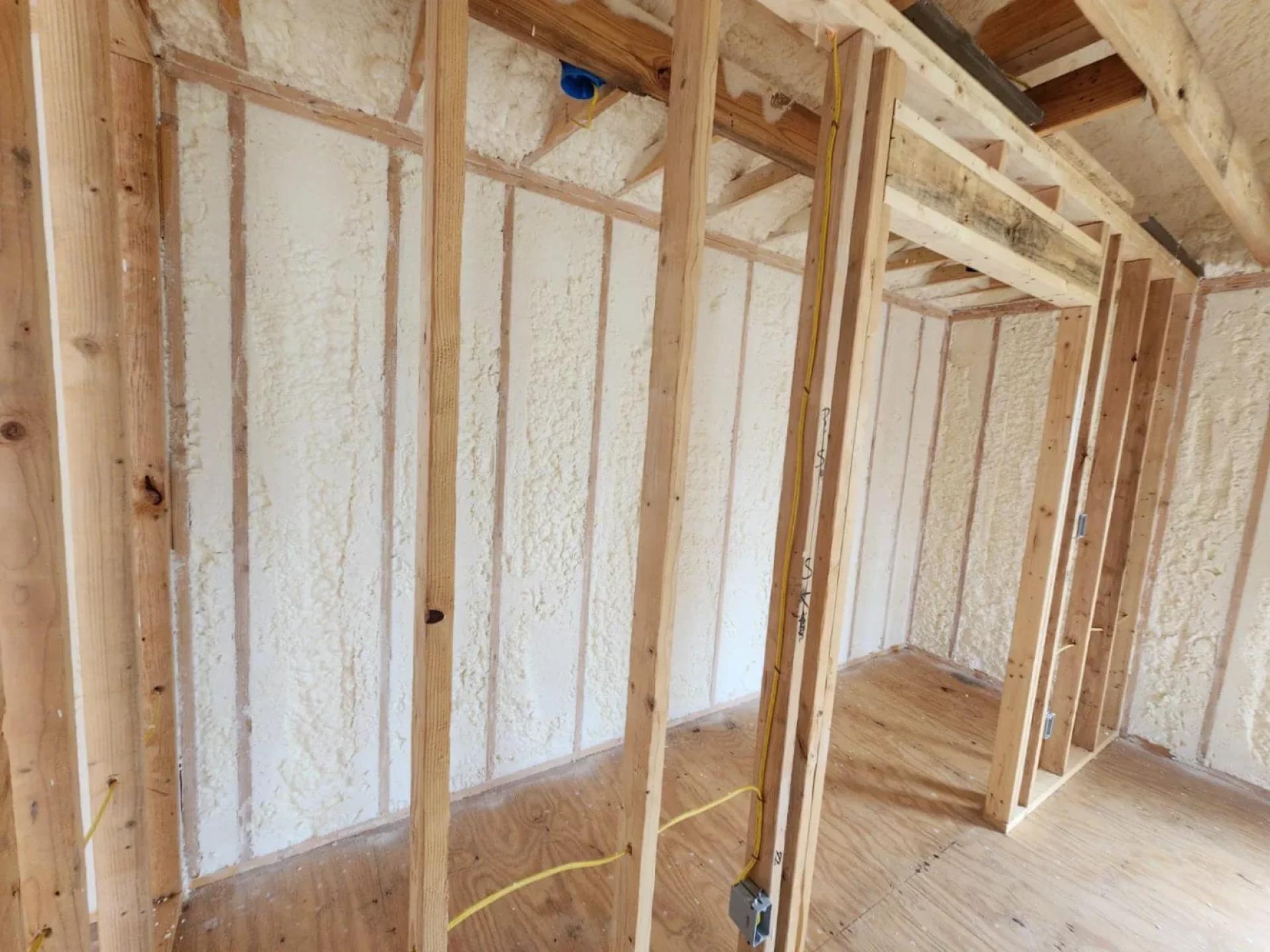
Spray foam insulation significantly improves the building envelope in New Lenox IL construction projects by creating an air-sealed, moisture-resistant, and thermally efficient barrier. This is particularly crucial in a region like New Lenox, where seasonal temperature swings, humidity fluctuations, and wind exposure create complex building science challenges. Spray foam eliminates thermal bridging and reduces uncontrolled air leakage, both of which are leading causes of energy loss and indoor comfort issues.
Unlike traditional batt or blown-in insulation, spray foam tightly bonds to surfaces, filling gaps and irregular cavities. This ensures a continuous thermal layer that adapts to the structural nuances of each project. South Chicago Insulation provides this insulation type based on experience with regional performance factors and proven effectiveness in diverse applications, from residential attics to commercial envelope upgrades.
Why It Matters in New Lenox IL
New Lenox experiences freezing winters, humid summers, and a significant number of freeze-thaw cycles annually. These conditions challenge standard insulation systems. Spray foam addresses this by resisting moisture penetration and air exchange, both of which degrade building performance over time. According to the U.S. Department of Energy, uncontrolled air leakage accounts for up to 40% of energy used for heating and cooling in buildings (Source: DOE, 2023).
Key Benefits of Spray Foam for Building Envelopes
Benefit
Description
Practical Insight
Air Sealing
Eliminates unplanned air infiltration, enhancing HVAC efficiency
Particularly important in older New Lenox homes with leaky framing
Moisture Resistance
Closed-cell variants block vapor and prevent condensation within walls
Reduces mold risk in humid summer months
Thermal Efficiency
High R-values per inch compared to fiberglass or cellulose
Maintains comfort during Lake Michigan-induced cold snaps
Structural Support
Closed-cell foam adds rigidity to framing
Beneficial in pole barns and retrofit roofing
Noise Reduction
Open-cell foam significantly reduces airborne sound
Ideal for homes near highways or commercial zones
Bonus Tip: In basement or crawlspace applications, closed-cell foam also acts as a vapor barrier, eliminating the need for separate plastic sheeting.
Spray Foam Types and Comparison
Feature
Open-Cell Foam
Closed-Cell Foam
R-Value per Inch
~3.5–3.8
~6.0–7.0
Moisture Resistance
Semi-permeable
Highly resistant
Air Seal
Excellent
Excellent
Vapor Barrier
No
Yes
Application Areas
Interior walls, attics
Roof decks, crawlspaces, exteriors
Cost
Lower
Higher
Flexibility
High
Rigid after cure
Source: Building Science Corporation, 2024
Technical Data Table
Specification
Open-Cell Spray Foam
Closed-Cell Spray Foam
Density
0.5 lb/ft³
2.0 lb/ft³
Perm Rating
10+
<1.0
Expansion Rate
100:1
30:1
Flame Spread Rating
≤25
≤25
Service Temperature Range
-200°F to +180°F
-100°F to +200°F
Source: ICC-ES Reports & Manufacturer Data Sheets, 2024
Region-Specific Performance Considerations
In the New Lenox area, high humidity in summer and low dew points in winter make vapor control a top priority. Closed-cell spray foam is often used in roof decks and crawlspaces for its vapor-impermeable properties, especially in retrofits where old buildings lack continuous weather barriers.
In attics with HVAC equipment, open-cell spray foam provides excellent air sealing while preventing thermal gain through rooflines. Additionally, homes near farmlands or highways benefit from open-cell’s sound attenuation properties, helping reduce exterior noise.
Bonus Tip: Use thermal imaging post-installation during cold weather to verify proper coverage and seal integrity—an expert technique frequently employed on South Chicago Insulation job sites.
Things to Consider Before Making a Decision
- Building Type: Closed-cell is ideal for commercial or pole barn projects, while open-cell fits well in residential interior walls.
- Moisture Conditions: For basements and crawl spaces, closed-cell foam is the safer option due to its low perm rating.
- Budget vs. Performance: While spray foam has a higher upfront cost, it reduces HVAC system load and energy use over time.
- Code Compliance: Illinois Energy Code requires continuous air barriers in new construction—spray foam helps achieve this in a single application.
- Fire Safety: In many applications, spray foam must be covered with a thermal or ignition barrier, such as intumescent coatings.
Common Questions
- Should I choose open-cell or closed-cell foam for attic insulation?
- If moisture control is not a primary concern, open-cell is a cost-effective choice. For sealed attic assemblies with potential humidity exposure, closed-cell may be more appropriate.
- How long does spray foam last?
- Properly installed spray foam can last the life of the building—50+ years—with minimal degradation.
- Does spray foam insulation affect indoor air quality?
- When installed by certified professionals with proper ventilation, off-gassing is minimal and temporary. Long-term, it helps improve indoor air quality by blocking outdoor pollutants.
Professional Insulation Services Offered by South Chicago Insulation
Each service below is tailored to solve specific thermal, moisture, or air control issues commonly found in Illinois construction and retrofit projects:
- Residential Insulation
- Custom-installed spray foam and blown-in insulation systems to improve comfort, reduce drafts, and lower energy bills in homes.
- Commercial Insulation
- Solutions for offices, warehouses, and retail spaces designed to meet code compliance and boost building energy performance.
- Retrofit Insulation
- Upgrades to existing walls, attics, and crawlspaces using non-invasive spray foam or blow-in methods for improved energy efficiency.
- Spray Foam Roofing
- Closed-cell foam roofing applications that offer monolithic, seamless protection against leaks, UV exposure, and thermal loss.
- Roof Coatings
- Reflective or protective coatings applied over foam or traditional roofs to extend life, reduce heat absorption, and seal surface cracks.
- Attic Insulation
- Optimized attic strategies including vented and unvented approaches using spray foam or blown-in insulation to maintain indoor climate.
- Crawlspace Encapsulation
- Seals crawlspaces with vapor barriers and spray foam to prevent moisture buildup, mold growth, and structural rot.
- Home Performance Evaluation
- Diagnostic services using blower door testing, infrared scanning, and HVAC analysis to assess a home’s energy performance and envelope health.
- Sound Attenuation Insulation
- Acoustic insulation solutions for reducing noise transfer between rooms, floors, or exterior environments.
- Pole Barn Insulation
- Closed-cell foam applications in agricultural and storage buildings for condensation control and structural durability.
- Intumescent Coatings
- Fire-resistant coatings applied over spray foam insulation to meet local fire safety and building code requirements.
- Blown-In Insulation
- Loose-fill cellulose or fiberglass installed in walls or attics to improve R-value without major renovations
FAQ Section
What maintenance is required after spray foam installation?
Spray foam requires little maintenance. Annual inspections are advised, especially in high-moisture areas.
Can spray foam be applied in cold weather?
Yes, with proper material conditioning and substrate preparation, spray foam can be applied in temperatures as low as 20°F.
Is spray foam compatible with other insulation types?
It can be used alongside fiberglass or cellulose in hybrid applications, though compatibility must be assessed for moisture control.
What are the signs of a poor spray foam job?
Indicators include shrinkage, poor adhesion, uneven application, and gaps. These can cause thermal bridging and air leaks.
Does spray foam qualify for energy efficiency tax credits?
Yes, under the IRS Section 25C, qualifying spray foam installs may be eligible for federal energy tax credits. Always consult a tax advisor.
Ready to Achieve Total Envelope Efficiency?
Enhancing your building envelope with spray foam isn’t just a thermal upgrade—it’s a complete performance transformation. Apply these insights now: Schedule your home or building evaluation with South Chicago Insulation.
Contact
South Chicago Insulation
📞 (779) 803-8025
Author and Reviewer:
Author: Bob Gasca attended his first spray foam training in 2007 and has continued to pursue yearly trainings to stay current with the latest technology and practices. He is a certified Spray Foam Master Installer through the SPFA and a member of the SPFA. Additionally, Bob serves as a Spray Foam Worldwide Ambassador, sharing information with spray foam professionals globally. Recently, he returned from a building science training, where he expanded his knowledge on how weather conditions affect home performance, helping him better diagnose and improve home health for families. Bob specializes in finding solutions to complex moisture and air infiltration issues.
Reviewer: Noah Gonzalez reviewed this article and drew on 9 years of experience to offer suggestions that make the guidance more directly useful for insulation contractors.






















Sign in to leave a comment.