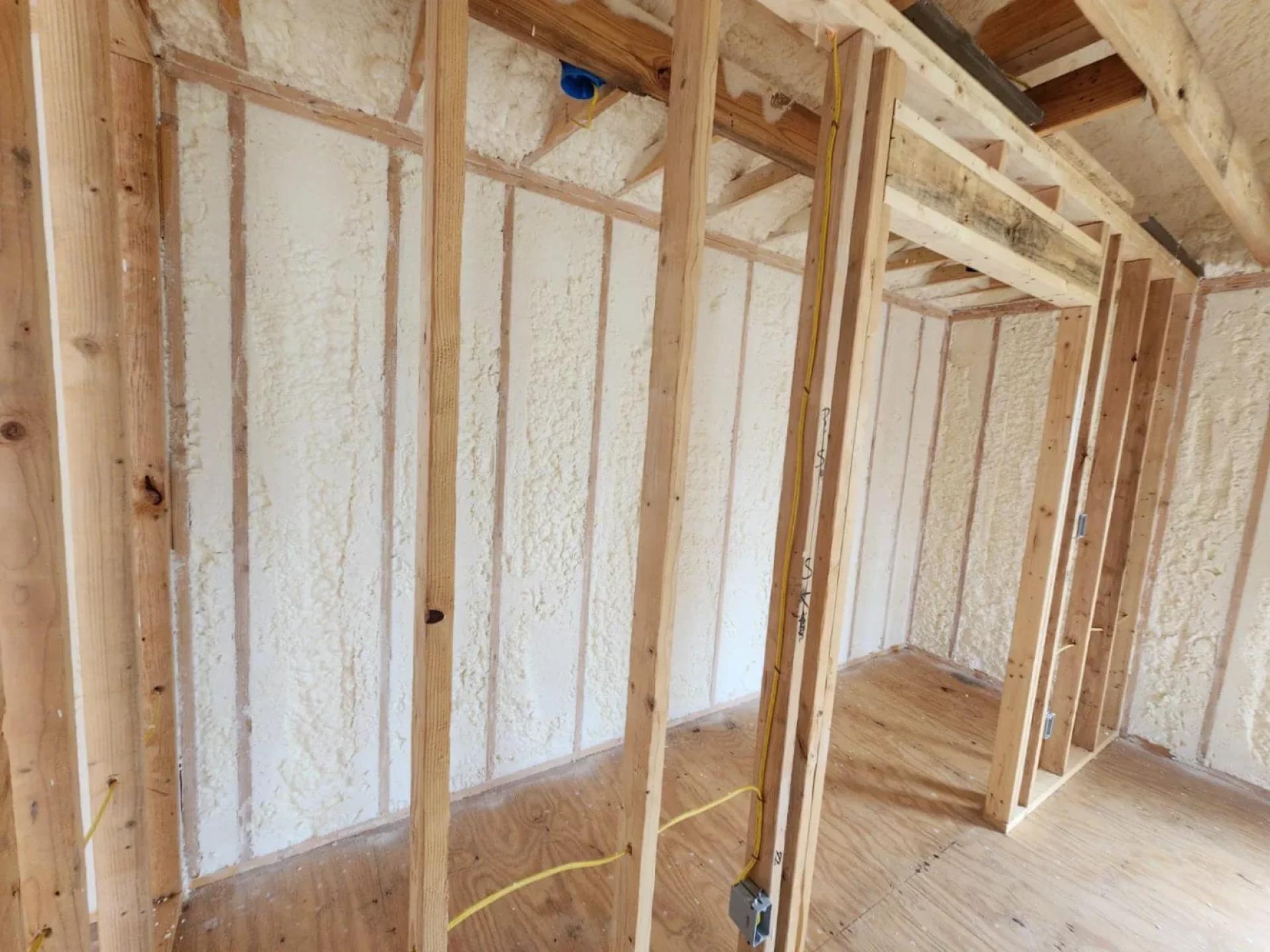

Spray foam insulation plays a critical role in preventing mold and moisture problems in residential buildings across New Lenox. Properly installed spray foam creates a continuous air and vapor barrier, closing gaps that allow humid air to condense inside walls, ceilings, and attic spaces. The immediate result: reduced risk of microbial growth and structural deterioration caused by moisture intrusion. This article outlines exactly how spray foam achieves this and explains practical steps homeowners and contractors can take to ensure its long-term effectiveness in the climate of New Lenox.
The enclosed structure of homes in New Lenox, particularly during winter-spring transitions, experiences moisture migration from interior to exterior walls. When insulation lacks an air seal, such as traditional batt or blown-in insulation, warm air often reaches cold surfaces and forms condensation. Spray foam mitigates this problem by adhering directly to framing members, sealing air leaks, and maintaining consistent indoor temperatures. Based on field testing and building science practices observed locally, the moisture resistance of spray foam contributes directly to lower mold incidence.
South Chicago Insulation applies best-practice installation techniques to deliver a system that actively controls air infiltration and manages moisture. With over a decade of first-hand experience addressing thermal and moisture issues in New Lenox homes, the following breakdown explains what homeowners should understand before choosing spray foam for mold prevention.
How Spray Foam Insulation Stops Mold Formation
Mold growth requires three conditions: moisture, organic material, and temperature stability. In New Lenox's four-season climate, rooflines and crawlspaces are common hotspots for all three. Spray foam prevents air movement, which is the primary driver of moisture transport in buildings.
Factor
Traditional Insulation (e.g., Fiberglass)
Spray Foam Insulation
Air Sealing
Poor to Moderate
Excellent
Vapor Barrier Effect
Requires a separate layer
Built-in with closed-cell foam
Moisture Absorption
High
Very Low (closed-cell)
Mold Susceptibility
High when wet
Minimal
Installation Coverage
Prone to gaps
Expands to fill all crevices
Bonus Tip: During retrofit projects in older homes, ensure all wet or mold-affected materials are removed before installing foam. Sealing over damp wood can trap moisture.
Technical Data and Material Specs
Closed-cell and open-cell spray foam have distinct moisture behaviors. Selection must match the application.
Property
Open-Cell Foam
Closed-Cell Foam
R-Value per inch
~3.6
~6.5
Water Permeability
Permeable
Impermeable
Application Areas
Interior walls, ceilings
Attics, crawlspaces, and roofs
Mold Resistance Rating (ASTM G21)
Moderate
Excellent
Structural Rigidity
Soft
Rigid
Regional Considerations for New Lenox Homes
New Lenox homes face frequent freeze-thaw cycles, high humidity in spring, and occasional storm-driven rain. These conditions make moisture intrusion a priority concern. Crawlspaces without proper encapsulation absorb ground moisture, which migrates upward. Attics with air leakage from living spaces allow condensation under roof sheathing.
Closed-cell spray foam is especially suited for:
- Basement rim joists
- Crawlspace ceilings
- Unvented attics and cathedral ceilings
Open-cell foam, while cost-effective, is better applied to interior walls where water exposure risk is minimal.
Bonus Tip: Spray foam should never be installed on surfaces showing active frost or elevated humidity. Use temporary heating and dehumidification before application in winter.
Things to Consider Before Making a Decision
Evaluate structural needs and building envelope performance before selecting spray foam:
- Inspect for existing moisture or mold
- Confirm climate zone requirements (New Lenox is in Zone 5)
- Identify ventilation paths in the attic and the crawlspace
- Consult the code for vapor barrier placement and ignition barriers
- Use third-party home performance audits when possible
Spray foam installation is permanent. Rework is costly. Making a proper decision the first time avoids expensive remediation.
Related Services for Complete Moisture Protection
- Residential Insulation offers whole-home air sealing and thermal control to prevent seasonal humidity swings that contribute to mold formation.
- Commercial Insulation enhances vapor management and condensation control in mixed-use or multifamily buildings, which experience higher occupant loads and moisture generation.
- Retrofit Insulation updates aging homes with sealed insulation assemblies, replacing degraded materials that no longer manage air or water.
- Spray Foam Roofing provides a seamless, waterproof barrier over roof decks. Ideal for flat or low-slope roofs in moisture-prone areas.
- Roof Coatings act as reflective, waterproofing layers that protect spray foam roofs and reduce surface temperature swings.
- Attic Insulation targets heat and moisture loss at the roofline, eliminating common mold-prone zones.
- Crawlspace Encapsulation uses spray foam and vapor barriers to block ground moisture and reduce subfloor humidity.
- Home Performance Evaluation pinpoints air and moisture entry paths using infrared imaging and blower door testing.
- Sound Attenuation Insulation includes air-sealing that can also reduce interior moisture migration through shared walls in duplexes or multi-family units.
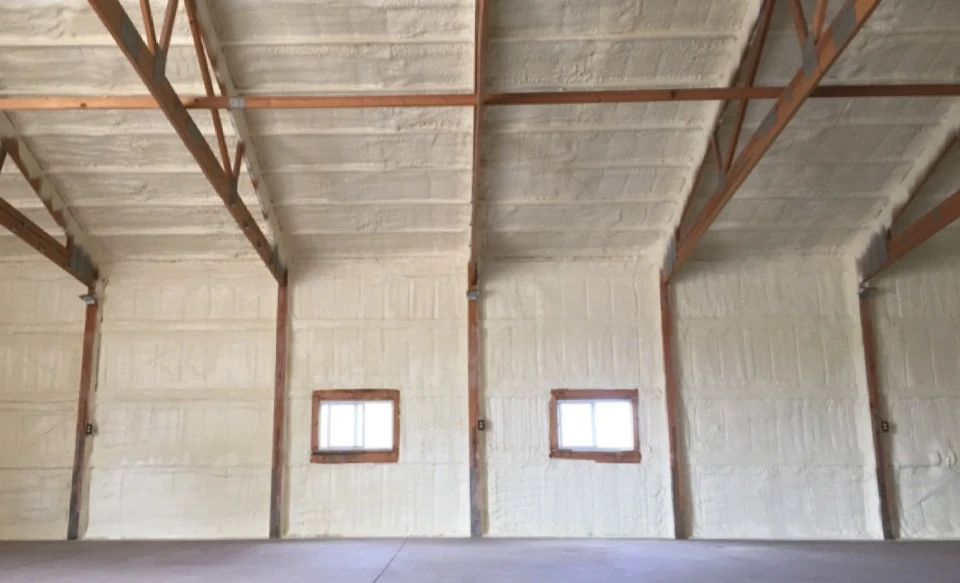
- Pole Barn Insulation adapts spray foam to non-conditioned agricultural structures that often experience large daily humidity swings.
- Intumescent Coatings protect spray foam in exposed areas, preventing fire hazards and complying with building codes.
- Blown-In Insulation offers supplementary sealing for enclosed spaces that can trap moisture when left untreated.
Common Questions When Planning Spray Foam for Mold Control
Can I apply spray foam over damp surfaces? No. Always dry and clean the surface first. Applying foam over damp material traps moisture and can lead to decay.
Do I need ventilation if I use spray foam? Yes. Balanced ventilation (like an ERV) is necessary to control indoor air quality after air sealing.
Which type of spray foam is better for mold prevention? Closed-cell, due to its vapor resistance and high density.
Will spray foam remove existing mold? No. Spray foam prevents future growth but does not remove existing spores or damage.
Can I insulate my attic with open-cell foam in New Lenox? Only if humidity is controlled and ventilation is adequate. Closed-cell is more robust for moisture-prone areas.
FAQ
How long does spray foam insulation last in preventing mold? Installed correctly, spray foam insulation can last the life of the building with no mold-related degradation.
What signs indicate existing moisture issues before spray foam? Water stains, musty odors, elevated indoor humidity, and inconsistent indoor temperatures often precede moisture problems.
Is closed-cell foam always necessary? Not always. It depends on exposure. For below-grade or roofline use, closed-cell is preferred. Interior walls may use open-cell.
Can spray foam help with radon mitigation? In encapsulated crawl spaces, yes. Spray foam reduces air movement from the soil, which can lower radon entry.
Will I still need a vapor barrier with spray foam? Closed-cell typically acts as a vapor barrier. Open-cell does not and may require an additional layer, depending on code.
Ready to Achieve Lasting Mold Protection?
Apply these insights now: Schedule your customized home performance evaluation with South Chicago Insulation. This ensures spray foam is applied with maximum benefit to your property’s specific moisture risks.
Contact Details: South Chicago Insulation Phone: (779) 803-8025 Email: [email protected]
Author and Reviewer:
Author: Bob Gasca attended his first spray foam training in 2007 and has continued to pursue yearly trainings to stay current with the latest technology and practices. He is a certified Spray Foam Master Installer through the SPFA and a member of the SPFA. Additionally, Bob serves as a Spray Foam Worldwide Ambassador, sharing information with spray foam professionals globally. Recently, he returned from a building science training, where he expanded his knowledge on how weather conditions affect home performance, helping him better diagnose and improve home health for families. Bob specializes in finding solutions to complex moisture and air infiltration issues.
Reviewer: Noah Gonzalez reviewed this article and drew on 9 years of experience to offer suggestions that make the guidance more directly useful for insulation contractors.
























Sign in to leave a comment.