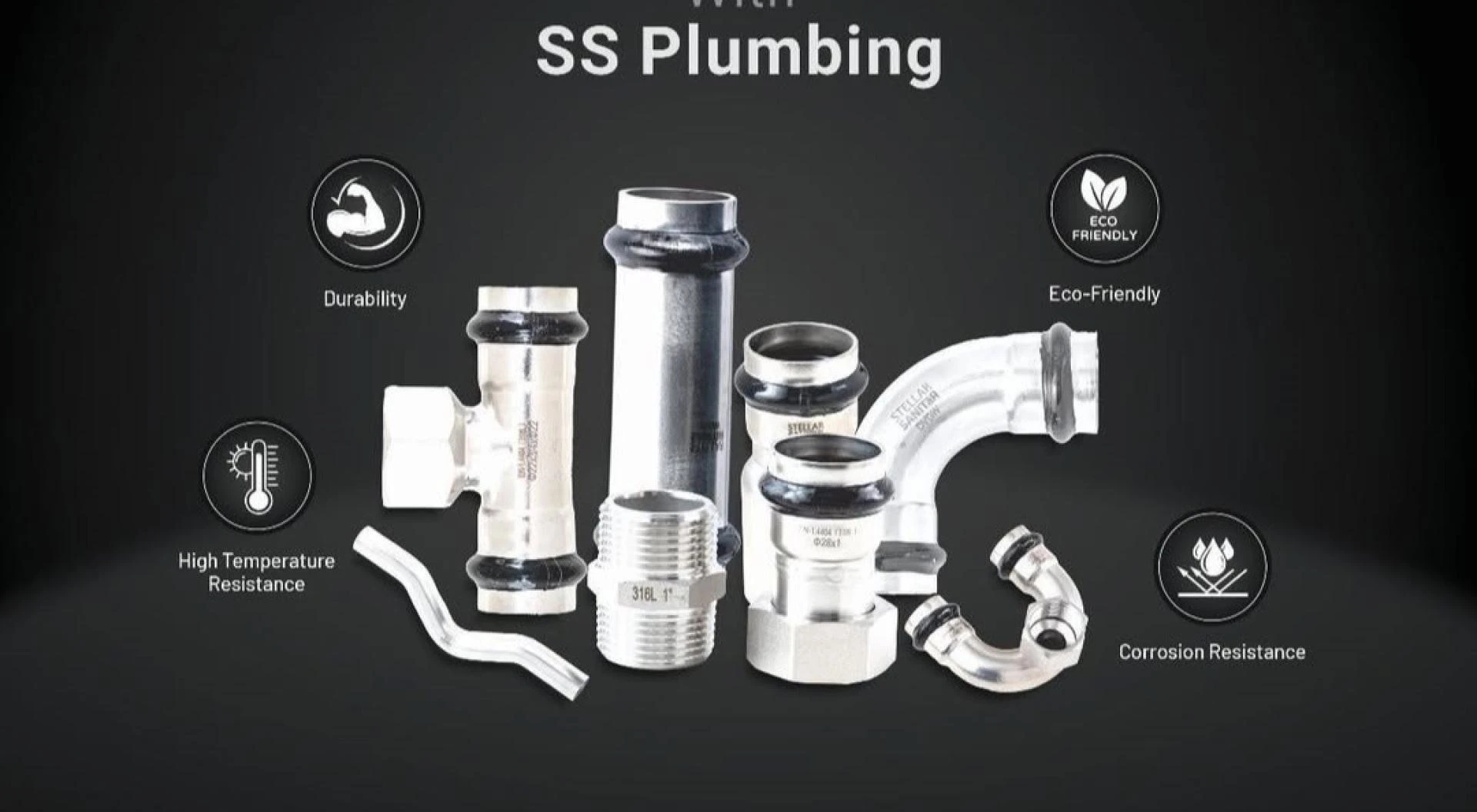

Pipelines function as critical components of a facility's infrastructure because they enable the transportation of water, gases, chemicals and other vital fluids. The use of stainless steel pipe fittings as pipe connectors helps ensure that both the pipe material and the fittings contribute to the overall longevity and performance of a pipeline.
The article demonstrates that stainless steel fittings improve pipeline strength while providing businesses and homeowners an economical solution for their piping requirements.
What Are Stainless Steel Fittings?
Stainless steel fittings serve as connectors that pipe systems use to join pipes, change movement direction, and manage fluid flow. These systems comprise various components, which include elbows, tees, couplings, reducers, and flanges. These fittings consist of alloys that contain iron and chromium and may also include nickel or molybdenum to provide protection against severe environmental and operational conditions.
Excellent Resistance to Corrosion
Excellent resistance to corrosion is one of the main reasons why stainless steel fittings increase the durability of piping systems. When compared to other types of materials that are used to make pipe, they rust and corrode due to the moisture and chemicals in the area, along with the consistent fluctuations in temperature that the piping system is subject to.
The creation of the chromium oxide layer, which forms a thin coating, either on the outside of the stainless steel fitting, prevents oxidation, and protects the stainless steel from the damaging effects of corrosive agents and chemicals. In this manner, the stainless steel fittings that are used in piping systems create a system that is resistant to the degradation of the materials and the failure of the piping system, throughout the entire life cycle of the piping system.
Superb Strength and Longevity
The greatest benefit that stainless steel fittings provide is their remarkable strength. Because they do not change shape when subjected to extreme pressure or heat, the fittings are capable of providing the designed pressure and temperature properties. Thus, they can be utilized in both large and small industrial applications, including: oil and gas pipelines; chemical processing facilities; and, wastewater treatment facilities.
Stainless steel fittings provide long-lasting performance, which decreases the need for replacement parts. The system guarantees continuous operation and it decreases maintenance expenses throughout the entire operational period.
Resistance to Temperature Variations
Pipelines operate under temperature conditions that change throughout their entire operational period. Materials with high expansion and contraction rates lead to both pipe leaks and structural failures. Stainless steel fittings maintain their integrity across a wide temperature range, from very high heat to freezing conditions.
The thermal stability of this material protects connection points from thermal stress, which prevents pipeline failures.
Leak Protection and Tight Sealing
A pipeline must stay completely intact without leakage for the full length of time it will run. Any fittings that do not meet quality standards will produce weak connections resulting in fluids leaking out of the pipeline and contaminating the environment or people who come into contact with that fluid. Stainless steel fittings are engineered to have a snug fit so they continue to remain reliable and able to hold up under pressure.
The system provides superior sealing quality while also allowing for fluid to flow smoothly, making it much easier for systems using stainless steel to perform more efficiently than with non-stainless steel piping. This is especially important to businesses because if a leak occurs, even a small one, will create large problems.
Minimal Maintenance
Pipelines utilizing stainless-steel connections will require significantly less maintenance than similar pipelines made from alternative materials. Because stainless-steel resists corrosion, there are fewer inspections. More repair and replacements can be avoided when compared to other materials.
This system's reliability complements its ability to carry out maintenance tasks for large underground pipeline networks which need specialized skills to accomplish.
Hygiene and Safety for Sensitive Applications
Hygiene is essential to the food processing, pharmaceutical and QW industries. Stainless steel fittings with their non-porous surface allow for easy cleaning to prevent the development of bacteria and contaminants.
The surfaces of stainless steel fittings, being smooth, will never come into contact with the fluids they convey, thereby ensuring that the contents of the system remain safe and hygienic.
Environmental and Economic Advantages
Stainless steel fittings aid in reaching your sustainability goals by having high recycling rates and long life, which result in lower amounts of waste generated. Stainless steel fittings also have the ability to maintain their physical properties throughout their entire life cycle, leading to savings in material resources and economic savings by eliminating frequent product replacements.
While the initial purchase cost of stainless steel fittings is usually higher than alternative fittings; in the long run they provide a cost advantage due to their long life, as well as reduced maintenance costs.
Applications of Versatility
Stainless steel fittings have been used extensively in various sectors including Construction, Oil & Gas, Chemical Processing, and Water Management. They can successfully function in many different operational requirements and environments.
Stainless steel provides reliable performance because they resist high-pressure fluids as well as corrosion from several different types of chemicals.
Conclusion
The use of stainless steel fittings may result in improved pipe system performance for an organization due to greater structural strength and increased durability of the pipe system itself. Stainless steel pipe fittings have been successfully installed into a modern-day pipeline because they maintain their strength while withstanding extreme temperatures and provide long-term leakage protection with minimal maintenance. This results in a high-performance pipe system produced through the installation of stainless steel fittings.
























Sign in to leave a comment.