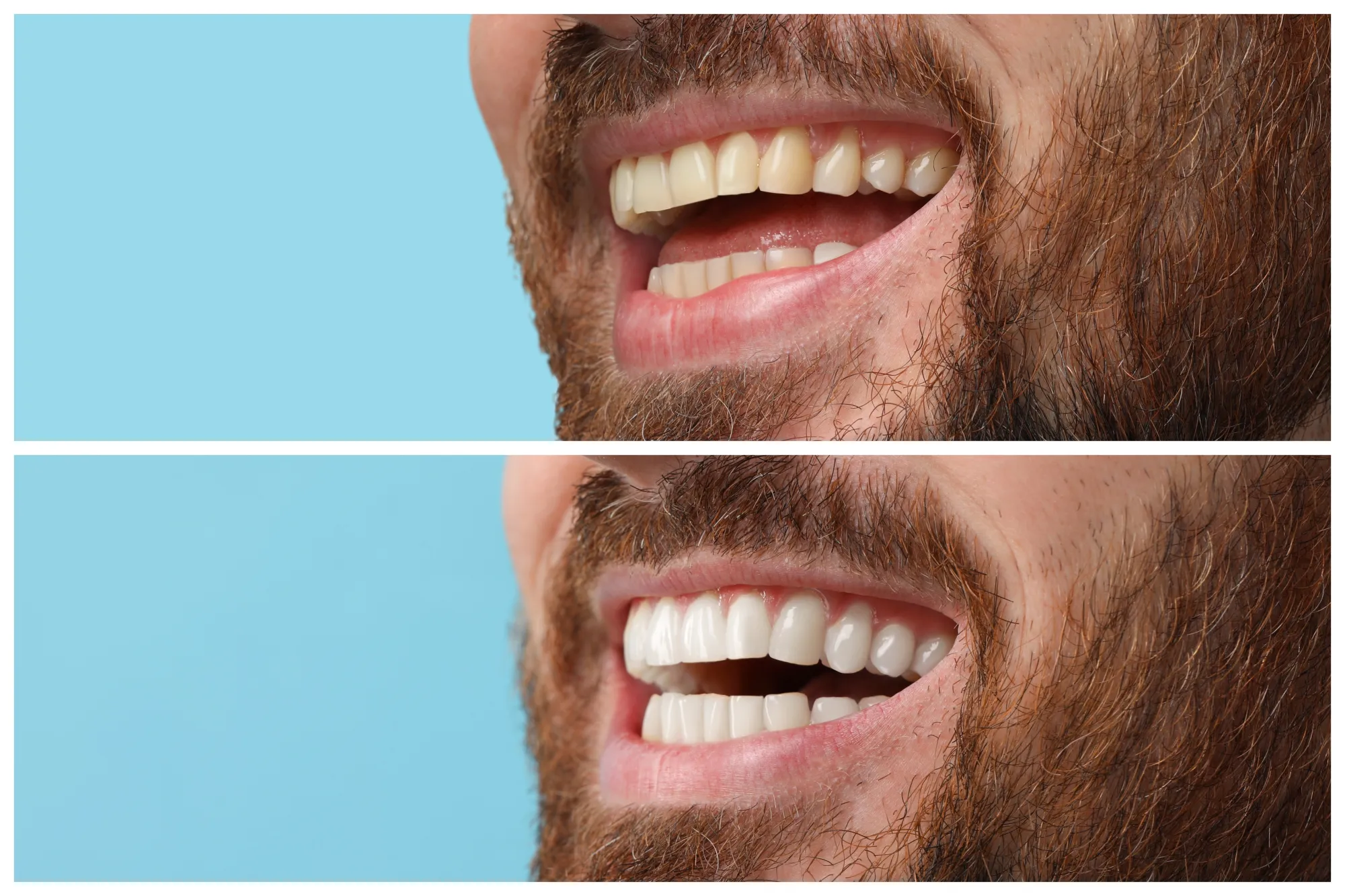

A brighter smile is a common cosmetic dental goal, but effective whitening involves more than choosing a product. The cause of discolouration, the health of the teeth and gums, existing restorations and previous sensitivity can all influence whether whitening is appropriate.
For people researching teeth whitening in Parramatta, dentist-supervised whitening treatments begin with an assessment of the mouth. This allows the dentist to identify conditions that should be treated first, explain how different teeth may respond and recommend an approach suited to the individual.
Why teeth change colour
Tooth discolouration can develop on the enamel surface or within the tooth structure.
Surface stains, also called extrinsic stains, are commonly associated with coffee, tea, red wine, tobacco and strongly coloured foods. Some may be reduced through professional cleaning, while whitening may be considered when a broader colour change is wanted.
Intrinsic discolouration develops within the tooth. It may relate to ageing, previous dental trauma, certain medications or changes during tooth development. These stains can respond differently and may not lighten evenly.
Ageing can involve both forms of colour change, as surface staining accumulates and the darker dentine beneath the enamel becomes more noticeable.
Because different causes can require different approaches, an examination is more useful than selecting a whitening product based only on appearance.
Why a dental examination comes first
Whitening products can cause discomfort when teeth or gums are not healthy. Before treatment, a dentist can check for problems that may affect safety, comfort or the final result.
The examination may identify tooth decay, cracks, erosion, gum disease, recession, sensitivity, damaged restorations or individual teeth that are darker than the others. It also allows crowns, veneers and tooth-coloured fillings to be assessed before treatment.
Decay, cracks or exposed tooth surfaces may increase the risk of pain during whitening. Gum inflammation may also need treatment before a bleaching product is used.
The assessment can also identify discolouration that is unlikely to respond predictably. A single dark tooth following trauma, for example, requires a different evaluation from gradual yellowing across the smile.
How dentist-supervised whitening treatments work
Professional whitening generally uses peroxide-based bleaching agents to lighten colour within natural tooth structure. This differs from whitening toothpaste, which mainly helps remove surface stains.
Depending on the assessment, whitening may be performed in the dental practice or through a professionally supervised take-home system. The recommended method can depend on the type of staining, existing sensitivity, treatment preferences and the result being sought.
With a supervised take-home system, custom-fitted trays may be provided to hold whitening gel against the teeth. A close fit can help distribute the product while reducing unnecessary contact with the gums. The dentist also provides directions about how much gel to use and how long the trays should be worn.
In-practice treatment is managed by the dental team, while take-home whitening provides a more gradual option. Neither approach can guarantee a particular shade, so the likely outcome should be discussed beforehand.
Existing dental work does not whiten
Crowns, veneers, bridges and tooth-coloured fillings do not respond to bleaching agents in the same way as natural teeth.
If surrounding teeth become lighter, a restoration may appear darker by comparison even though its colour has not changed. This is particularly important when restorations are visible near the front of the mouth.
A dentist can assess their position and colour before treatment. Some restorations may continue to blend acceptably. In other cases, replacement may be discussed after whitening is complete and the tooth shade has settled.
Managing temporary sensitivity
Temporary tooth sensitivity is a common side effect of whitening. Some people notice mild sensitivity to cold, while others experience more noticeable discomfort.
The intensity varies with the condition of the teeth, previous sensitivity, product concentration and frequency of use.
A dentist may adjust the plan by recommending:
- shorter application periods
- longer intervals between treatments
- a different product concentration
- toothpaste designed for sensitive teeth
- a temporary pause if sensitivity develops
- careful application to reduce gum contact.
Sensitivity is often temporary. Pain that is severe, continues or affects one particular tooth should be assessed rather than assumed to be a normal response.
Gum irritation can also occur if whitening gel contacts the soft tissues. Following the supplied directions and avoiding excess gel helps reduce this risk.
Who may be suitable for whitening?
Whitening may be suitable for adults with healthy teeth and gums who want to reduce general yellowing or staining from food, drinks or tobacco.
Suitability depends on more than tooth colour. The dentist also considers the cause of discolouration, enamel condition, gum health, existing sensitivity, visible restorations and the patient’s expectations.
Whitening may need to be postponed when there is untreated decay, active gum disease, cracked teeth, significant erosion or unexplained sensitivity. Treating these concerns first can improve comfort and protect oral health.
Some discolouration may respond poorly or unevenly to bleaching. Depending on the diagnosis, alternatives could include professional cleaning, replacing an unsuitable restoration, composite bonding or veneers.
Setting realistic expectations
Whitening can create a noticeable improvement, but results vary between patients and teeth.
The final shade can be influenced by the original tooth colour, age, enamel characteristics, cause of staining and treatment method. Yellow-toned discolouration may respond differently from grey or trauma-related changes.
Very bright or completely uniform results are not always achievable. The aim is generally to create a fresher appearance that remains consistent with the person’s natural teeth and smile.
Whitening is also not permanent. Teeth remain exposed to substances that can cause new staining, so the colour may gradually change again.
Maintaining a brighter smile
Good oral hygiene and regular dental care can help maintain the result and reduce new surface staining.
Useful habits include brushing twice a day with fluoride toothpaste, cleaning between the teeth daily and attending dental appointments at intervals recommended for your oral health. Rinsing with water after coffee, tea or red wine may also reduce the time staining substances remain on the teeth.
Avoiding tobacco supports both the appearance of the teeth and wider oral health.
Some patients may be advised to complete occasional maintenance whitening. This should follow professional instructions rather than repeatedly applying products whenever the teeth appear darker. Incorrect or excessive use can increase sensitivity and irritate the gums without producing a better result.
Safe whitening starts with professional advice
Teeth whitening is most predictable when it begins with an assessment of why the teeth have changed colour.
A dentist can confirm whether the teeth and gums are healthy, identify restorations that will not whiten and recommend a treatment method suited to the individual. This provides a clearer understanding of the likely improvement and any sensitivity that may need to be managed.
For people considering teeth whitening in Parramatta, professional supervision provides guidance before, during and after treatment. With realistic expectations and appropriate maintenance, whitening can refresh the appearance of natural teeth while keeping oral health at the centre of the process.



























Sign in to leave a comment.