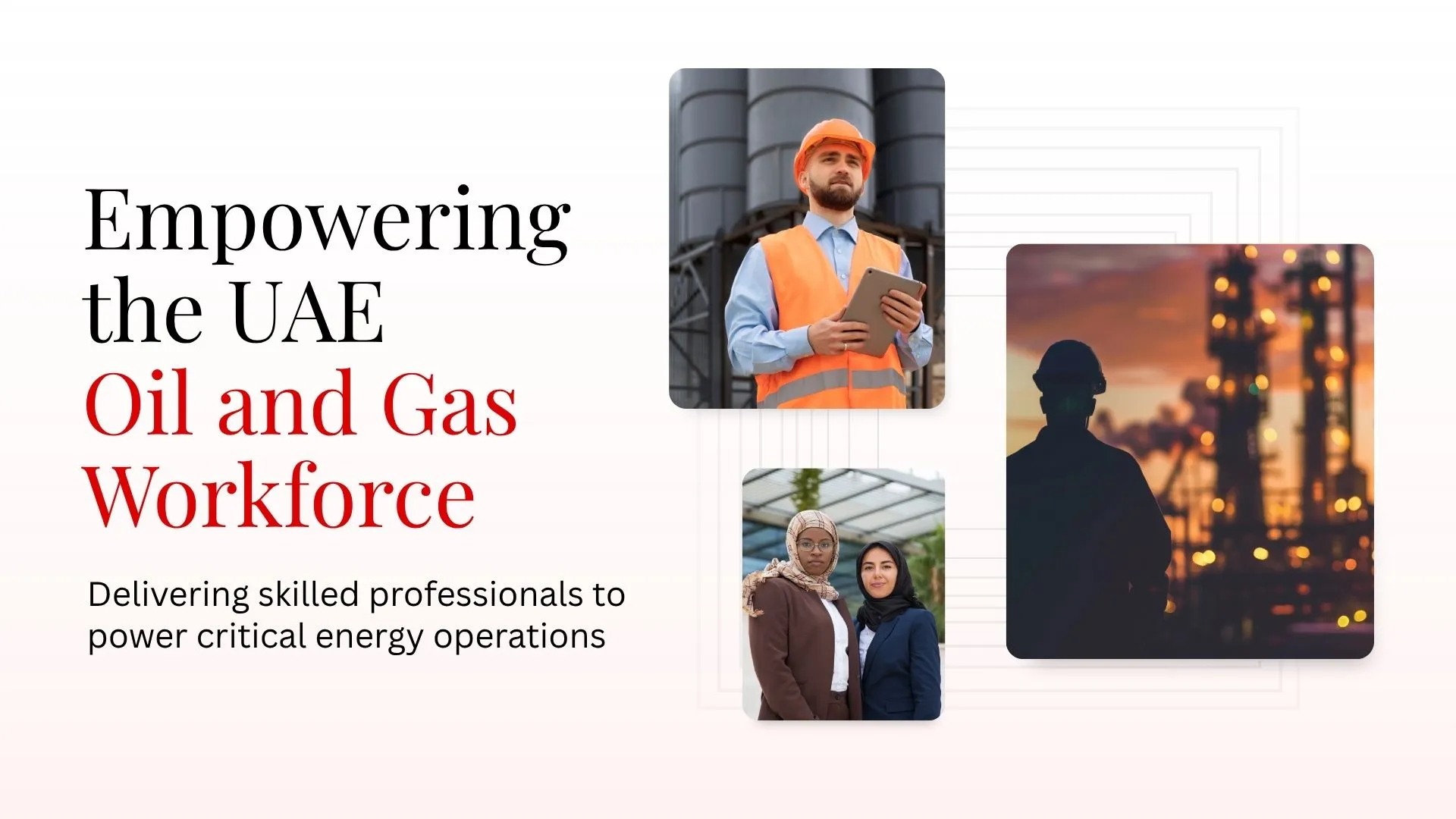

The oil and gas industry has been part of the UAE story for decades. It has helped shape the countrys economy, supported major industries and contributed to the UAE becoming an important energy hub.
But the industry is not standing still.
The UAE is continuing to develop its oil and gas resources while also investing in natural gas, cleaner energy, technology and more efficient ways of working. This is creating a sector that looks quite different from what it did in the past.
For businesses, one of the biggest changes can be seen in the people they need. The industry still depends on experienced engineers, technicians and operations professionals, but there is also growing demand for people who understand technology, safety and new ways of working.
Understanding this changing landscape can help businesses and professionals make better decisions about the future.
Why oil and gas still matter in the UAE
Oil and gas remain an important part of the UAE energy sector, particularly in Abu Dhabi, where much of the countrys oil and gas activity is based.
The industry covers much more than simply finding and producing oil. It also includes natural gas, transportation, processing, refining, storage, trading and several supporting services.
These activities support many other parts of the economy. Energy is needed by industries, businesses and communities across the country, making the sector closely connected to everyday life in the UAE.
ADNOC, the Abu Dhabi National Oil Company, has also expanded its activities across different parts of the energy industry, including oil, gas, trading and lower carbon energy solutions.
So while the energy landscape is changing, oil and gas continue to have an important place in the UAE.
The industry is changing with the times
One of the biggest changes in the UAE energy sector is the growing focus on natural gas and cleaner ways of producing and using energy.
Natural gas is used across the UAE for power generation and industrial activities. It is also processed into products that are used locally and exported to international markets.
At the same time, the UAE is investing in renewable and clean energy as part of its wider energy plans.
The UAE Energy Strategy 2050 focuses on increasing clean energy, improving energy efficiency and supporting new energy technologies. The strategy is designed to meet future energy needs while supporting the countrys long term sustainability goals.
This does not mean oil and gas are disappearing.
Instead, the UAE is building a wider energy system where traditional energy and newer energy solutions can develop alongside each other.
Technology is becoming part of everyday operations
Technology is changing many industries, and oil and gas is no exception.
Companies are using digital tools to monitor equipment, improve operations, identify potential problems and make everyday work more efficient.
Some oil and gas operations can now be monitored remotely, reducing the need for people to be physically present for every task. ADNOC, for example, has been using digital technologies and remote monitoring across parts of its operations.
This does not mean technology is replacing people.
It means the nature of some jobs is changing.
A technician may need to understand digital equipment. An engineer may work with new software and data. A project manager may need to coordinate teams working with increasingly advanced systems.
The industry still needs human experience and decision making. Technology simply gives professionals new tools to work with.
The people behind the industry
Behind every oil field, processing facility, pipeline and energy project is a large workforce.
Different parts of the industry require different skills. Engineers may work on equipment or projects. Technicians may handle maintenance and repairs. Safety professionals help maintain safe working environments. Project managers coordinate people, schedules and resources.
There are also roles in finance, procurement, logistics, human resources, administration and other areas that support energy businesses.
This is why the oil and gas workforce is much broader than many people realise.
The sector needs people with practical experience, strong technical knowledge and an understanding of how to work safely.
At the same time, professionals who can adapt to new technology and changing work practices can bring additional value to their organisations.
Why oil and gas staffing in UAE needs a different approach
Hiring for the oil and gas industry is not always as simple as filling an open position.
A company may need an experienced engineer for a long term role. Another may need technicians for a particular project. A business could also need additional professionals during a period of increased activity or maintenance.
This is where oil and gas staffing in UAE becomes an important part of workforce planning.
The right staffing approach depends on what the business actually needs. For some roles, permanent hiring may make sense. For others, temporary or project based workers may be more suitable.
UAE labour regulations recognise different types of work, including full time, part time, temporary and flexible work. Temporary work can be used when the nature of the job requires a specific period or is connected to a particular task.
The important thing is to match the workforce arrangement with the actual requirement.
What companies look for in oil and gas professionals
A good candidate is not defined by a qualification alone.
Experience matters, particularly when a role involves complex equipment, field work or responsibility for important operations.
Safety awareness is equally important. Oil and gas environments can involve heavy equipment, industrial facilities and demanding working conditions. People need to understand procedures and take workplace safety seriously.
Adaptability is becoming important too.
As the industry introduces more digital tools and new technologies, professionals may need to learn new systems and adjust to different ways of working.
Communication is another valuable skill. Oil and gas projects often involve people from different teams, companies and backgrounds. Being able to communicate clearly can make everyday work much easier.
For companies working in the UAE, finding people who bring the right combination of experience, skills and adaptability can therefore make a significant difference.
Where the next opportunities may come from
The UAE energy sector is opening opportunities in several areas.
Natural gas is one of them. The country continues to develop its gas infrastructure and processing capabilities, supporting both domestic demand and international markets.
Technology is another.
As digital tools become more common, there is likely to be greater interaction between traditional energy roles and technology based skills.
Clean energy and sustainability will also continue to influence the industry. The UAE Energy Strategy 2050 places greater focus on clean energy, energy efficiency, innovation and new technologies.
This means future opportunities may not fit neatly into the traditional idea of an oil and gas job.
The industry is gradually becoming a place where engineering, technology, operations and sustainability come together.
What this means for the workforce
For professionals, the changing industry creates an important opportunity to keep learning.
An engineer with strong industry experience can benefit from understanding new digital tools. A technician can build value by becoming comfortable with modern equipment. Project professionals can strengthen their careers by understanding new approaches to energy and sustainability.
For employers, the focus should be on building teams that can handle both current requirements and future changes.
This is an area where workforce planning becomes especially useful. Companies need to think beyond immediate vacancies and consider what skills their projects and operations may require in the months and years ahead.
Net2Source works with organisations across workforce requirements, including staffing needs connected with the energy sector in the UAE. The changing nature of the industry makes understanding both business requirements and available talent increasingly important.
A sector with more than one story to tell
The UAE oil and gas industry is often viewed simply as an industry built around oil production.
There is much more to it today.
It includes natural gas, technology, industrial operations, engineering, logistics and a growing focus on efficiency and cleaner energy.
The UAE is also developing its wider energy sector rather than relying on a single source of energy. This approach is reflected in the countrys Energy Strategy 2050 and the continued development of both traditional and new energy activities.
For businesses, this means workforce needs will continue to evolve.
For professionals, it means there is value in staying curious and building skills beyond one area.
And for the UAE, it means the energy sector can continue to support the countrys growth while adapting to a changing world.
What lies ahead for the UAE energy workforce
The next phase of the UAE oil and gas industry will be shaped by more than energy production.
Technology, natural gas, cleaner operations, changing workforce needs and new energy investments will all play a role.
The people working in the industry will be just as important as the technology and infrastructure supporting it.
Companies that understand their workforce requirements and invest in the right skills will be better prepared for change. Professionals who continue learning and adapting will also be in a stronger position as new opportunities emerge.
The UAE has already built a strong foundation in oil and gas. The next chapter is about how that foundation can support a more diverse, efficient and future ready energy sector.
Frequently Asked Questions
Why is oil and gas important to the UAE?
Oil and gas have played an important role in the UAE economy and continue to support energy production, industry and other business activities across the country.
Is the UAE still investing in oil and gas?
Yes. The UAE continues to develop its oil and gas and natural gas capabilities while also investing in clean energy and energy efficiency.
What are common oil and gas jobs in the UAE?
Common roles include engineers, technicians, project managers, safety professionals, operations staff, maintenance specialists and other professionals supporting energy projects.
What is oil and gas staffing in UAE?
Oil and gas staffing in UAE involves finding suitable professionals for different roles across the energy industry. Depending on the requirement, companies may hire permanent, temporary or project based workers.
What skills are important for oil and gas jobs in the UAE?
Industry experience, technical knowledge, safety awareness, communication and the ability to adapt to new technology are all valuable skills.
Is technology changing oil and gas jobs?
Yes. Digital tools and remote monitoring are becoming more common in the industry. Professionals are increasingly expected to work alongside new technologies and systems.
What is the UAE Energy Strategy 2050?
The UAE Energy Strategy 2050 is the countrys long term plan for developing a more sustainable and efficient energy sector. It focuses on clean energy, energy efficiency, innovation and meeting future energy needs.
Why is workforce planning important in oil and gas?
Oil and gas projects can have different workforce requirements at different stages. Workforce planning helps businesses understand which skills they need and when they need them.
How is the oil and gas workforce changing in the UAE?
The workforce is becoming more diverse as traditional energy roles increasingly connect with technology, digital skills, sustainability and new ways of working. Net2Source recognises this shift as part of the changing workforce landscape in the UAE energy sector.




















Sign in to leave a comment.