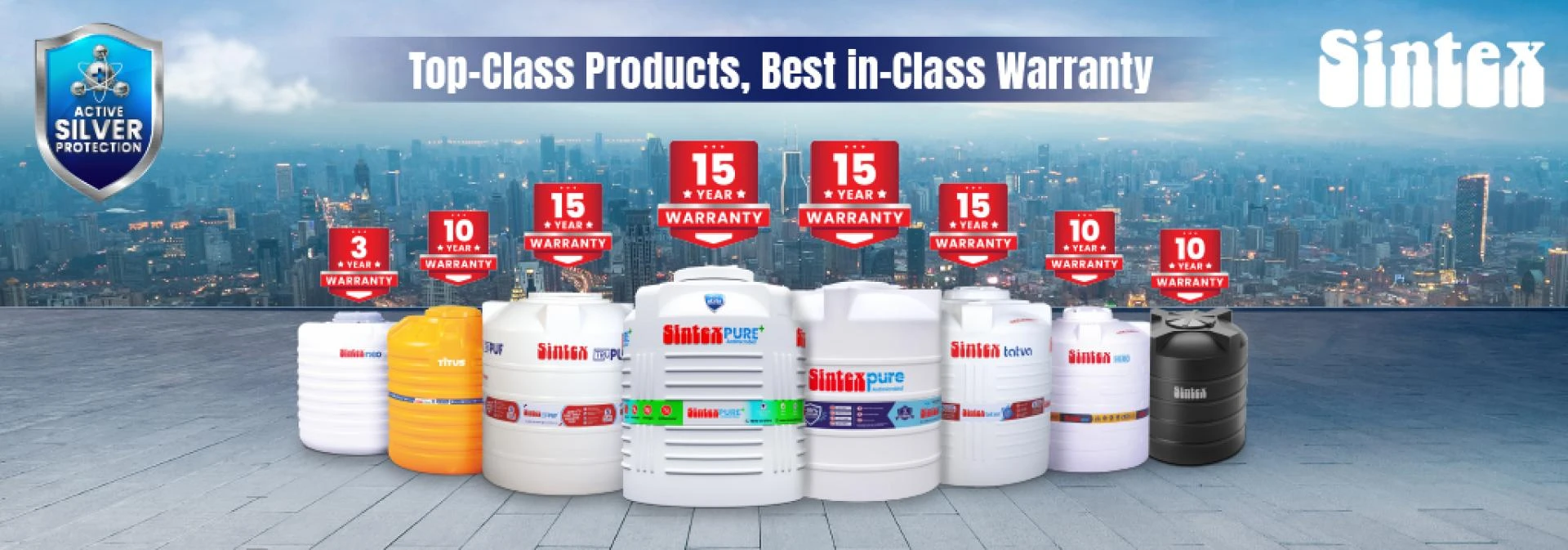

Choosing a quality water tank can be complicated because of inconsistent water supplies, potential contamination, and wear-and-tear to the structure. Water leakages, algae growth, and cracked tanks are a big headache for many to deal with due to weather-related stress. This ultimately leads to increased costs for replacement and the associated health risks.
Sintex has made a difference by pioneering advanced standards in water tank durability and reliability. You can trust them with all tanks but making an informed decision requires a thorough assessment of available tank features.
Understand What Your Water Needs
Assessing water requirements starts with proper analysis of household size, daily consumption, and supply reliability to select an appropriate tank. You need to:
- Count family members and per-person usage.
- Review municipal supply frequency, and add a buffer for outages.
- Consider future expansions, like adding bathrooms or gardens that increase demand.
- Small homes can consider opting for a 200 litre water tank to serve their immediate needs.
Types of Water Tanks Available
Each type of tank has its own benefits. The following are some of the most common types of tanks for you to consider.
Plastic (Polyethene) Tanks
Polyethene (plastic) tanks are lightweight and easily installable, making them an excellent choice for residential settings. These tanks range from a 500-litre to 10000-litre size, allowing for maximum versatility. They come with special UV protection in order to help combat sun damage.
Also read: The Role of Water Storage in Preventing Waterborne Illness in Rural & Urban India
Concrete Tanks
Concrete tanks are designed for permanent installation. They are strong because they are designed to be used underground and will hold up well to high amounts of pressure and impact. It has the capacity to hold water at consistent temperatures, and the chances of algae growth are very low.
Stainless Steel Tanks
Stainless steel tanks are designed to prevent rusting and to keep bacteria from reaching the bottom of the tank. It makes them an excellent choice for an overhead water tank. Stainless steel is highly durable and has the ability to hold a lot of weight and many chemicals. So it is often used for industrial-type applications.
Fibreglass (FRP) Tanks
Fibreglass tanks are customisable in shape and offer a combination of strength and lightness. They are corrosion-resistant, can be installed above and below ground, and can withstand extreme weather conditions. Care must be taken when transporting to avoid cracks, which makes them ideal for coastal locations that may be exposed to saltwater.
Steel Tanks (Galvanised or Corrugated)
Steel tanks, whether galvanised or corrugated, are available in heavier-duty grades to handle large quantities of water for fire protection and agricultural applications. The corrugated design allows for ease of assembly, and the galvanised coating protects against rust.
Features to Check for Long-Lasting Water Tanks
Many factors affect the durability of a water tank, but some of the most important include.
Materials
Select top-quality polyethene or multi-layer plastic 5000 litre water tank that blocks both UV rays and algae. It extends the lifetime of tanks beyond 20 years. Using stainless steel or Fibre Reinforced Plastic (FRP) prevents rust in hard water areas, while the cheaper option of galvanised steel will corrode.
Sizing
It is important that you check with the capacity as per the usage at your location. For example, when you purchase a 500 litre water tank, it would typically help an apartment cover its needs, whereas a 10,000-litre tank would serve a villa or small office. Using a tank that is too big will consume excessive space and material. A tank that is too small can overflow, and you are likely to run out of water if you do not have enough.
Maintenance
When selecting your tank, look for those with a smooth interior surface and manholes that are easily accessible for cleaning. This will reduce sediment build-up in your tank. To prevent vacuum locks, your tank should have air vents, and your tank's lids should be fully threaded to maintain an intact seal so that pests cannot enter.
Budget
A premium 10000 litre water tank will save you money over time through less frequent replacements. It is important that you consider the installation cost as 10 to 20 percent of the buying price and the warranty periods of 10 years after the purchase. Lower-priced tanks are generally inferior in terms of durability, which can lead to excess repair costs.
Conclusion
Choosing water storage tanks that can withstand the test of time depends on aligning your individual needs with the tank's features. By assessing tank type, material choices, and site-specific conditions, a homeowner can avoid the many common pitfalls associated with water tanks.
This will not only protect your health but also support long-term sustainable water management practices at both the individual and community levels. Routine maintenance will maximise the life expectancy of your water storage tank. Therefore, make a one-time investment with Sintext to build lasting value.

























Sign in to leave a comment.