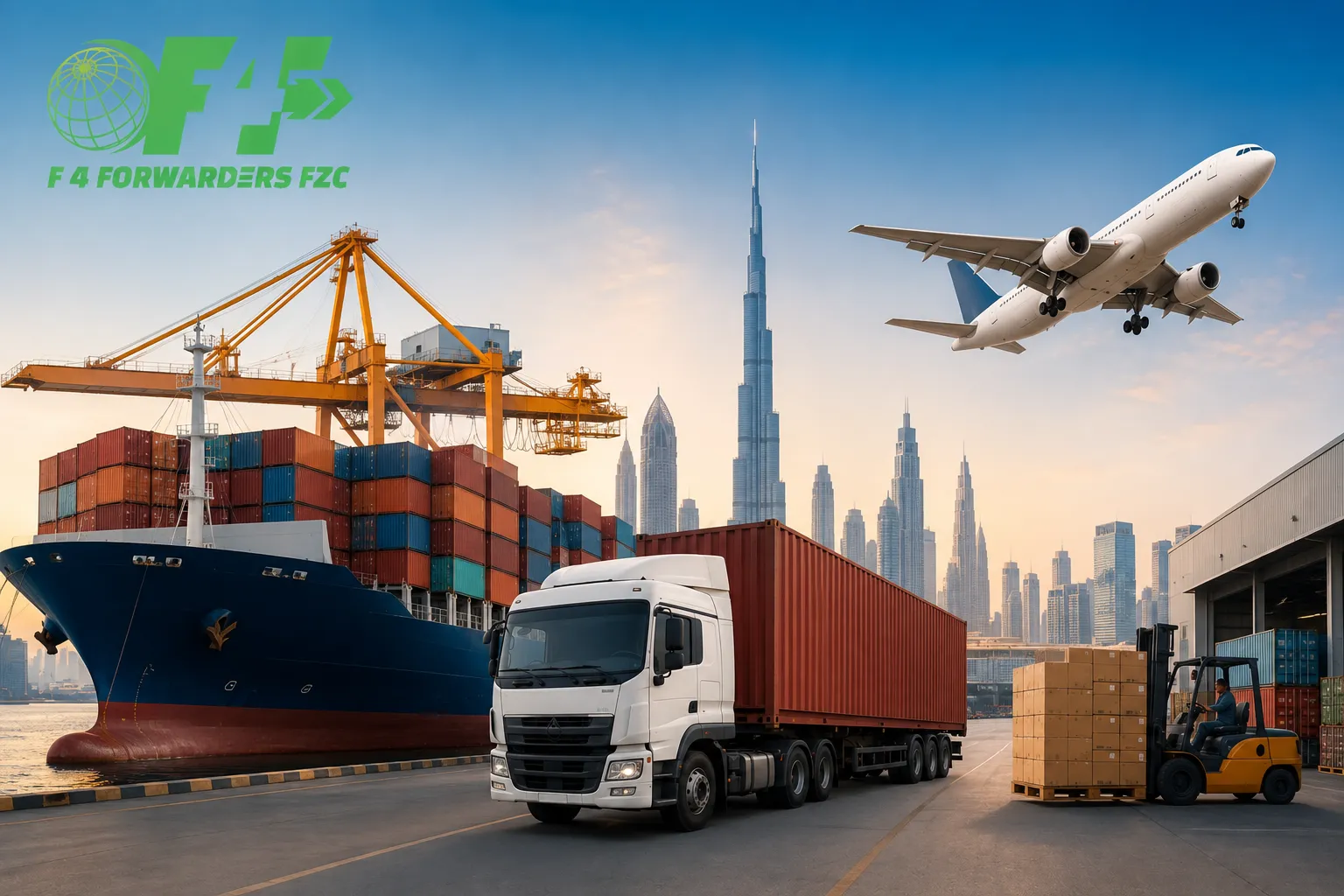

Dubai's status as a global trade and re-export hub means the city has no shortage of logistics providers — from global integrators to boutique regional specialists. That abundance of choice is, paradoxically, part of the problem. Searching for the "best logistics company in Dubai" returns dozens of near-identical claims of excellence, leaving decision-makers with little to actually differentiate on.
This article offers a more useful approach: a framework for evaluating logistics providers based on operational substance rather than marketing language, grounded in how Dubai's trade infrastructure actually works.
Why Dubai's Logistics Landscape Is Unusually Complex
Dubai sits at the intersection of several major trade lanes connecting Asia, Europe, and Africa. It hosts Jebel Ali Port — one of the world's largest man-made harbors and a major transshipment hub — alongside Al Maktoum International (DWC) and Dubai International (DXB) airports, and an extensive network of free zones including JAFZA, DAFZA, and Dubai South.
This density of infrastructure is an advantage for businesses, but it also means logistics providers vary enormously in scope. Some specialize in specific trade lanes or industries; others offer broad, generalized coverage. Neither is inherently "better" — the right fit depends on what a business actually ships.
What "Best" Should Actually Mean
Rather than treating "best" as a fixed ranking, it's more useful to define it against specific operational criteria:
1. Multimodal Capability
The strongest logistics companies in Dubai operate seamlessly across sea, air, and land freight, and can combine them intelligently — for example, using sea-air combinations to balance cost and speed. A provider limited to a single mode will inevitably push clients toward that mode, even when it isn't optimal.
2. Customs and Regulatory Expertise
UAE customs procedures, free zone regulations, and re-export documentation requirements are detailed and change periodically. A logistics partner's familiarity with these processes directly affects how often shipments clear without delay.
3. Warehousing and Distribution Infrastructure
Beyond transport, many businesses need bonded warehousing, inventory management, and distribution support. Providers with owned or closely partnered warehouse facilities typically offer more consistent service levels than those relying entirely on third-party subcontracting.
4. Technology and Visibility
Shipment tracking, digital documentation, and proactive exception alerts have become baseline expectations. The differentiator now is not whether a provider offers tracking, but how actionable and timely that visibility actually is.
5. Industry-Specific Experience
Project cargo, automotive logistics, FMCG, and industrial equipment each carry distinct handling, compliance, and timing requirements. A provider with demonstrated experience in a client's specific cargo category will generally outperform a generalist on that category.
Red Flags Worth Watching For
A few patterns tend to indicate weaker logistics partners, regardless of how polished their marketing is:
- Vague answers when asked about specific customs procedures or free zone protocols
- Reluctance to provide references or case examples relevant to your industry
- Pricing that seems significantly below market average without a clear explanation
- No clear process for handling exceptions — delays, damage, or documentation issues
The Role of Relationship, Not Just Transaction
Businesses that treat logistics purely as a transactional cost center often end up switching providers frequently, absorbing the operational disruption that comes with onboarding a new partner each time. The stronger long-term approach treats a logistics company as a supply chain partner — one that understands a business's shipping patterns, seasonal demand, and risk tolerance well enough to proactively flag issues before they become costly.
Practical Takeaways
When evaluating logistics companies in Dubai:
- Match provider capability to your actual cargo type and trade lanes — don't default to the biggest name.
- Ask specific, scenario-based questions ("What happens if a shipment is held at customs?") rather than general ones.
- Verify multimodal capability directly rather than assuming it.
- Weigh warehousing and distribution infrastructure if your business needs storage, not just transport.
- Look for a provider willing to invest in understanding your business, not just process your shipments.
Closing Thought
There is no single "best logistics company in Dubai" that fits every business — but there is a best fit for your specific trade lanes, cargo type, and growth stage. The businesses that get the most value from their logistics partnerships are the ones that evaluate providers against these operational realities rather than general reputation alone.
F4 Forwarders FZC works with businesses across Dubai and the wider UAE on exactly this basis — matching freight forwarding, customs clearance, warehousing, and project cargo capability to what each client actually ships, rather than a one-size-fits-all service model.




























Sign in to leave a comment.