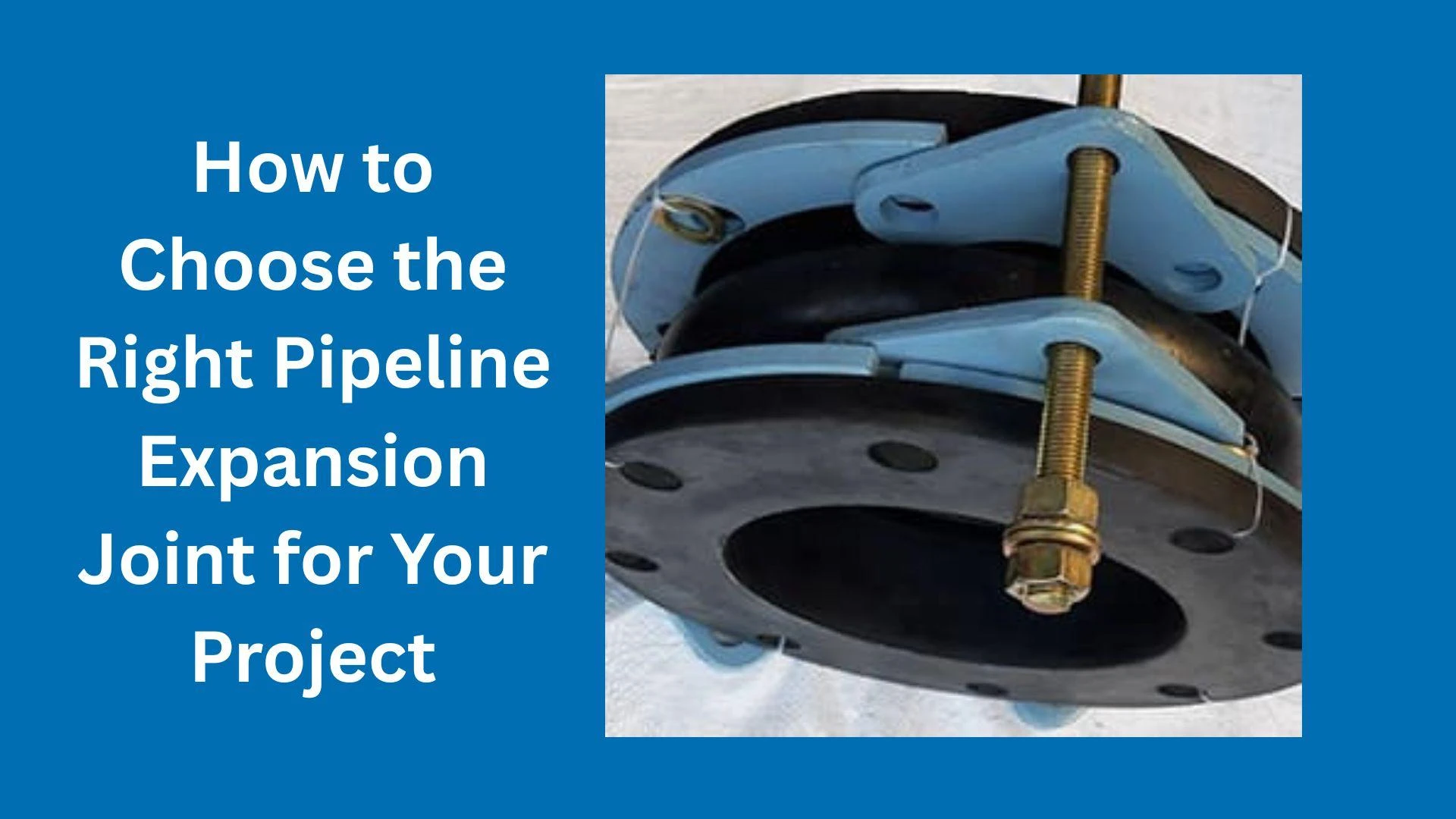

Selecting the appropriate pipeline expansion joint is a critical decision for engineers, contractors, and project managers involved in piping systems. Expansion joints play a key role in absorbing thermal expansion, reducing vibration, and accommodating misalignment in pipelines. Choosing the wrong type can lead to system failure, costly repairs, and safety hazards. This guide provides a detailed approach to help you identify the best expansion joint for your project requirements.
Understanding Pipeline Expansion Joints
Pipeline expansion joints are flexible components designed to absorb movement, reduce stress, and compensate for thermal, mechanical, and operational changes within piping systems. They are essential in industries such as oil and gas, chemical processing, power generation, water treatment, and HVAC systems.
The right joint ensures long-term durability, operational efficiency, and safety. Conversely, selecting an unsuitable joint can result in leaks, fatigue, or structural damage to your pipeline infrastructure.
Types of Pipeline Expansion Joints
Understanding the different types of expansion joints is the first step in selecting the right one:
1. Metallic Expansion Joints
Metallic joints are made from stainless steel or other corrosion-resistant alloys. They are ideal for high-temperature and high-pressure applications.
- Advantages:
- Handles high temperatures and pressures
- Resistant to corrosion
- Long lifespan under demanding conditions
- Applications: Power plants, industrial boilers, chemical pipelines
2. Rubber Expansion Joints
Rubber joints are flexible and absorb vibration, noise, and minor misalignments. They are commonly used in water systems, HVAC piping, and low-pressure applications.
- Advantages:
- Excellent vibration dampening
- Reduces noise
- Suitable for corrosive or chemical environments with proper lining
- Applications: Water treatment plants, HVAC systems, plumbing systems
3. Fabric Expansion Joints
Fabric joints are used primarily in ductwork and exhaust systems to accommodate thermal expansion and minor movements.
- Advantages:
- Lightweight and flexible
- Cost-effective for large duct systems
- Easy installation in specialized applications
- Applications: Exhaust systems, flue gas ducts, ventilation systems
4. Composite Expansion Joints
These joints combine metallic and non-metallic materials to offer both strength and flexibility for specialized industrial applications.
Key Factors to Consider When Choosing an Expansion Joint
1. Temperature and Pressure Ratings
Your pipeline’s operating temperature and pressure dictate the suitable joint type. Metallic joints perform well under extreme temperatures, whereas rubber joints are limited to moderate temperatures. Ensure the joint’s specifications exceed your system’s maximum operating conditions.
2. Movement Requirements
Expansion joints must accommodate axial, lateral, or angular movements. Determine the expected movement in your pipeline due to thermal expansion or vibration and select a joint capable of absorbing these changes without damage.
3. Medium Type and Corrosiveness
The fluid or gas transported through the pipeline affects material selection. Corrosive chemicals or abrasive fluids require corrosion-resistant materials like stainless steel or chemically resistant rubber linings.
4. Vibration and Noise Dampening
In applications with pumps, compressors, or mechanical vibrations, joints that provide noise and vibration absorption, such as rubber or composite joints, are highly beneficial.
5. Installation Constraints
Consider available space, connection type, and ease of maintenance. Some joints require anchors or guide systems, while others can be installed with minimal support. Ensure your project site can accommodate the chosen expansion joint.
6. Industry Standards and Certifications
Choose joints compliant with relevant industry standards, such as ASME, ASTM, or ISO. Certification ensures quality, safety, and reliability.
Maintenance and Lifespan Considerations
Proper maintenance extends the lifespan of your pipeline expansion joint. Regular inspections for wear, leaks, corrosion, or fatigue help prevent unexpected failures. Many manufacturers provide service intervals and replacement guidelines based on operating conditions. Selecting a high-quality joint reduces long-term maintenance costs and improves system reliability.
Conclusion
Choosing the right pipeline expansion joint is vital for the performance, safety, and longevity of any piping system. By considering the type of joint, operating conditions, movement requirements, and material compatibility, project managers and engineers can ensure optimal functionality and prevent costly failures. Prioritizing quality, compliance, and proper installation will result in a robust, efficient, and reliable pipeline infrastructure.






























Sign in to leave a comment.