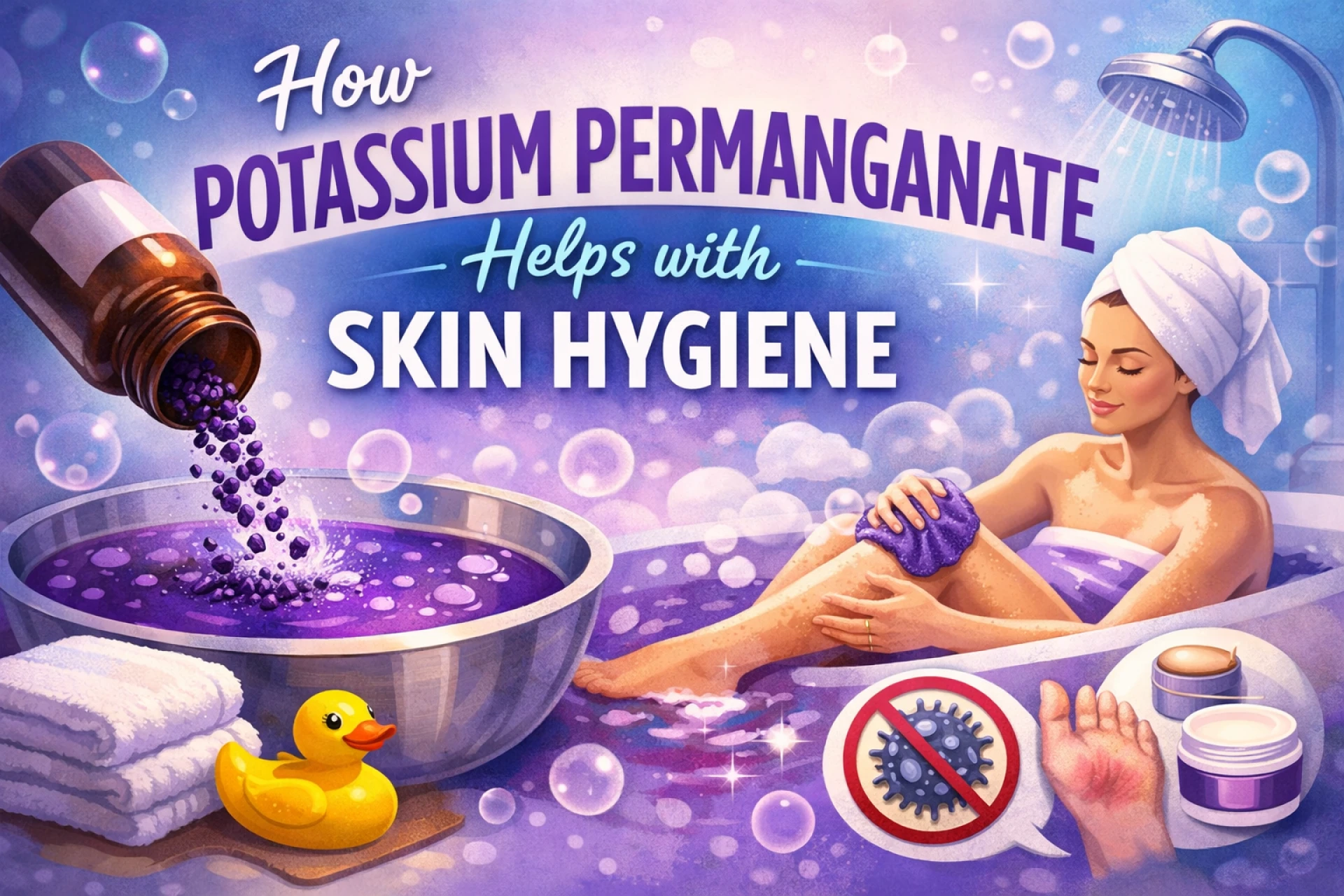

Skin problems can be… annoying. Sometimes painful too. A small rash, a stubborn infection, or a patch of irritated skin can make everyday things feel uncomfortable. People often reach for creams or antiseptic washes, yet there’s an old-school chemical solution that dermatologists still mention now and then. Right in the middle of many discussions about potassium permanganate uses for skin, this deep purple compound keeps popping up. Not exactly trendy, though surprisingly effective in certain situations.
The first time most people see potassium permanganate crystals, they notice the color. A dark purple, almost ink-like shade. Mix it with water and the liquid turns pink or violet depending on how much you add. Oddly beautiful for something used in medical settings.
And yes, it has been around for quite a while.
What Potassium Permanganate Actually Does to the Skin
Potassium permanganate is known as a strong oxidizing compound. That sounds technical, though the idea is pretty simple. It reacts with organic material, including certain bacteria and fungi.
Because of that reaction, doctors sometimes recommend diluted potassium permanganate solution for skin infections. The chemical helps dry out weeping wounds and reduces the presence of microbes on the skin surface.
I remember reading a dermatologist once describe it as a “controlled drying agent.” That description stuck with me. Skin conditions that produce fluid or discharge often improve when the area stays clean and dry.
The solution used on skin is always extremely diluted, usually light pink. Dark purple? Way too strong.
Potassium Permanganate Baths for Skin Conditions
One of the most talked-about treatments involves a potassium permanganate bath for skin infections. Doctors sometimes suggest this for people dealing with certain dermatological issues.
Eczema with oozing patches, infected dermatitis, or blistering skin conditions can respond to these diluted baths. The chemical helps dry the affected area while reducing bacteria that may worsen irritation.
Imagine filling a small basin or bathtub with warm water, then dissolving a carefully measured amount of potassium permanganate. The water turns a pale pink color. Patients soak the affected skin for several minutes.
Nothing dramatic happens in the moment. No sudden relief or magic feeling. The improvement usually appears slowly after repeated treatments.
Dermatology often works like that. Slow progress.
Foot Soaks and Fungal Problems
Feet spend most of the day inside shoes. Warm, slightly damp spaces. Not exactly a paradise for skin health.
Fungal infections like athlete’s foot thrive in that environment. Redness, itching, peeling skin… people who deal with it know how stubborn it can be.
This is where potassium permanganate foot soak for fungal infections sometimes enters the picture. The diluted solution works as a mild antiseptic and drying agent. Dermatologists occasionally recommend it alongside antifungal treatments.
The soak can reduce moisture around infected skin, which makes life harder for fungi.
Also, a small observation. People who try this often mention the slight staining effect. Towels might pick up faint pink or brown marks. Not permanent, though noticeable at first.
Little trade-offs, I guess.
Help for Minor Skin Infections and Wounds
Doctors sometimes recommend potassium permanganate solution for wound cleaning in certain situations. Particularly when the skin has minor bacterial infections or irritated lesions that produce discharge.
The oxidation process affects many microorganisms living on the skin surface. Reducing those microbes can help irritated skin settle down.
Some clinics use it for infected eczema patches, impetigo-like lesions, or small ulcers.
Yet it’s not something people should experiment with casually at home. Concentration matters a lot. Too strong and the solution may irritate or burn the skin.
Dermatologists usually guide patients on the right dilution. That part really matters.
Why Dermatologists Still Use It
Medicine changes constantly. New creams appear every year. Fancy packaging, bold claims, that sort of thing.
Yet potassium permanganate still appears in dermatology textbooks. A bit surprising.
One reason is its broad antimicrobial activity. The compound works against bacteria, fungi, and some parasites on the skin surface.
Another reason is its drying action. Certain skin conditions improve when moisture decreases, especially weeping dermatitis.
And honestly… it’s inexpensive and easy to store. Hospitals appreciate treatments that remain stable without complicated storage conditions.
Sometimes older remedies stick around because they still work.
Safety Matters More Than People Expect
Potassium permanganate may sound simple, though handling it casually isn’t a great idea.
The concentrated crystals are strong. Direct contact can irritate skin and even cause burns if misused. The solution intended for medical use must always be heavily diluted.
Doctors usually recommend concentrations that turn water a light pink shade. Dark purple solutions belong in chemistry labs, not on skin.
Another small thing. The compound can temporarily stain skin or fabrics brownish-purple. It fades after washing or over time, yet it can surprise people the first time they see it.
Not harmful… just unexpected.
Common Skin Conditions Treated with Potassium Permanganate
Several dermatological conditions sometimes involve potassium permanganate treatments:
- Weeping eczema treatment with potassium permanganate
- Potassium permanganate bath for infected dermatitis
- Potassium permanganate foot soak for athlete’s foot
- Potassium permanganate solution for fungal skin infections
- Potassium permanganate wound care for minor infected lesions
Doctors usually combine it with other medications rather than relying on it alone. Antifungal creams, antibiotics, or anti-inflammatory treatments may still be necessary.
Skin health rarely depends on just one solution.
A Small Purple Chemical with a Long History
Potassium permanganate has been used in medicine for well over a century. That alone says something.
In hospitals, clinics, and dermatology departments, it continues to appear in certain treatment plans for skin hygiene and infection control. Not flashy. Not widely advertised either.
Still… it quietly helps manage skin conditions that involve irritation, moisture, or microbial growth.
And if you ever see that pale pink solution in a medical setting, you’ll know what it probably is. A diluted mix of potassium permanganate, doing what it has done for decades—keeping irritated skin a little cleaner and a little calmer.
Simple chemistry. Sometimes that’s all it takes.



























Sign in to leave a comment.