
Every month, like clockwork. You feel fine for a couple of weeks and then suddenly, out of nowhere, everything feels too much. Sleep becomes difficult. Small things feel enormous. Your chest feels tight. Your thoughts race at night and your patience runs thin during the day. Then your period arrives and within two or three days, you feel like yourself again.
If this sounds familiar, you are not imagining it. And you are definitely not overreacting.
The truth is, millions of women go through this cycle every single month and are still being told it is just PMS. But there is a lot more happening beneath the surface than most people realise. This article breaks it all down in plain language, so you can finally understand what your body is actually trying to tell you.
What Is Actually Happening in Your Body Before Your Period
To understand why anxiety gets worse before your period, you need to understand the second half of your menstrual cycle. This is called the luteal phase. It begins after ovulation, roughly around day 14 to 16 of your cycle, and ends when your period starts.
During this time, two key hormones, progesterone and estrogen, rise and then fall sharply if a pregnancy does not occur. Most people think this only affects the reproductive system. But it affects your brain just as much.
These hormones talk directly to the parts of your brain that regulate mood, sleep, stress tolerance, and emotional reactions. So when their levels shift, your mental and emotional experience shifts with them.
The Luteal Phase Is a Brain Event, Not Just a Reproductive One
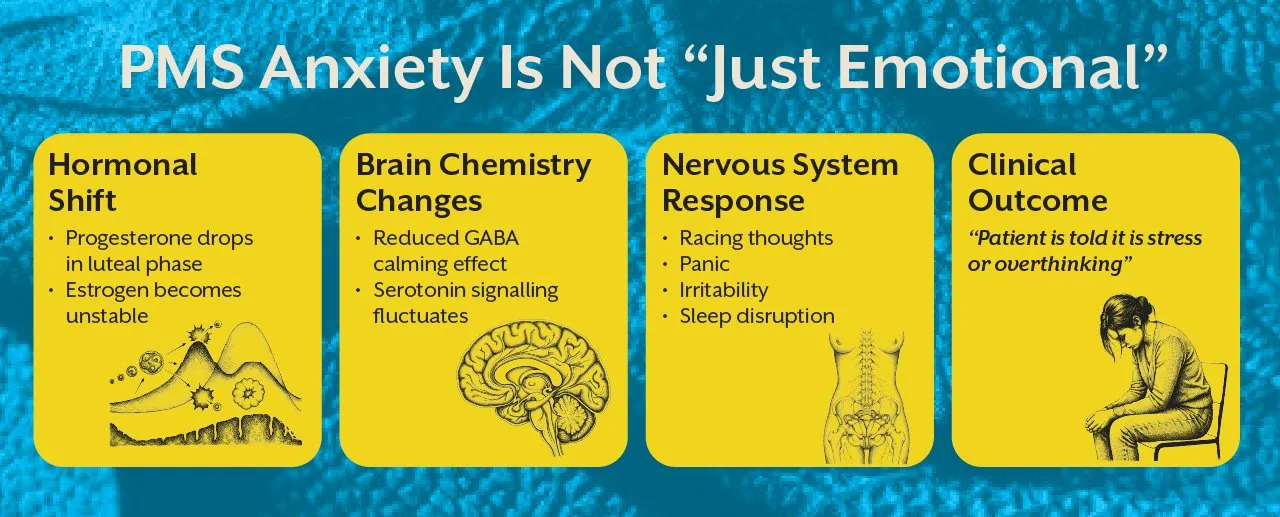
This is one of the most important things to understand. The brain has receptors specifically designed to respond to these hormones. When progesterone drops before your period, the brain's natural calming system is directly disrupted. This is not a vague emotional sensitivity. This is a neurological shift happening inside your body every single month.
The Real Reason You Feel Anxious Before Your Period
Progesterone Drops and Takes Your Calm with It
Progesterone is often called a reproductive hormone, but inside your brain it works like a natural sedative. One of the things it produces is a compound called allopregnanolone, which activates your brain's GABA receptors.
GABA is your brain's main calming chemical. It is the thing that helps you feel relaxed, sleep well, and not spiral into anxious thoughts. When progesterone drops in the days before your period, GABA activity drops with it. Your brain loses one of its most important tools for staying calm.
The result? Racing thoughts. Poor sleep. A nervous system that feels like it is operating on high alert. This is not weakness. This is biology.
Cortisol Makes Everything Worse
Here is something that does not get talked about enough. The more stressed you are in your daily life, the worse your premenstrual anxiety will be.
Cortisol, which is your main stress hormone, and progesterone share the same building block in the body, which is a molecule called pregnenolone. When you are under chronic stress, your body prioritises making cortisol. This means less raw material is available to make progesterone.
So if you are someone who is running on stress, not sleeping well, skipping meals, or constantly overwhelmed at work, you are already entering the luteal phase with lower progesterone and higher cortisol. The anxiety you feel before your period is not random. It is the result of that imbalance playing out in your nervous system.
Blood Sugar Swings Add Fuel to the Fire
Ask any woman what she craves before her period and the answers are often the same. Sweet foods, salty snacks, bakery items, caffeine.
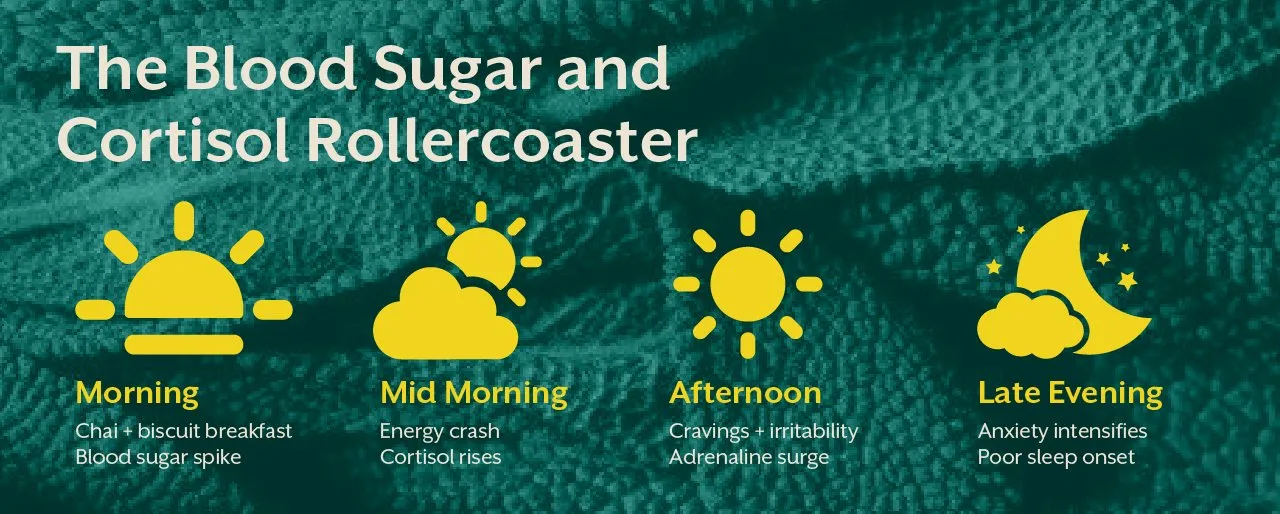
These cravings make sense because your body is trying to manage energy, but giving in to them repeatedly creates a roller coaster of blood sugar spikes and crashes throughout the day. Each crash triggers your adrenal glands to release cortisol and adrenaline to bring your blood sugar back up. And those hormones trigger the exact same physical feelings as anxiety: a racing heart, shakiness, irritability, and a sense of dread.
Many women who think they are experiencing emotional anxiety before their period are actually also experiencing the physical effects of unstable blood sugar. The two feed each other in a cycle that keeps the nervous system on edge.
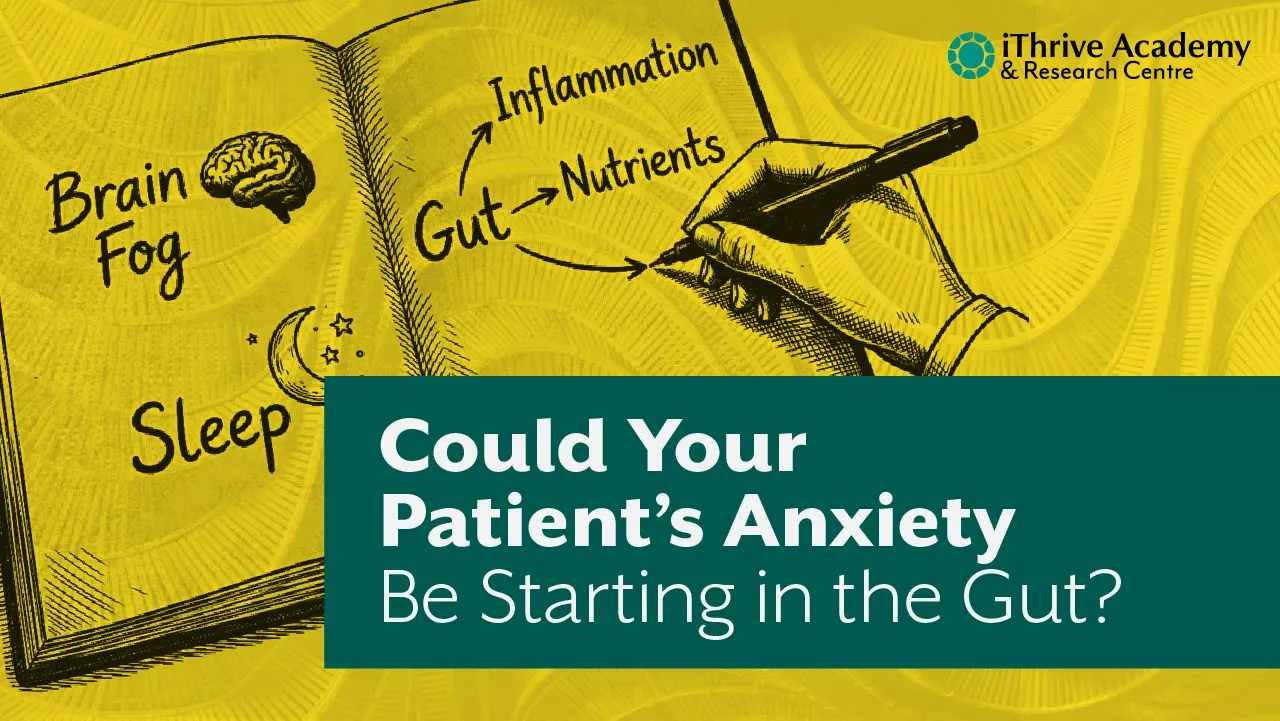
Your Gut Has More to Do with This Than You Think
This might sound surprising, but the health of your digestive system plays a real role in how anxious you feel before your period.
Your gut produces a large portion of your body's serotonin, which is a chemical that strongly influences mood, emotional resilience, and sleep. When your gut microbiome is disrupted by poor diet, stress, antibiotics, or inflammation, serotonin production can be affected. This directly impacts how emotionally stable you feel, especially during the luteal phase when your brain is already under hormonal pressure.
The Connection Between Gut Health and Estrogen
There is also a group of gut bacteria that helps your body process and clear used estrogen. When this process is disrupted, estrogen does not clear properly and levels can build up or become unstable. Estrogen fluctuation is directly linked to mood changes, irritability, and increased sensitivity before a period.
This is one reason why two women with similar hormone test results can have very different emotional experiences before their periods. The gut is often the missing piece of the puzzle.
What Nutrient Deficiencies Are Doing to Your Mood
Food and mental health are not separate conversations. What you eat throughout your cycle has a direct impact on how you feel in the week before your period.
Magnesium
Magnesium is involved in hundreds of processes in the body, including GABA activity, sleep quality, muscle relaxation, and the stress response. It is one of the most common deficiencies in women, particularly those under chronic stress. Women with low magnesium often notice worse sleep, more muscle tension, palpitations, and heightened anxiety in the days before their period. These are all signs the nervous system is not getting the support it needs.
B Vitamins
Vitamin B6 in particular is essential for the production of serotonin and dopamine. Folate and B12 are involved in a process called methylation, which affects how well your brain makes and recycles neurotransmitters. When these pathways are sluggish, mood symptoms often show up, especially in the luteal phase when the brain is already under extra stress.
Omega 3 Fatty Acids
Omega 3 fats play a key role in how well your brain cells communicate and in keeping inflammation in check. Low omega 3 intake has been linked to poor mood regulation and heightened emotional reactivity. Many women eating a typical modern diet are not getting enough from food alone.
Why Doctors Often Miss This
Standard medical appointments are short. Hormone panels are often run on the wrong day of the cycle, or not run at all. And premenstrual symptoms are still frequently minimised or attributed to stress or emotional sensitivity.
The issue is that most conventional approaches look at hormones, gut health, nutrition, and mental health as separate systems. They are not. They are constantly communicating with each other. When you look at premenstrual anxiety through only one lens, you miss most of the picture.
Functional nutrition asks a different question. Instead of asking what medication can suppress this symptom, it asks why is this symptom showing up in the first place and what systems are out of balance underneath it. That shift in thinking changes everything about how these patterns are approached and resolved.
If you want to understand how these systems connect, the team at iThrive Academy has been working in this space with women and practitioners for years.
What You Can Actually Do About It
Understanding the root cause is the first step. Here are some practical areas worth focusing on:
Stabilise your blood sugar by eating regular meals with protein, healthy fats, and fibre throughout the day, especially in the week before your period. Skipping meals or eating mostly carbohydrates creates the cortisol spikes that worsen anxiety.
Reduce caffeine in the luteal phase. Caffeine directly increases cortisol and disrupts sleep. Even one or two fewer cups a day in the two weeks before your period can make a noticeable difference.
Prioritise sleep above almost everything else. Poor sleep dramatically increases emotional reactivity the next day. In the luteal phase, when the brain is already under hormonal pressure, sleep deprivation makes everything feel harder.
Look at your magnesium intake. Food sources include leafy greens, pumpkin seeds, almonds, dark chocolate, and legumes. If you are consistently low, a quality supplement after speaking with a practitioner may be worth considering.
Be honest about your stress load. Chronic stress is one of the biggest drivers of progesterone depletion. Managing it is not optional if you want your premenstrual experience to improve. This might mean boundaries at work, regular rest, movement that does not feel punishing, or proper support.
Support your gut health through diverse plant foods, fermented foods like yoghurt or kefir, and reducing ultra-processed foods that disrupt the microbiome and increase inflammation.
None of these are overnight fixes. But each one addresses a real physiological reason for why anxiety worsens before a period.
Severe PMS Is Not Normal Even If It Is Common
There is a difference between noticing some mild mood shifts before your period and spending 10 days every month feeling emotionally unstable, exhausted, and unable to function normally.
The second experience is common. But common does not mean it is something you simply have to live with. It means there are underlying patterns in your physiology that are creating unnecessary suffering and that deserve to be properly investigated and supported.
Women who get to the root cause of their premenstrual anxiety often describe the experience as life changing, not because they found a magic answer, but because they finally understood what was actually happening in their body and could address it with real information.
Frequently Asked Questions
Why does my anxiety feel so much worse specifically in the week before my period?
In the luteal phase, progesterone rises and then falls sharply before menstruation. This drop reduces GABA activity in the brain, your main calming neurotransmitter. At the same time, cortisol tends to be higher and blood sugar becomes more unstable. The result is a nervous system that is less resilient and far more reactive than it is at other points in your cycle.
Is premenstrual anxiety the same as PMDD?
They are related but not the same. Premenstrual anxiety refers to anxiety symptoms that worsen in the luteal phase and may be mild to moderate. PMDD, or premenstrual dysphoric disorder, is a more severe condition where emotional and physical symptoms significantly interfere with daily life. Both involve the same hormonal and neurological mechanisms, but PMDD is diagnosed when the impact is severe and consistent across multiple cycles.
Can what I eat really make a difference to my mood before my period?
Yes, genuinely. Nutrients like magnesium, B6, and omega 3 fatty acids are directly involved in neurotransmitter production, stress regulation, and inflammation. Blood sugar stability has a direct effect on cortisol and adrenaline levels. Gut health influences serotonin production and estrogen clearance. Food choices throughout the cycle can meaningfully change how the luteal phase feels, and many women notice a real difference within two to three cycles of consistent changes.
My hormone tests came back normal but I still feel terrible before my period. Why?
Standard hormone panels are often run on the wrong day of the cycle, which makes them less informative. But even when results appear within range, the issue may lie in how well those hormones are being metabolised, how sensitive the brain's receptors are to them, or in nutrient deficiencies that affect neurotransmitter function. Normal test results do not mean there is nothing to address.
How long does it take to see improvement if I work on the root causes?
Most women notice meaningful changes within two to three cycles when they consistently address nutrition, sleep, stress, and gut health together. Some see improvements sooner. This is not a quick fix, but addressing the real causes tends to produce lasting results rather than just managing symptoms month to month.
Should I see a doctor or a functional nutrition practitioner for this?
Ideally both, depending on the severity of your symptoms. A doctor can rule out conditions like thyroid dysfunction or iron deficiency that can worsen premenstrual symptoms. A functional nutrition practitioner can help you look at the bigger picture across hormones, gut health, nutrition, and lifestyle. If you are interested in this kind of root cause thinking in depth, the iThrive Certified Functional Nutrition programme is a good place to explore.
The Bottom Line
Anxiety that worsens before your period is not a personality flaw. It is not you being too sensitive. It is not something you have to accept as your normal.
It is a physiological pattern with identifiable causes including progesterone decline, GABA disruption, cortisol imbalance, blood sugar instability, gut health, and nutritional gaps. Every one of these can be investigated and supported.
The more women understand this, the more they can advocate for themselves and stop accepting the dismissal of symptoms that are real, cyclical, and often very treatable.
If you want to go deeper into understanding how hormones, nutrition, and the brain connect in women's health, start exploring at iThrive Academy.























Sign in to leave a comment.